English
- English
- Español
- Português
- русский
- Français
- 日本語
- Deutsch
- tiếng Việt
- Italiano
- Nederlands
- ภาษาไทย
- Polski
- 한국어
- Svenska
- magyar
- Malay
- বাংলা ভাষার
- Dansk
- Suomi
- हिन्दी
- Pilipino
- Türkçe
- Gaeilge
- العربية
- Indonesia
- Norsk
- تمل
- český
- ελληνικά
- український
- Javanese
- فارسی
- தமிழ்
- తెలుగు
- नेपाली
- Burmese
- български
- ລາວ
- Latine
- Қазақша
- Euskal
- Azərbaycan
- Slovenský jazyk
- Македонски
- Lietuvos
- Eesti Keel
- Română
- Slovenski
- मराठी
- Srpski језик

A Reverse Osmosis System Technical Evaluation Manual

I. Design Drawings and Design Calculations

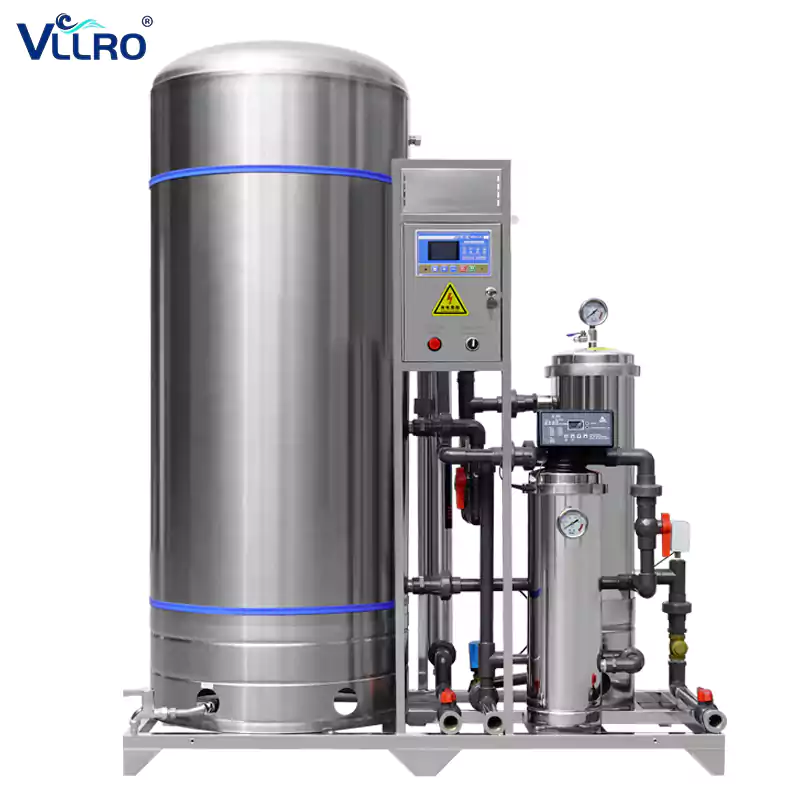
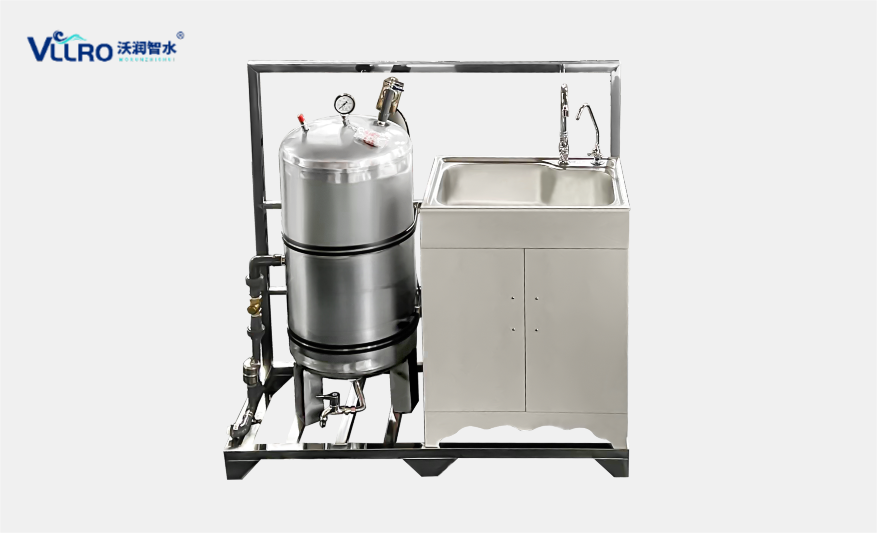
Device exterior view

Flowchart of Water Treatment Process

frame diagram

Pipeline routing diagram

Electrical Control Circuit Diagram
1. water yield accounting
The water production capacity of this equipment has been validated through simulation calculations using specialized water treatment quality modeling software. The baseline parameters include raw water TDS of 1000 ppm and water temperature of 25°C under extreme operating conditions, with simulated water quality fluctuations within ±20% limits, where raw water TDS may reach up to 1200 ppm. The system employs four Huitong ULP31-4040 low-pressure reverse osmosis membranes paired with dedicated pump units of matching power specifications. Both individual membrane performance and overall flux parameter configurations fully comply with system design requirements. Software simulations demonstrate stable clean water output of 1.0 m³/h, with membrane module desalination efficiency exceeding 99.5% and TDS levels below 10 ppm under extreme conditions. The equipment achieves standardized water production capacity, qualified effluent quality, and optimal operational load without risks of underproduction or overload, fully meeting rated water demand requirements while adapting to various harsh water quality scenarios.
The water supply system employs two specialized pumps: a New Territories BWI4-4 model as the raw water pump and a PLD2-11 model as the high-pressure pump. The pump sets' parameters precisely meet operational requirements, ensuring stable water pressure and flow rate while maintaining equipment pressure within the safe range of 0.6-0.8MPa. This configuration eliminates overload risks and water supply shortages, enabling long-term continuous operation without performance compromise.
By default factory settings, the recovery rate is configured at 50%, with a water purification output-to-wastewater discharge ratio of 1:1, aligning with the equipment operating load. The system's factory preset recovery rate ensures stable maintenance of design parameters while balancing water production efficiency and membrane component service life.
4. Accessory matching accounting
The pretreatment system employs two 20-inch PP cotton filter cartridges connected in series, paired with dedicated filter cartridges, achieving a filtration precision of 5μm. This configuration effectively intercepts sediment and large particulate impurities in water, protecting the downstream reverse osmosis membrane elements. The entire system's main pipelines and associated valves adhere to a standardized DN20 specification, featuring no pipe diameter reduction or expansion to ensure stable water flow conditions. All components are precisely matched in specifications and seamlessly integrated, ensuring smooth operation without malfunctions.
II. Equipment and System Component Selection
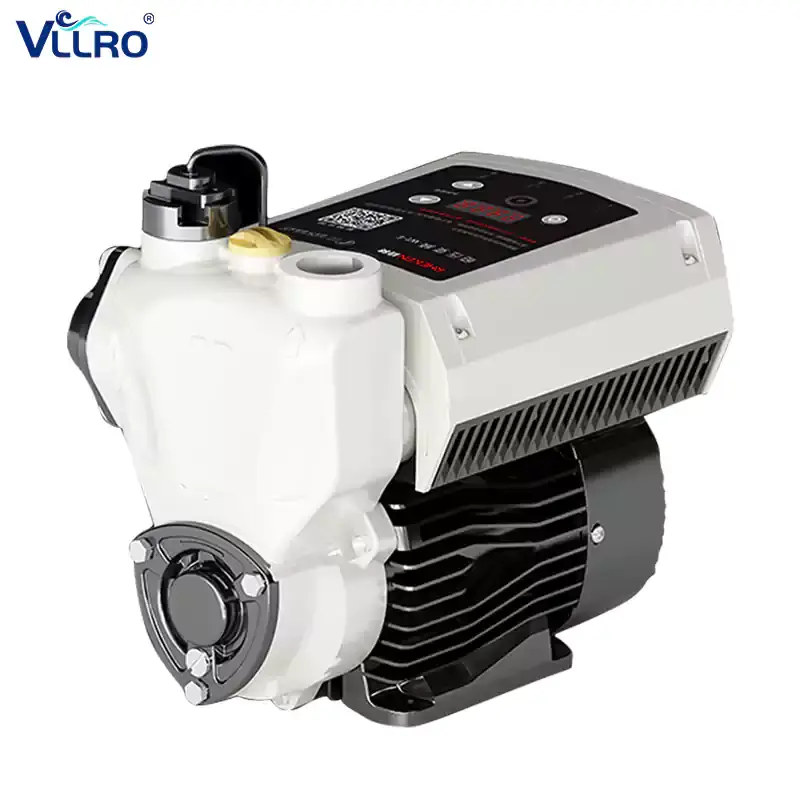
Brand model: New Territories BWI 4-4
Key parameters: Flow rate 4 m³/h, head 30 m, power 0.75 kW, voltage 220 V
Verification conclusion: The inlet water pressure is stable, with sufficient water supply to meet the front-end water transmission requirements.
|
Accompanying verification calculation Given conditions: Rated water production rate of 1.0 m³/h, recovery rate of 50%, influent demand of 2.0 m³/h, and pipeline pressure drop ≤5 m. Verification formula: Pump rated flow rate ≥ system inlet flow rate; Pump rated head ≥ total pipeline pressure drop Calculation process: Rated flow rate 4 m³/h> 2.0 m³/h, rated head 30 m> 5 m, with sufficient flow rate and pressure. Curve verification: Matches the original manufacturer's flow-pressure performance curve, ensuring safe operating range without risks of idling or overload. |
|
|

Performance parameters of primary water pump and performance curve of high-pressure pump

Performance parameters of primary water pump and performance curve of high-pressure pump
Brand model: PLD2-11
Key parameters: Compatible with 220V voltage, power output of 1.8kW, and head of 102m
Verification conclusion: Stable pressure output meets the operational requirements of the membrane module, with no overload during operation.
|
Accompanying verification calculation Given conditions: influent flow rate 2.0 m³/h, membrane operating pressure 0.6-0.8 MPa (equivalent to head 60-80 m) Verification formula: Pump rated flow rate = system inlet flow rate; Pump rated head ≥ membrane working head Calculation process: Rated flow rate 2 m³/h = 2.0 m³/h, rated head 102 m> 80 m, sufficient pressure with no overload Curve verification: Based on the original manufacturer's performance curve, it operates within the high-efficiency and safe range. |
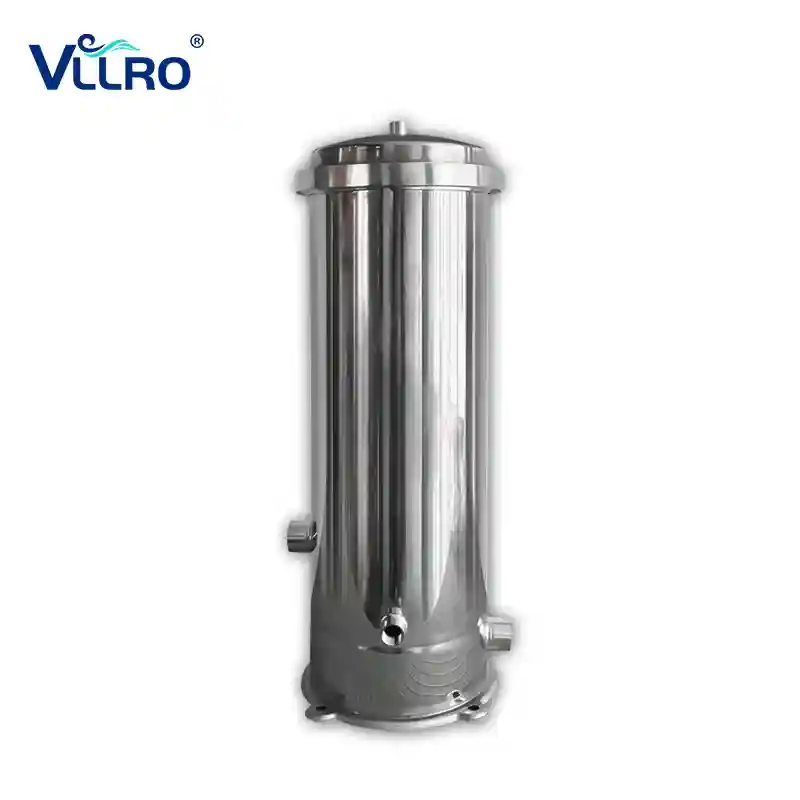
Brand model: 20-inch standard blue bottle
Key parameters: Compatible with 20-inch PP cotton filter cartridge, featuring strong sealing performance and reliable pressure resistance.
Verification conclusion: The filter cartridge is securely installed with no risk of leakage or filtration failure, and features easy disassembly and replacement. The structure is compact and durable.
|
Calculation of Flow Rate for Pre-treatment Filter Bottles Given conditions: influent flow rate 2.0 m³/h, filter bottle inner diameter 128 mm, 2 units connected in series, safe flow velocity ≤1.0 m/s
Calculation process: S≈0.01286 m², v≈0.043 m/s Calculation conclusion: The flow velocity is significantly below the safety limit, with gentle water flow and thorough filtration, causing no damage to the filter element and meeting operational requirements. |
4. Pre-treated PP cotton filter element
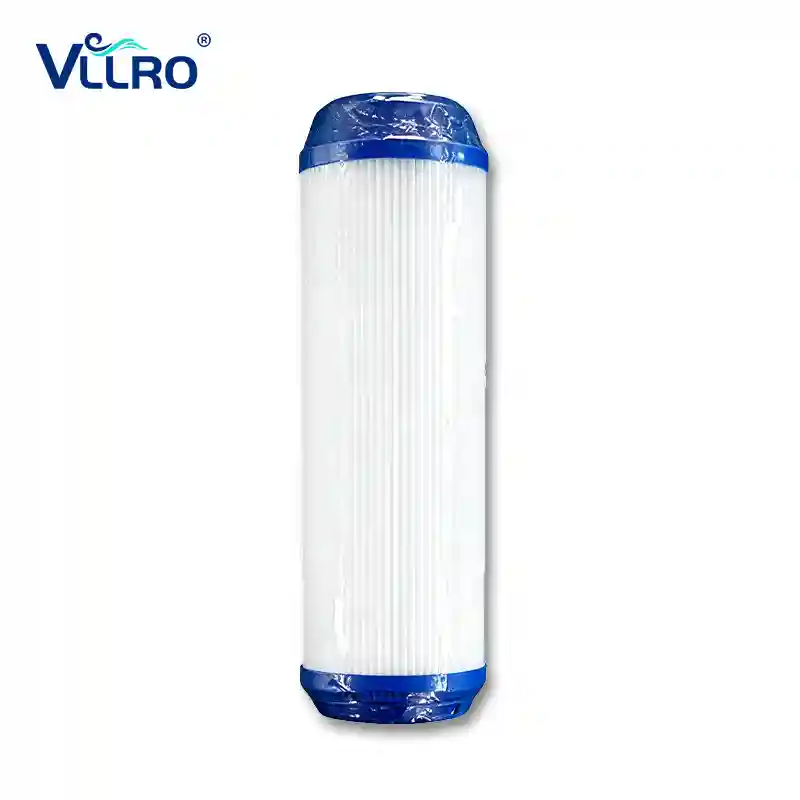
Brand model: 20-inch PP cotton filter cartridge
Key parameters: Quantity 2 units, filtration precision 5μm
Verification conclusion: Effectively filters out silt, rust, and large particulate impurities from water, protecting the downstream RO membrane elements.
|
Verification of filtration accuracy for PP cotton filter elements Given conditions: The RO membrane tolerates impurity particle sizes ≤5μm, while the raw water contains predominantly large particulate impurities exceeding 5μm. The filter element has a precision of 5μm, with two units connected in series. Verification process: The 5μm filter element can completely intercept harmful large particles, with two-stage filtration preventing impurity penetration, thereby providing optimal protection for the membrane element. Calculation conclusion: Accuracy is well matched, protection is adequate, with no issues of insufficient filtration or excessive resistance, and the selection is reasonable. |
Brand model: General 220V solenoid valve
Key parameters: Diameter DN20,220V power supply, Valve body material stainless steel
Material Advantages and Verification Findings: The valve body is constructed from stainless steel, featuring exceptional chemical stability and resistance to water purification corrosion. Long-term water circulation demonstrates no rust formation or impurity precipitation, ensuring no contamination of effluent quality. With superior sealing performance and responsive on-off functionality, it is optimized for clean water intake conditions. Integrated low-pressure switches enable automatic shutdown during water shortages, effectively preventing pump idling. The fully compatible bore size with main pipelines ensures smooth water flow.
|
Calculation of Flow Rate for Solenoid Valve Given conditions: influent flow rate 2.0 m³/h, solenoid valve diameter DN20, water passage area 0.000314 m², safe flow velocity 1.5-2.5 m/s Calculation formula: Flow velocity v = Flow rate Q ÷ Cross-sectional area S ÷ 3600 Calculation process: v≈1.77 m/s Calculation conclusion: The flow velocity is within the safe range, with smooth flow and no risk of throttling or turbulence, making it suitable for all operating conditions. |
6. Flushing (wastewater) solenoid valve
Brand model: General 220V solenoid valve
Key parameters: Diameter DN20,220V power supply, valve body material copper
Material Advantages and Verification Conclusion: The valve body is constructed with thickened copper material, exhibiting high mechanical strength, pressure resistance, and impact resistance. It demonstrates excellent resistance to wear caused by wastewater impurities and is compatible with high-flow flushing conditions for membrane modules. The design minimizes clogging risks, ensures prolonged service life, and provides rapid on-off response capabilities. It accurately executes automatic flushing commands to clean membrane surfaces and delay membrane fouling. The valve maintains compliant diameter specifications and unobstructed flow performance.
|
Calculation of Flow Rate for Solenoid Valve Given conditions: influent flow rate 2.0 m³/h, solenoid valve diameter DN20, water passage area 0.000314 m², safe flow velocity 1.5-2.5 m/s Calculation formula: Flow velocity v = Flow rate Q ÷ Cross-sectional area S ÷ 3600 Calculation process: v≈1.77 m/s Calculation conclusion: The flow velocity is within the safe range, with smooth flow and no risk of throttling or turbulence, making it suitable for all operating conditions. |
Brand model: BD-A3
Key parameters: Normally open water-deficiency power-off protection, action pressure 0.02 MPa, reset pressure 0.03 MPa, trigger sensitivity
Verification conclusion: Accurately monitor the raw water inlet pressure, immediately shut down the system in case of water shortage or excessively low pressure to prevent pump idling and burnout, and meet the system's low-pressure protection requirements.
|
Verification of Low Voltage Switchgear Selection Given conditions: The critical pressure for pump idling is ≤0.015 MPa, the normal water intake pressure is approximately 0.3 MPa, and the switching action pressure is 0.02 MPa. Verification process: 0.015 MPa <0.02 MPa <0.3 MPa, with reasonable threshold values ensuring no false activation during normal operation. Immediate shutdown upon water shortage. Calculation conclusion: It can effectively prevent pump burnout due to idling, meet system protection requirements, and comply with selection specifications. |
Brand model: BD-A30
Key parameters: Normally closed high-voltage overload protection, action pressure 1.5 MPa, reset pressure 0.8 MPa, with precise pressure threshold
Verification conclusion: Real-time monitoring of pipeline high pressure; immediate shutdown when pressure exceeds the limit to prevent pipe rupture, membrane component damage, and equipment overload-induced failure, ensuring overall operational safety.
|
Verification of High Voltage Switchgear Selection Given conditions: Normal operating pressure ranges from 0.6 to 0.8 MPa, maximum pressure tolerance of the reverse osmosis membrane is 1.6 MPa, and switching action pressure is 1.5 MPa. Verification process: 0.8MPa <1.5MPa <1.6MPa. Immediate shutdown if pressure exceeds the limit to protect the entire system. Calculation conclusion: The threshold is precise, overpressure protection is effective, preventing pipe bursts and equipment damage, with rational model selection. |
Brand model: Huitong ULP31-4040 Reverse Osmosis Membrane
Key parameters: Quantity 4 units, desalination rate ≥99.5%
Verification conclusion: The water production capacity meets the standards, with a stable output of 1.0 m³/h of purified water, fully satisfying the rated water supply requirements. The operation is stable and reliable.
|
Accompanying verification calculation Given conditions: The water production rate of a single membrane unit is 0.25 m³/h, with a total of 4 units and a rated water production rate of 1.0 m³/h. The baseline TDS value of raw water is 1000 ppm (under harsh operating conditions), with an allowable TDS fluctuation of 20% and a maximum value of 1200 ppm. The desalination efficiency of the membrane elements is ≥99.5%. Calculation formula: Total water production = Water production per unit branch × Number of membranes; Outflow TDS = Raw water TDS × (1-Desalination rate) Calculation process: 0.25 × 4 = 1.0 m³/h, meeting water production standards; when the raw water TDS is 1200 ppm, the effluent TDS ≤ 10 ppm, meeting water quality standards. Additional verification: Desalination rate ≥99.5%, compatible with high-salinity raw water, ensuring consistent compliance of effluent quality even under fluctuating raw water parameters. |
Water Quality Evaluation Notes: The membrane element selection was based on a baseline of 1000 ppm total dissolved solids (TDS) in raw water under extreme operating conditions, simulating a 20% water quality fluctuation scenario. When raw water TDS rises to 1200 ppm, the system maintains effluent TDS levels below 10 ppm by leveraging the high desalination efficiency of four Huitong ULP31-4040 reverse osmosis membranes, fully meeting water purification requirements with adequate quality compatibility redundancy.
Equipment effluent water quality under simulated influent conditions with TDS=1000
Equipment effluent water quality under simulated influent conditions with TDS=1200
Brand model: 4040 dedicated film housing
Key parameters: Nominal voltage rating ≤1.6MPa, compatible with 4040 model RO membrane
Verification conclusion: The pressure-bearing capacity is sufficient, far exceeding the system operating pressure, ensuring operational safety without hidden risks, and eliminating the risks of leakage, damage, or shell rupture.
|
Verification of Membrane Shell Pressure Resistance Value Given conditions: System peak pressure ≤1.0 MPa, safety redundancy factor 1.5, nominal membrane vessel pressure rating 1.6 MPa Calculation formula: Minimum safe pressure = Peak pressure × 1.5 Calculation process: 1.0 × 1.5 = 1.5 MPa, 1.6 MPa> 1.5 MPa, meeting safety requirements Calculation conclusion: Sufficient pressure resistance, adequate redundancy, no risk of rupture or leakage, suitable for long-term operation. |
Brand model: Custom
Key parameters: Rust-resistant thickened material with stable load-bearing capacity
Verification conclusion: The support is robust, the equipment is stably positioned, and it is durable with minimal deformation tendency.
12. Pipeline fittings (including filter bottles and solenoid valve pipelines)
Brand model: Huaya PVC pipe
Key specifications: DN20 size, PVC corrosion-resistant material, compatible with complete equipment
Verification conclusion: Sealing is tight, water flow is unobstructed, compatible with valve bore size, corrosion-resistant and aging-resistant, with no leakage observed.
|
Pipeline Flow Rate Calculation Given conditions: influent flow rate 2.0 m³/h, water passage area of DN20 pipe 0.000314 m², and safe flow velocity range 1.5-2.5 m/s Calculation formula: Flow velocity v = Flow rate Q ÷ Cross-sectional area S ÷ 3600 Calculation process: v≈1.77 m/s Calculation conclusion: The flow velocity complies with standards, water passage is unobstructed, and there is no risk of exceeding limits. |
13. Electronic control system (including intelligent control panel)
Brand model: Intelligent Electronic Control Box + Intelligent Control Panel
Key parameters: 220V voltage, equipped with multiple protections including high/low voltage, low water level, and overload; supports automatic/manual dual-mode switching, featuring one-touch start/stop, automatic flushing, status display, and fault alarm. Panel power consumption is approximately 0.05kW.
Verification conclusion: Integrated with fully automated intelligent control and equipped with manual control backup options, it can switch to manual emergency operation in case of automatic mode failure without interrupting water supply; featuring comprehensive protection, requiring no frequent manual monitoring, enabling long-term stable operation, and offering simple operation and maintenance.
Overall verification conclusion
All components of this equipment suite are specifically designed to meet the 1.0m³/h water production capacity requirements, featuring parameter compatibility and standardized specifications. The main pipelines and core valves utilize DN20 diameters to eliminate potential issues related to diameter reduction or expansion. Each accessory has undergone specialized calibration, ensuring compliance with operational parameters including flow rate, pressure, velocity, and pressure resistance. Equipped with comprehensive protective mechanisms, the system demonstrates adaptability to various operating conditions ranging from conventional to high-salinity water quality and fluctuating water volumes. With long-term stable performance and zero failure risks, it fully satisfies both operational requirements and regulatory evaluation standards.
This equipment set features precisely matched component specifications and optimized parameters, with DN20 pipelines and valves of identical dimensions ensuring full system compatibility. Capable of handling diverse operating conditions including standard water production, high-salinity raw water (TDS 1000ppm), fluctuating influent flow, and full-load operation, it fully meets the 1.0m³/h water production requirement. With stable performance and reliable operation, the system is designed for long-term use and ready for immediate deployment.
4. The device features moderate power consumption and low energy usage, making it suitable for long-term indoor use.
5. All components are standard mature models available on the market, with DN20 pipelines and valves meeting industry-wide specifications. The system offers convenient after-sales maintenance, easy procurement of consumables, and low replacement costs.
III. Technical Data Sheet and Technical Specifications
Basic parameters of the complete machine
Rated water output: 1.0m³/h Rated voltage: 220V/50Hz Normal operating pressure: 0.6-0.8MPa System recovery rate: 50% (water-to-wastewater ratio 1:1) Total unit power: 2.6kW Desalination efficiency: ≥99.5% Main pipeline and core valve diameter: DN20
Technical Parameter Table
|
project |
Parameter values |
Specification Description |
|
rated water production |
1.0m³/h |
The equipment operates stably at full load, producing 1 ton of compliant purified water per hour to meet daily living and industrial water supply demands. |
|
operating recovery rate |
50% |
The factory preset parameters ensure precise control, balancing water production capacity with membrane component lifespan. This design achieves water conservation and durability while effectively preventing excessive membrane surface fouling. |
|
working pressure |
0.6-0.8MPa |
Maintain the equipment within its standard safe operating pressure range, avoiding overload or underpressure conditions, and protect the pipelines, membrane elements, and pump body. |
|
preprocessing accuracy |
5μm |
Two 20-inch PP cotton filter cartridges are employed to effectively intercept sediment, rust, insect eggs, and large particulate suspended solids, thereby protecting the downstream RO membrane. |
|
Total machine power |
2.6kW raw water pump, 0.75kW + high-pressure pump, 1.8kW + intelligent control panel, 0.05kW |
Moderate power consumption, low energy consumption, and economical operating costs. The intelligent control module exhibits extremely low power consumption without additional electrical load. |
|
Core filter element |
Huitong ULP31-4040 Reverse Osmosis Membrane (4 pieces) |
High-quality domestic RO membrane with a desalination rate ≥99.5%, capable of filtering out harmful substances such as heavy metals, salts, bacteria, and organic matter. |
|
Water quality of effluent |
TDS ≤ 10 ppm (raw water: 300–500 ppm) |
The purified water is free of impurities and meets safety standards, compatible with both conventional raw water TDS levels of 300-500 ppm and high-salt conditions with TDS up to 1000 ppm. It consistently delivers compliant purified water, fulfilling daily domestic and cleaning water requirements. |
|
Device material |
Flowing parts: Stainless steel + food-grade PVC; Frame: Thickened stainless steel |
The material is selected from food-grade water-related components, featuring rust resistance, corrosion resistance, and odor-free properties. It ensures safe and harmless contact with water quality while providing robust and durable overall performance. |
|
Pipe fittings |
Huaya PVC Pipe (DN20) |
Made of food-grade corrosion-resistant PVC material with a main pipeline diameter of DN20, equipped with matching valves and fittings of the same specifications. Features airtight sealing to prevent water leakage or seepage, with excellent water pressure resistance and aging resistance. Ensures smooth water flow to meet the flow requirements of the entire system. |
|
Core valve accessories |
Water inlet solenoid valve DN20, flushing solenoid valve DN20DN20 |
All system valves feature uniform valve diameters compatible with main pipeline specifications, ensuring stable on-off/regulating performance to guarantee precise system operation control and eliminate leakage risks. |
|
control method |
Intelligent fully automatic + manual standby |
Equipped with an intelligent control panel supporting automatic start-stop, automatic flushing, and fault alarms; features a manual standby mode to ensure uninterrupted water supply during emergencies. |
|
security guard |
Water shortage protection, high/low voltage protection, overload protection |
Supporting low-voltage switches, high-voltage switches, inlet solenoid valves, and flushing solenoid valves to prevent idling, pipe bursts, and overload damage. |
|
Applicable environment |
Indoor room temperature, ventilated and dry environment |
Operating temperature range: 5-40°C. Avoid direct sunlight, freezing, and water accumulation. Suitable for indoor installation in various global locations. |
|
Maintenance cycle |
PP cotton filter cartridges should be replaced every 3-6 months, and RO membranes every 2-3 years (depending on water quality). |
Regular replacement of consumables is sufficient, with no frequent maintenance required for valve pipelines. The maintenance process is simple and does not necessitate professional personnel, resulting in low operational and maintenance costs. |
V. Design Assumptions and Key Design Considerations
1. Design hypothesis conditions
1. Feedwater Source: Capable of withstanding harsh raw water conditions, typically tolerating TDS levels of 300-500 ppm, and even up to 1500 ppm under extreme conditions. Designed for TDS levels up to 1000 ppm, the system allows ±20% TDS fluctuations with peak values reaching 1200 ppm while maintaining stable compliance. It accommodates excessive sediment/suspended solids, significantly elevated influent turbidity, high water hardness, and minor fluctuations (≤20%) in flow rate, quality, or turbidity. The system operates without severe chemical contamination, strong acid/alkali corrosion, or significant oil impurities, requiring no additional advanced pretreatment equipment and featuring self-adaptive buffering capabilities.
2. Operating Environment: Compatible with harsh field conditions. The equipment can be installed in semi-open indoor areas with moderate ventilation and slight humidity, tolerating wide temperature fluctuations of 3-45°C. It can withstand minor dust exposure and slight vibration interference. No high-standard hardening is required for the site, and stable placement is achievable even on slightly uneven surfaces. The equipment is resistant to short-term moisture exposure, without exposure to direct sunlight or freezing conditions, and can withstand water immersion without accumulation.
3. Power supply conditions: Compatible with harsh power supply environments, connected to single-phase 220V/50Hz residential mains electricity. Allows significant voltage fluctuations within ±15%, capable of withstanding temporary voltage instability, minor power outages, tripping, and insufficient line load. Grounding conditions generally permit normal operation, making it suitable for remote sites with poor power supply conditions.
4. Operation and Maintenance: Designed for extensive operation and maintenance scenarios, it allows for short-term neglect of equipment maintenance, failure to conduct timely pipeline inspections, and delayed replacement of consumables. Even with minor filter clogging or slight pipeline scaling, the equipment can continue stable operation despite malfunctions, requiring no professional technical personnel on-site and only basic operational skills from ordinary staff.
5. Site Installation: The installation site shall reserve sufficient space for maintenance and inspection, ensure smooth connection of water supply and drainage pipelines, and meet conventional drainage requirements to fulfill the basic site conditions for equipment installation, commissioning, and subsequent operation and maintenance.
Core Technology Specification Supplement
1. The equipment adopts a modular design with a compact structure, occupying minimal space and facilitating transportation, installation, and commissioning without requiring complex infrastructure modifications.
2. Supports 24/7 continuous stable operation in fully automated mode without manual monitoring. The system automatically triggers alarms and initiates shutdown protection upon fault detection.
3. It is compatible with conventional tap water, groundwater, and other water sources, demonstrating strong adaptability to raw water quality. The pretreatment system can effectively buffer water quality fluctuations.
1. Water production capacity matching: Designed with a rated net water flow of 1.0 m³/h, four Huitong ULP31-4040 reverse osmosis membranes are selected, paired with pumps matching the corresponding flow rate and head, ensuring stable water production during full-load operation to meet daily water demand without issues of water supply shortages or insufficient output.
2. Operational Safety Protection: Strictly control the system operating pressure within the safe range of 0.6-0.8 MPa, equipped with high-pressure switches, low-pressure switches, inlet water solenoid valves, and flushing solenoid valves to achieve multi-level protection including shutdown due to water shortage, shutdown due to high-pressure overload, and anti-idling protection, thereby preventing pipe bursts, pump burnout, and equipment overload damage.
3. Core Component Compatibility: All accessories feature standardized specifications and precise dimensional matching. The system employs DN20 Huaya PVC corrosion-resistant piping, paired with matching inlet solenoid valves and flushing solenoid valves, along with mature components including 20-inch transparent filter cartridges and specialized membrane housings. The piping and valve systems maintain uniform diameters for seamless integration, ensuring airtight sealing without leakage, filtration issues, or connection inefficiencies. Capable of operating under various conditions—from standard water quality to high-salinity environments with TDS levels up to 1000ppm and fluctuating water parameters—the system guarantees uninterrupted operation throughout all working conditions.
4. Equipment service life management: Set a reasonable 50% system recovery rate, achieve precise and stable control through DN20 specifications, balance water production volume with membrane component wear, and employ two-stage PP cotton pretreatment to intercept impurities. This reduces membrane surface fouling and wear, delays core component aging, extends the service life of RO membranes and the entire system, and lowers operational and maintenance costs.
5. Long-term stable operation: Designed with dual modes of fully automatic operation and manual standby, it supports 24-hour continuous uninterrupted operation. Equipped with an automatic flushing function, the system achieves timed high-flow membrane surface cleaning through flushing solenoid valves, compatible with prolonged continuous working conditions without requiring frequent manual monitoring.
6. Global site adaptability: The equipment adopts modular integrated design with compact structure and small footprint, enabling installation in indoor venues worldwide. It requires minimal installation conditions and eliminates the need for complex infrastructure modifications, while offering convenient transportation, debugging, and disassembly.
7. Water Quality Purification Compliance: With a desalination rate ≥99.5% as the design target, the system ensures effluent TDS levels ≤10 ppm by deeply filtering out salts, heavy metals, microorganisms, and colloidal impurities, achieving water purity that meets daily usage requirements.
8. Operational convenience: The selection of standard accessories and consumables ensures compatibility with industry-wide DN20 pipeline and valve specifications, facilitating procurement and replacement. Simple replacement procedures for filter cartridges and membrane elements eliminate the need for specialized technical personnel, thereby reducing subsequent maintenance complexity and operational costs.
9. Energy-efficient operation: Optimized power ratio with a total unit power of 2.6kW, featuring moderate power consumption and low energy usage, making it suitable for indoor equipment applications.
10. Consumables Operation and Maintenance Control: Specify the replacement cycle for core consumables. Pre-treatment PP cotton filter elements should be replaced every 3-6 months, with the specific replacement interval flexibly adjusted based on raw water turbidity and impurity content. The typical service life of RO membrane elements is 1-3 years, requiring timely replacement upon expiration to ensure water purification efficiency and effluent quality of the equipment.
11. Membrane module replacement criteria: The RO membrane module must be replaced immediately when any of the following conditions occur to prevent equipment operation disruption and influent water quality non-compliance caused by membrane aging or damage:
(1) The system operating pressure increases by more than 15% compared to the initial normal operating pressure;
(2) The water production flow rate of the equipment decreases by more than 10% compared to the initial operating flow rate;
(3) The conductivity of produced water continues to rise, resulting in a decrease of over 5% in the desalination rate of membrane elements;
(4) The membrane element has been in cumulative operation for 1-3 years, with significant performance degradation, desalination rate below 95%, and water production decreased by more than 30%;
(5) Membrane elements exhibit damage or leakage issues that cannot be repaired through maintenance;
(6) The system's effluent quality has consistently failed to meet standards. After investigating potential causes such as pretreatment processes, pipeline systems, and pump units, it was confirmed that the failure was attributed to membrane element malfunction.
Related News
- What Are the Main Stages of an Industrial Water Purification Process?
- How to Reduce Wastewater in Commercial RO Systems Without Sacrificing Membrane Life
- How to Calculate ROI for a Commercial Water Refilling Station
- How to Design a Borehole Water Pretreatment System for Remote Commercial RO Stations
- The "Brain" Behind the System: How VLLRO's Intelligent IoT Control Platform Revolutionizes Water Management
- The Invisible Shield: Why UV Sterilization is Non-Negotiable for Safe Drinking Water
Leave me a message