
English
- English
- Español
- Português
- русский
- Français
- 日本語
- Deutsch
- tiếng Việt
- Italiano
- Nederlands
- ภาษาไทย
- Polski
- 한국어
- Svenska
- magyar
- Malay
- বাংলা ভাষার
- Dansk
- Suomi
- हिन्दी
- Pilipino
- Türkçe
- Gaeilge
- العربية
- Indonesia
- Norsk
- تمل
- český
- ελληνικά
- український
- Javanese
- فارسی
- தமிழ்
- తెలుగు
- नेपाली
- Burmese
- български
- ລາວ
- Latine
- Қазақша
- Euskal
- Azərbaycan
- Slovenský jazyk
- Македонски
- Lietuvos
- Eesti Keel
- Română
- Slovenski
- मराठी
- Srpski језик

Underfloor Heating System Water Softening Resin
Protecting your underfloor heating system from the damaging effects of hard water is a critical investment in its longevity and efficiency. The primary threat comes from limescale, a hard, chalky deposit that forms when calcium and magnesium ions in hard water are heated. This scale adheres to internal pipe walls, heat exchangers, and boiler components, acting as a stubborn insulator. This drastically reduces heat transfer efficiency, forcing your system to work harder and consume more energy to achieve the same comfortable temperature. Over time, significant scale buildup can lead to complete blockages, increased pressure, and catastrophic equipment failure. To combat this, a dedicated water softening solution is essential. Our specialized Water Softening Resin with Ion Exchange Technology is engineered specifically for closed-loop hydronic systems like underfloor heating. This premium Ion Exchange Water Softening Resin for Hard Water works by trapping the scale-forming calcium and magnesium ions and releasing benign sodium ions in their place, effectively softening the water before it circulates. The result is proactive Water Softening Resin for Scale Removal, preventing scale from ever forming. Furthermore, our resin is designed for easy maintenance, featuring Water Softening Resin with Fast Reactivation properties, allowing for simple recharging with a brine solution to restore its full capacity and ensure years of reliable protection.
The Underfloor Heating System Water Softening Resin is formulated with high-capacity, gel-type polystyrene beads in a sodium form. Its superior physical and chemical stability ensures consistent performance under the typical temperature and pressure conditions of a hydronic heating system. The uniform bead size minimizes pressure drop across the filter housing, maintaining optimal flow rates for your heating circuit. This resin exhibits excellent kinetic characteristics, meaning it removes hardness ions quickly and efficiently as water passes through the filter. It also possesses high resistance to osmotic shock and mechanical attrition, which is crucial for maintaining its structural integrity over many cycles of use and regeneration. The table below details the key technical parameters that define the performance and quality of our specialized resin.
Technical Specifications
- Polymer Matrix: Styrene-Divinylbenzene (Gel Type)
- Functional Group: Sulfonic Acid (Na+ form)
- Ionic Form as Shipped: Sodium (Na+)
- Total Exchange Capacity: ≥ 2.0 eq/L (min)
- Moisture Holding Capacity: 45% - 50%
- Particle Size Range: 0.3mm - 1.2mm
- Uniformity Coefficient: ≤ 1.7
- Maximum Operating Temperature: 120°C (248°F)
- pH Range: 0 - 14
- Recommended Flow Rate: 5 - 50 m³/h/m³ resin
| Parameter | Specification | Test Method |
|---|---|---|
| Bead Integrity (Whole Beads) | > 95% | ASTM D2187 |
| Iron Content (Fe) | < 0.02% | ICP-OES |
| Solubility in Water | Insoluble | Visual Inspection |
| Shipping Weight (Approx.) | 850 g/L | Weighing Scale |
| Regeneration Solution | 10% NaCl (Brine) | Manufacturer's Guideline |
Related Products


Hot Products
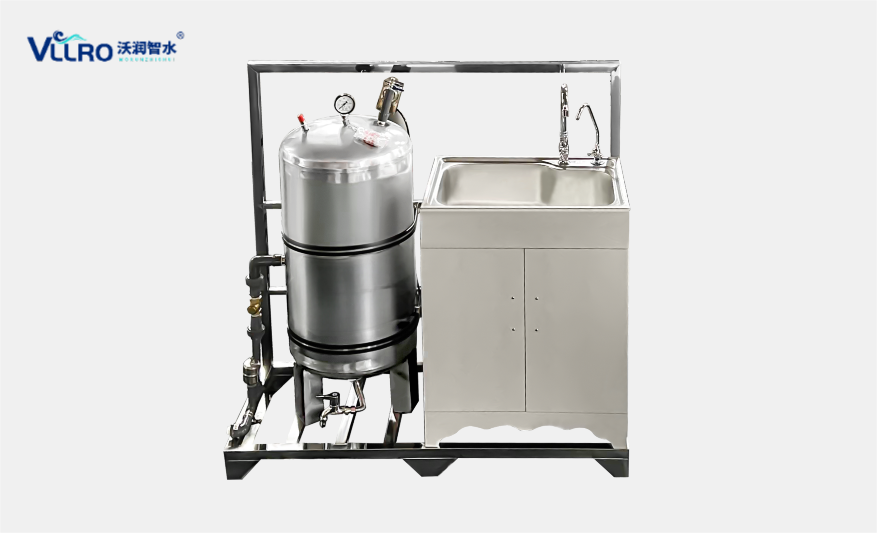
304 Stainless Steel Water Supply Purifier Machine
VLLRO provides high-quality 304 Stainless Steel Water Supply Purifier Machine for global customers. As a professional manufacturer of pre-flush filter in China, VLLRO Combines a kitchen sink, pressure tank, ultrafiltration purification, and UV sterilizer in one compact unit. Serves as both furniture and a water treatment system.
Industrial Reverse Osmosis Water Purifier
China's VLLRO is a renowned manufacturer and supplier in the industrial reverse osmosis water purifier industry. Specializing in the production of industrial water purification equipment with high water output and stable water quality, our products support deep customization and provide technical support for users worldwide.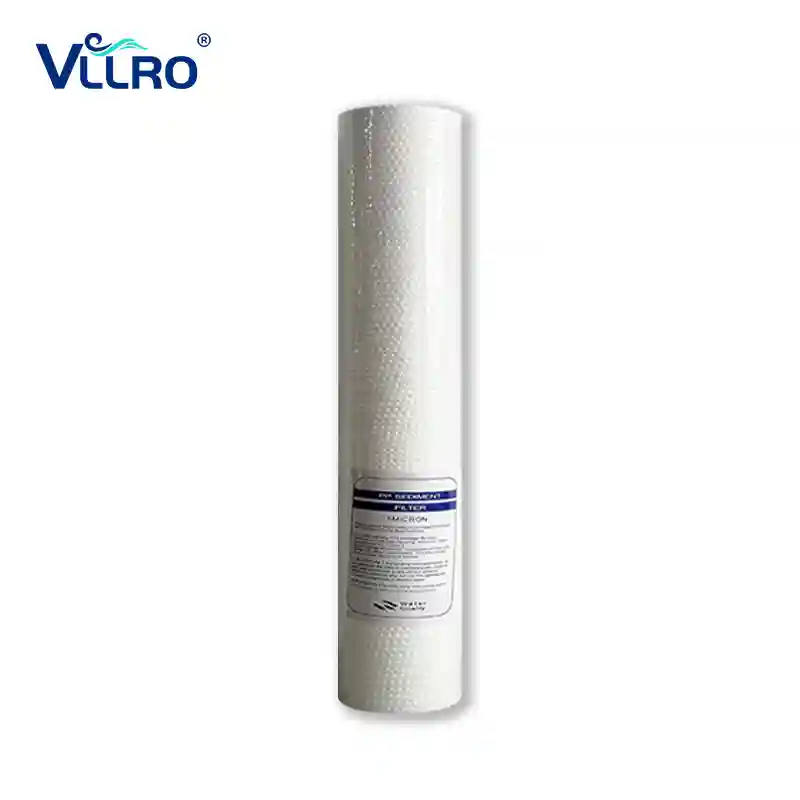
PP Sediment Filter Cartridge
The customized VLLRO PP sediment filter cartridge produced by Chinese factories are the first line of defense for filtration and water purification equipment. Made of food-grade materials, with fine fibers and high density, it can effectively intercept large particles of impurities such as sand and mud. Long service life and easy to replace. It can be customized directly according to your needs.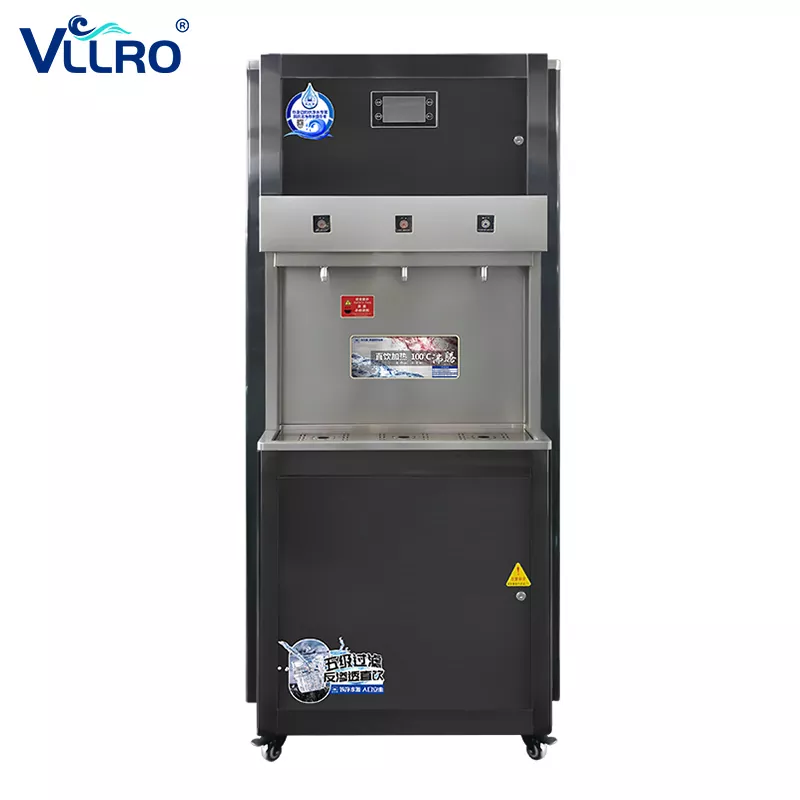
Commercial Step-by-step Boiling Water Purifier
The VLLRO commercial step-by-step boiling water purifier made in China, produced by a professional commercial drinking water equipment factory, provides safe drinking water solutions for various commercial scenarios overseas. The five-stage direct drinking water filtration system can remove impurities, off-color and off-odor from water. The RO reverse osmosis effluent fully complies with the national direct drinking water standards.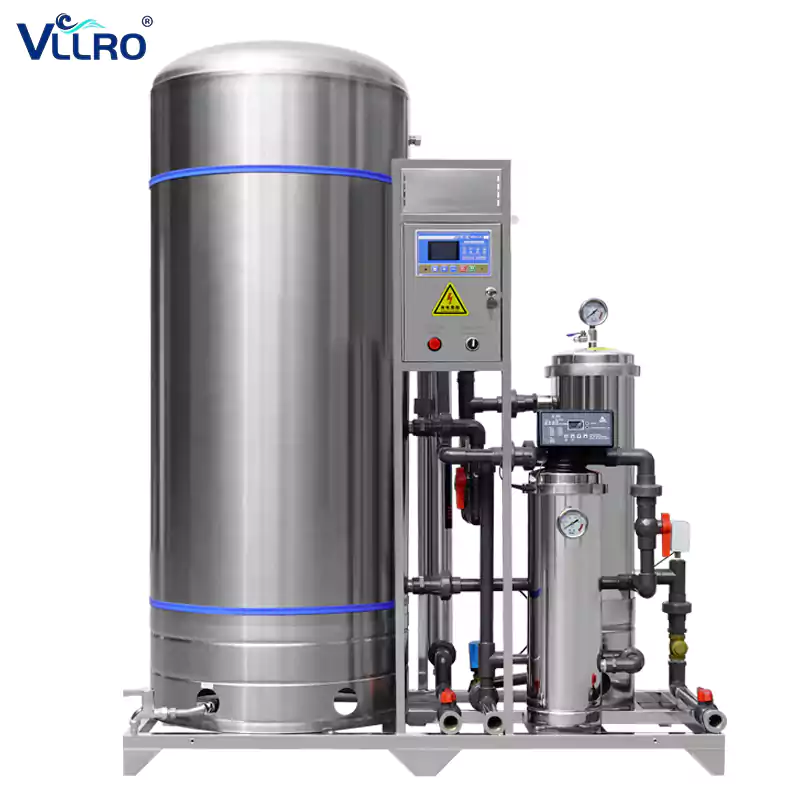
Pre-Flush Filter
As a professional manufacturer of pre-flush filter in China, VLLRO adopts advanced automatic backwashing technology, which can effectively remove particulate impurities such as sand, rust and suspended solids from water. It provides reliable pre-protection for industrial and commercial water use and extends the service life of downstream equipment, making it an excellent water treatment solution.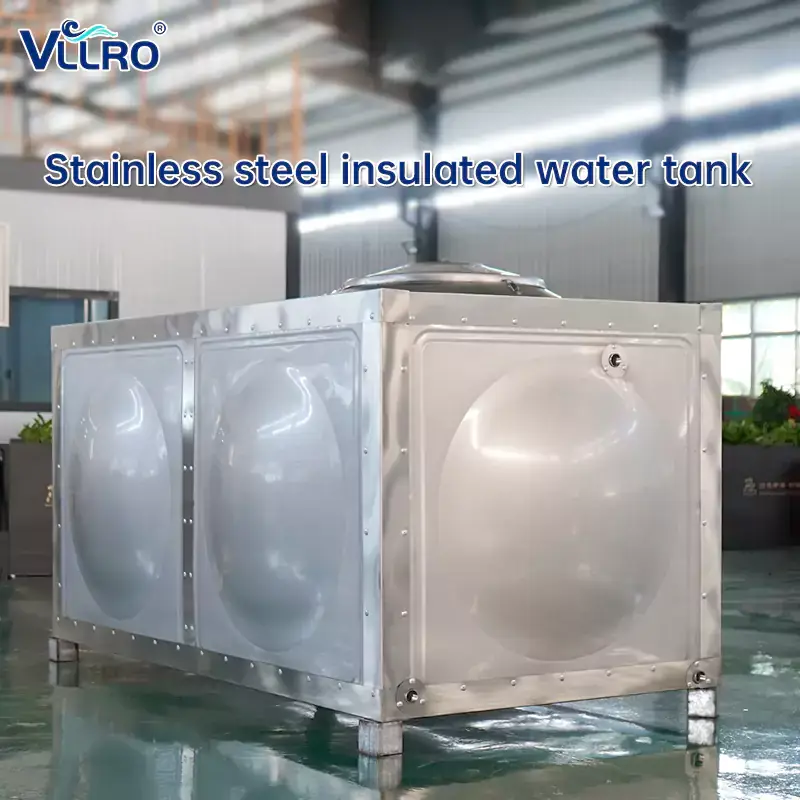
Stainless Steel Insulated Water Tank
Welcome to choose the stainless steel insulated water tank produced by the professional China manufacturer - VLLRO. We are dedicated to providing high-quality and long-lasting water storage solutions for customers worldwide. Made of 304 stainless steel and polyurethane foam, it has a long-lasting heat preservation performance. We offer OEM/ODM customization, wooden box packaging, and global shipping. With reliable quality, it is an ideal choice for commercial and industrial projects.
- Related Blog
- Reviews
