English
- English
- Español
- Português
- русский
- Français
- 日本語
- Deutsch
- tiếng Việt
- Italiano
- Nederlands
- ภาษาไทย
- Polski
- 한국어
- Svenska
- magyar
- Malay
- বাংলা ভাষার
- Dansk
- Suomi
- हिन्दी
- Pilipino
- Türkçe
- Gaeilge
- العربية
- Indonesia
- Norsk
- تمل
- český
- ελληνικά
- український
- Javanese
- فارسی
- தமிழ்
- తెలుగు
- नेपाली
- Burmese
- български
- ລາວ
- Latine
- Қазақша
- Euskal
- Azərbaycan
- Slovenský jazyk
- Македонски
- Lietuvos
- Eesti Keel
- Română
- Slovenski
- मराठी
- Srpski језик

How to Design a Borehole Water Pretreatment System for Remote Commercial RO Stations
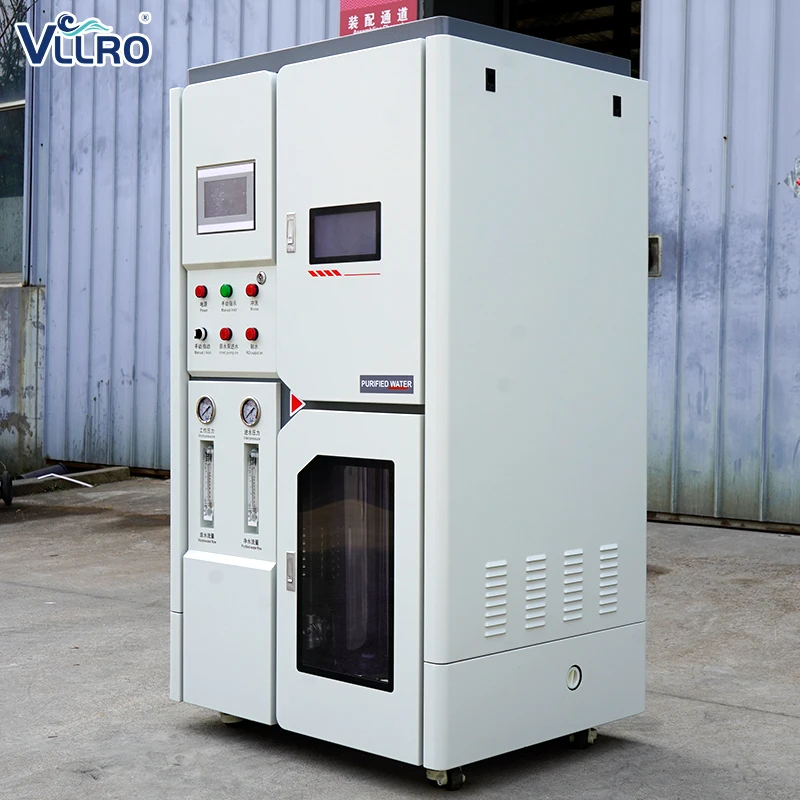
Direct answer: A borehole-fed commercial RO station should never be designed from the RO membrane backward. The correct sequence is to test the raw water, identify dissolved and oxidized contaminants, select pretreatment for the actual water chemistry, add RO only after membrane risks are controlled, and design monitoring and maintenance around the realities of the site. For remote projects, the system must also be modular, easy to service, protected against power and feed-water interruptions, and able to operate safely when connectivity is limited.
This guide is for B2B buyers, engineering consultants, and project operators planning water kiosks, modular water stations, or decentralized drinking-water systems supplied by boreholes.
Why does borehole water require a separate pretreatment design?
Groundwater can look clear and still create serious operating problems. Iron and manganese may be dissolved when water leaves the borehole and become visible only after exposure to oxygen. Hardness, turbidity, pH, salinity, and microbial indicators can also vary by location and season.
Penn State Extension notes that iron and manganese are common in groundwater and recommends testing their concentration and form before selecting treatment. The same principle applies to commercial RO projects: a clear raw-water sample is not enough evidence for membrane selection or equipment sizing.
The first project deliverable should therefore be a raw-water profile, not a product quotation.
Which raw-water parameters should be tested?
A practical test plan should be agreed with the local laboratory and project engineer. Depending on the site, it may include:
| Parameter group | Examples | Why it matters to pretreatment |
|---|---|---|
| Physical | Turbidity, color, temperature, total dissolved solids | Indicates particulate load and overall process conditions |
| Hardness and alkalinity | Calcium, magnesium, alkalinity | Helps assess scaling risk and softening or antiscalant needs |
| Metals | Iron, manganese, aluminum and other site-relevant metals | Determines oxidation, filtration, or other removal steps |
| Salinity and ions | Chloride, sulfate, nitrate and other dissolved ions | Influences RO loading, permeate targets, and material selection |
| Microbiology | Total coliforms and other locally required indicators | Supports disinfection and safe-storage planning |
| Operating conditions | Well yield, pressure, pump curve, seasonal variation | Determines flow, storage, controls, and redundancy |
Do not copy a pretreatment train from a different borehole just because the equipment appears similar. Two wells in the same region can require different treatment because their geology, pumping regime, and contamination sources differ.
How should iron and manganese be treated before RO?
The treatment path depends on concentration, oxidation state, pH, dissolved oxygen, and the required water quality. Common options include:
| Raw-water condition | Possible treatment direction | Remote-site consideration |
|---|---|---|
| Low dissolved iron with suitable chemistry | Softening or other validated process | Confirm resin capacity, regeneration, and salt logistics |
| Dissolved iron and manganese requiring oxidation | Oxidation followed by filtration | Requires contact time, backwash, and chemical or oxygen management |
| Oxidized particles already present | Media filtration | Plan backwash water, drainage, and media inspection |
| Higher combined metal load | Engineered oxidation and filtration | Require pilot or documented performance basis |
| Multiple contaminants | Multi-stage pretreatment | Validate the complete sequence instead of adding isolated units |
Penn State describes oxidizing filters, oxidation followed by filtration, aeration, catalytic carbon, and other approaches as treatment options whose suitability depends on the actual source water. Its guidance also emphasizes understanding maintenance requirements and obtaining written performance information from equipment suppliers.
For a commercial RO station, the key question is not “Which filter removes iron?” It is “Which pretreatment sequence protects the RO membrane at this site, and how will the operator verify that it is working?” A sound starting point is the VLLRO technical guide to commercial RO membranes, which explains how feed-water quality drives membrane selection and lifespan.
What should the complete process flow look like?
A typical borehole-fed commercial RO station may include the following logic:
- Borehole pump and raw-water protection: protect against dry running, unstable pressure, and unexpected loss of supply.
- Raw-water storage or equalization: provide stable feed conditions where the project design requires it.
- Oxidation or chemical dosing, if validated: convert dissolved contaminants into a form that can be removed.
- Contact time: allow the selected reaction to occur under controlled conditions.
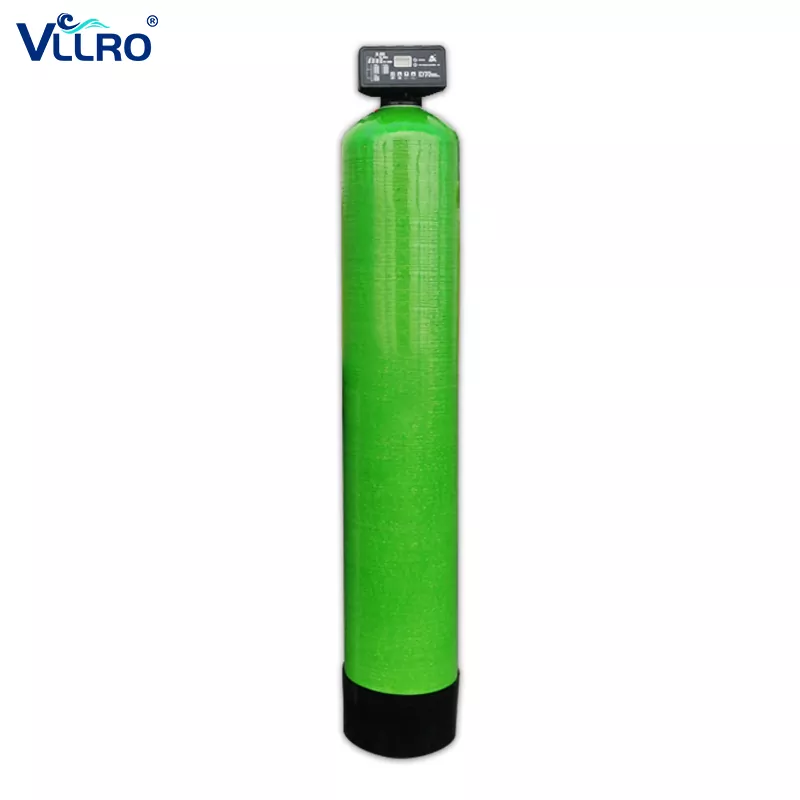
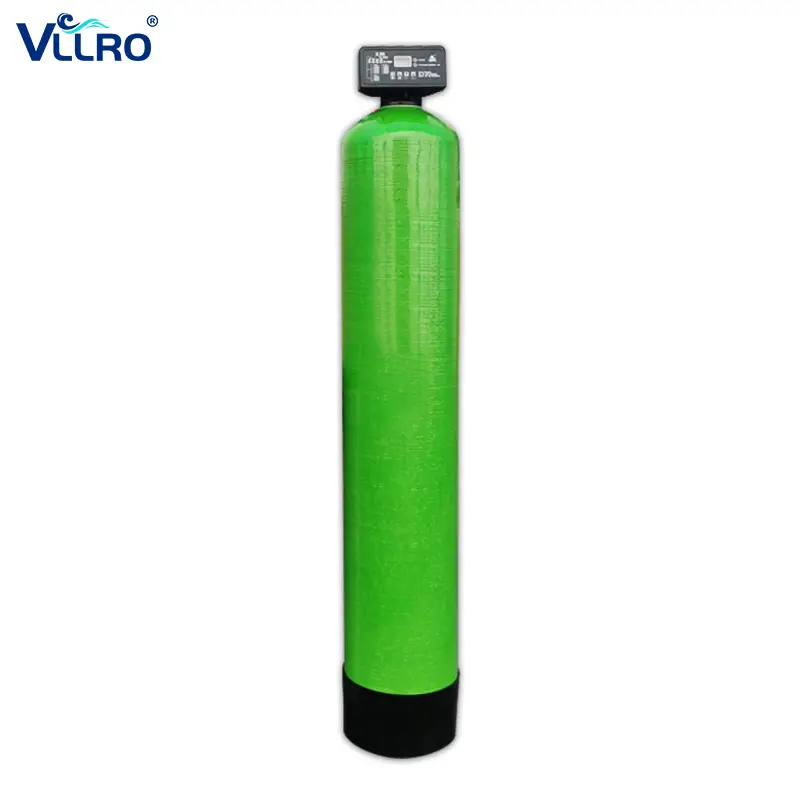
- Media or cartridge filtration: remove precipitated metals and suspended solids.
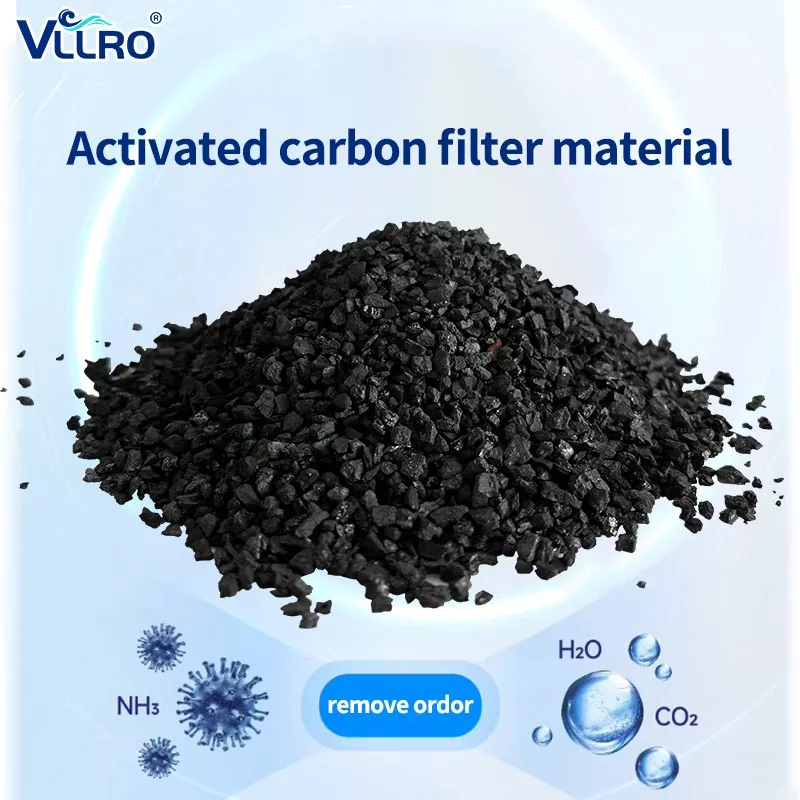
- Activated carbon or dechlorination, where required: protect downstream components from oxidants or organic compounds.
- Softening or antiscalant dosing, where required: control hardness and scaling potential.
- Fine filtration: reduce particles before the high-pressure RO stage.
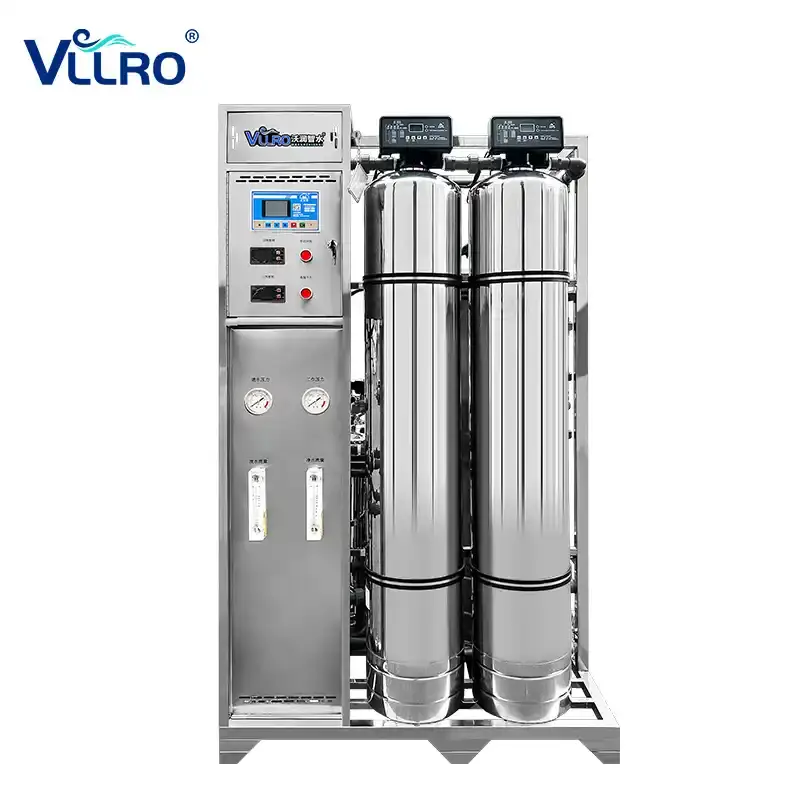
- Commercial RO: produce treated water at the design flow and quality.
- Final disinfection and hygienic storage: apply the validated final barrier and protect water through distribution.
The exact sequence, chemical dosing, media type, and equipment capacity must follow the water analysis and engineering design. A process diagram with design assumptions is more valuable than a generic equipment list.
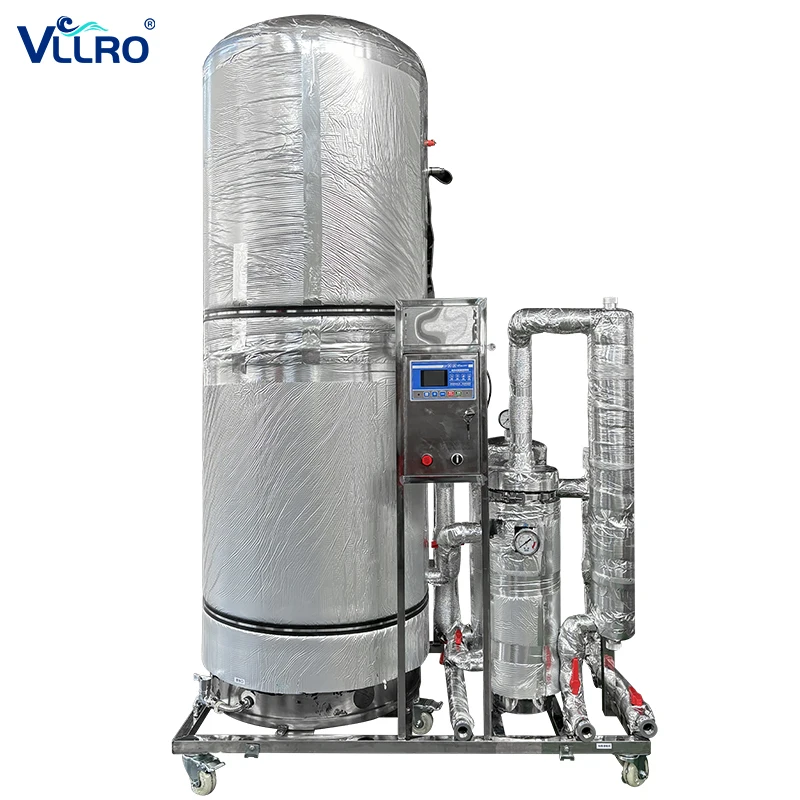
How should remote projects be designed for maintenance?
A remote water station is also a logistics project. The operator may face long travel distances, limited technical labor, irregular electricity, delayed spare parts, and difficult wastewater disposal. Pretreatment should therefore be evaluated using five maintenance questions:
- How often does each filter need backwashing or replacement?
- What chemicals, salt, or test reagents must be stored on site?
- Can one treatment train be isolated while another remains available?
- Is the backwash or reject water route safe and permitted?
- Can an operator identify a fault without specialized diagnostic equipment?
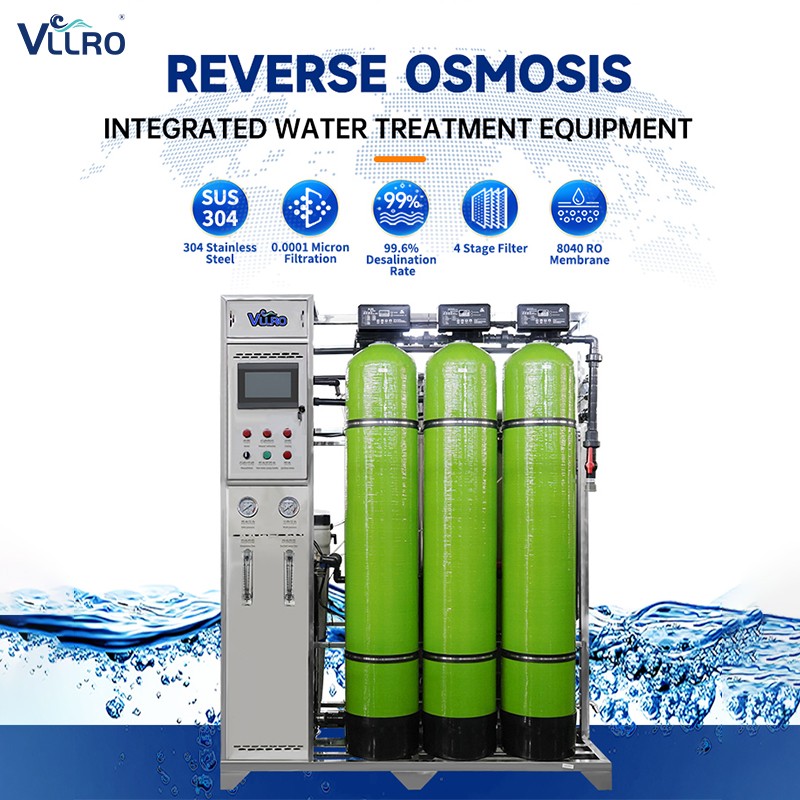
VLLRO’s modular product approach can be positioned around these requirements: package the treatment stages into serviceable modules, label every isolation point, document consumables, and expose key status signals through local controls and remote monitoring. This should be verified during commissioning and operator training, not assumed from a marketing label. Consumable life and replacement cycles are set out in the VLLRO guide to water filtration consumables replacement cycles.
Which monitoring points protect the RO membrane?
At minimum, the control design should consider:
- Raw-water pressure and tank level
- Pretreatment inlet and outlet pressure
- Differential pressure across media or cartridge filters
- Oxidant or dosing status where chemicals are used
- RO feed pressure and flow
- Permeate conductivity or TDS trend
- Reject flow and recovery calculation
- High-pressure pump status and dry-run protection
- Final disinfection status where installed
- Alarm history, maintenance records, and consumable hours or volume
Remote monitoring is useful when it reduces uncertainty between site visits. It should help the operator answer: Is the borehole supplying water? Is pretreatment loading increasing? Is the membrane performance drifting? Is a pump or dosing system outside its normal range? VLLRO describes this layer of the design in its overview of the IoT control platform for water management.
How should a supplier be evaluated for a borehole project?
| Evaluation area | Evidence to request |
|---|---|
| Water analysis | Test report, sample date, seasonal assumptions, and design basis |
| Pretreatment logic | Process flow diagram and contaminant-removal rationale |
| Membrane protection | Feed limits, alarm thresholds, cleaning plan, and baseline performance |
| Remote operation | Local PLC behavior, offline protection, remote alarms, and data access |
| Maintenance | Backwash schedule, consumables, chemicals, spare parts, and training |
| Site adaptation | Power requirements, climate, enclosure, drainage, and installation method |
| Validation | Commissioning checklist, water-quality tests, and acceptance criteria |
| Lifecycle cost | Energy, reject water, consumables, travel, service, and downtime assumptions |
A supplier that cannot clearly explain the pretreatment design basis should not be selected solely because its RO capacity or equipment price looks attractive.
How can modular systems support emergency or off-grid deployment?
The U.S. EPA has described a modular, mobile water-treatment system developed for emergency response and noted the importance of deployment, monitoring, pre-approval, and operator training. UNICEF’s emergency water-treatment specifications similarly emphasize affordability, ease of use, fail-safe behavior, durability, packability, safe storage, and manageable consumables.
These principles translate into practical requirements for an off-grid commercial station:
- Use standardized modules that can be transported and replaced.
- Keep critical protection logic local when the network is unavailable.
- Provide clear startup, shutdown, and restart procedures.
- Include safe access for media, cartridges, membranes, and dosing systems.
- Plan spare parts and consumables before commissioning.
- Document where treated water can be used and what testing is required.
Modularity is valuable only when it reduces service complexity and improves availability. It should not mean adding more components without a clear operating plan.
FAQ: Borehole pretreatment for commercial RO stations
Can borehole water go directly into an RO membrane?
It can be technically possible in limited cases, but it should not be assumed. Raw-water testing is required to identify particulate, scaling, oxidation, biological, and dissolved-contaminant risks before finalizing the process.
Is a water-softener always required?
No. Softening depends on hardness, pH, iron and manganese form, membrane design, recovery, and the selected antiscalant or pretreatment strategy.
Why does clear borehole water turn orange or black?
Dissolved iron or manganese can oxidize after exposure to oxygen and form visible particles or stains. Testing the concentration and form helps determine the correct treatment.
How often should pretreatment filters be replaced?
There is no universal interval. Replacement or backwash frequency should be based on differential pressure, treated volume, water quality, media condition, and the supplier’s validated operating plan.
Can a remote station operate without internet?
The essential local control and safety functions should continue without cloud connectivity. Remote dashboards and alerts require a separate communications layer and should not be the sole protection mechanism.
What should happen to RO reject and backwash water?
The project must define a safe, permitted disposal or reuse route based on local regulations, site conditions, and the chemistry of the water. It should be included in the engineering design.
What documents should a B2B buyer require?
Request the raw-water test basis, process flow diagram, design calculations, component specifications, control logic, maintenance plan, commissioning procedure, training materials, and lifecycle-cost assumptions.
Conclusion
The most reliable borehole-fed RO station is not the one with the most treatment stages. It is the one whose pretreatment is matched to measured water chemistry, whose membrane protection is observable, and whose maintenance plan fits the realities of the remote site.
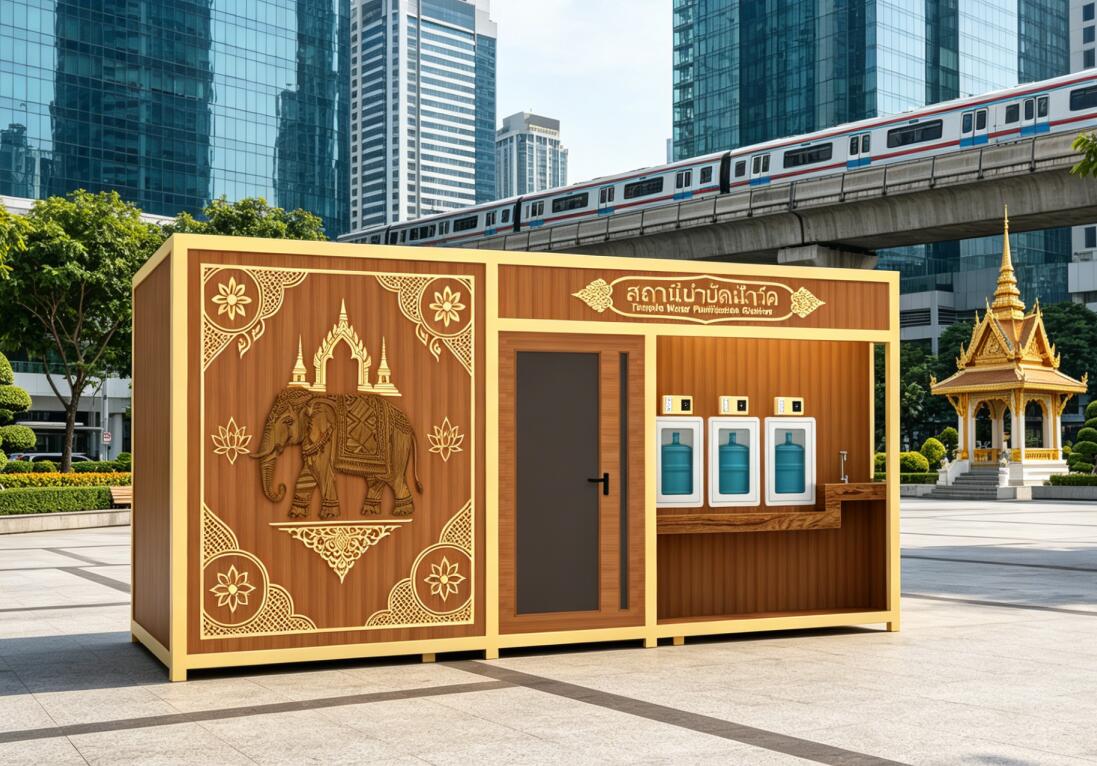
For B2B projects, VLLRO can turn this logic into a modular proposal: test first, design the pretreatment sequence, protect the RO stage, add local and remote monitoring, and document how operators will maintain the station after handover.
References
Related News
- How to Reduce Wastewater in Commercial RO Systems Without Sacrificing Membrane Life
- How to Calculate ROI for a Commercial Water Refilling Station
- The "Brain" Behind the System: How VLLRO's Intelligent IoT Control Platform Revolutionizes Water Management
- The Invisible Shield: Why UV Sterilization is Non-Negotiable for Safe Drinking Water
- Maximizing RO Longevity: The Complete Guide to Water Filtration Consumables and Replacement Cycles
- The Heart of the System: Why VFD Booster Pumps are Essential for Modern RO Water Stations
Leave me a message