English
- English
- Español
- Português
- русский
- Français
- 日本語
- Deutsch
- tiếng Việt
- Italiano
- Nederlands
- ภาษาไทย
- Polski
- 한국어
- Svenska
- magyar
- Malay
- বাংলা ভাষার
- Dansk
- Suomi
- हिन्दी
- Pilipino
- Türkçe
- Gaeilge
- العربية
- Indonesia
- Norsk
- تمل
- český
- ελληνικά
- український
- Javanese
- فارسی
- தமிழ்
- తెలుగు
- नेपाली
- Burmese
- български
- ລາວ
- Latine
- Қазақша
- Euskal
- Azərbaycan
- Slovenský jazyk
- Македонски
- Lietuvos
- Eesti Keel
- Română
- Slovenski
- मराठी
- Srpski језик

Maximizing RO Longevity: The Complete Guide to Water Filtration Consumables and Replacement Cycles
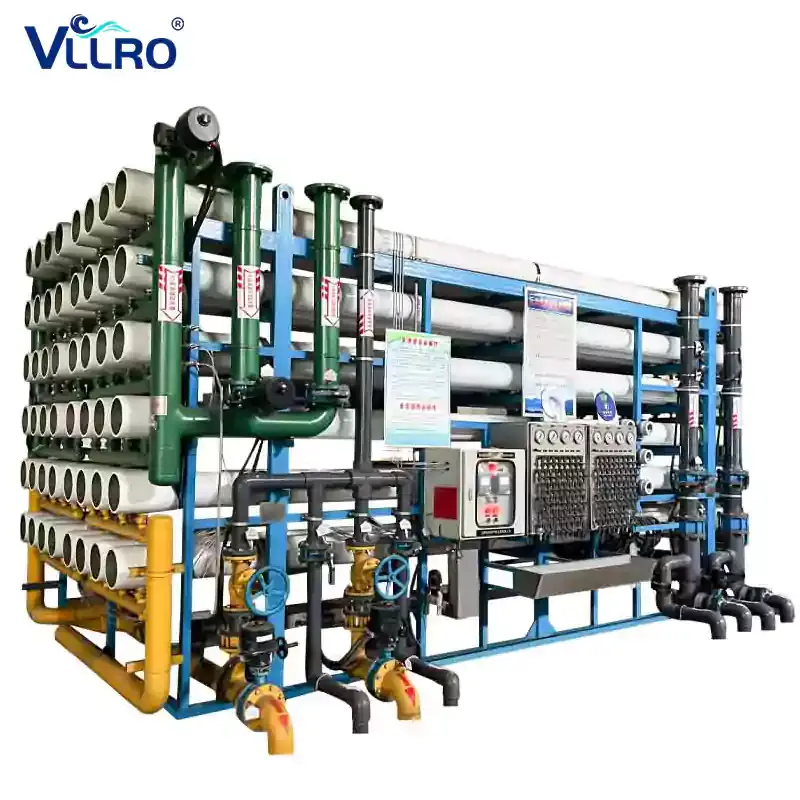
Direct Answer: The longevity of your Reverse Osmosis (RO) system depends entirely on the health of your Water Filtration Consumables. These pre-treatment components — including PP Cotton, Activated Carbon, and Quartz Sand — act as a sacrificial "shield" for the RO membrane. By adhering to a strict Replacement Cycle, operators can prevent 90% of membrane failures and ensure the final water output remains within WHO safety standards.
The "Shield" Logic: Understanding Pre-treatment Consumables
Before water reaches the 0.0001-micron RO stage, it must pass through three lines of defense. Each layer of Water Filtration Consumables removes a different class of contaminant, and each one protects the layer behind it.
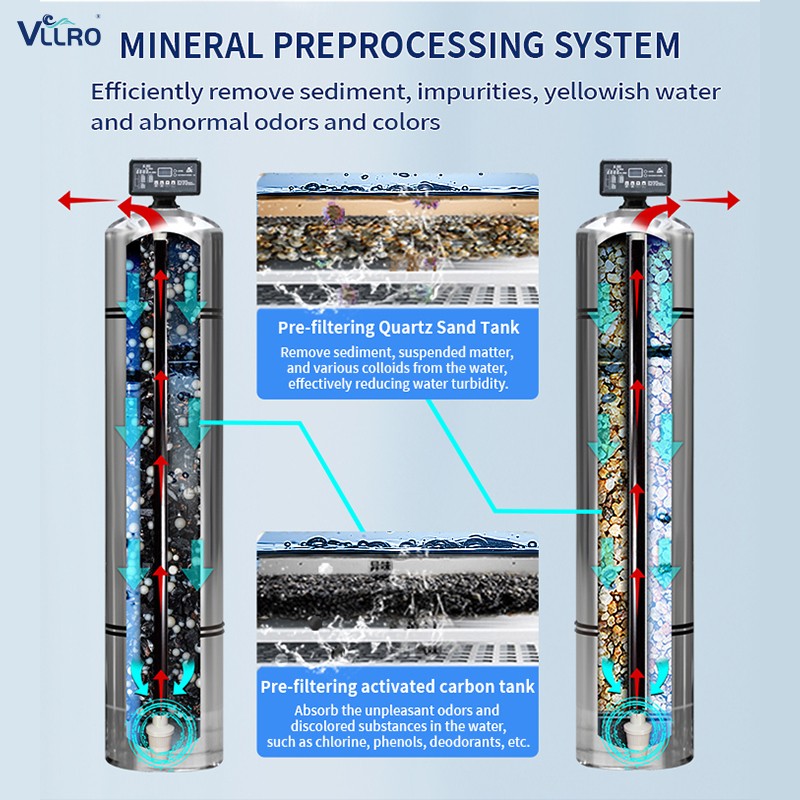
- Multi-Media Sand/Carbon Filters: Removes large sediments, rust, and chlorine that would otherwise oxidize the RO membrane surface.
- PP Cotton Cartridges (5-Micron): Captures remaining fine particles that could scratch the RO membrane surface and open permanent leakage channels.
- Antiscalant Dosing: Chemical consumables that prevent calcium and magnesium from forming hard scales on the concentrate side of the element.
VLLRO Recommended Replacement Schedule
To maintain peak performance and protect your Investment ROI, VLLRO recommends the following replacement cycle table for commercial and industrial RO water stations. This schedule assumes a standard municipal or borehole feed water source with SDI below 5.
| Consumable Type | Primary Function | Typical Replacement |
|---|---|---|
| PP Cotton Filter | Fine Particle Removal | 3 - 6 Months |
| Activated Carbon | Chlorine & Odor Removal | 6 - 12 Months |
| Quartz Sand | Turbidity Reduction | 12 - 24 Months |
| RO Membrane | 0.0001μm Purification | 12 - 24 Months |
| UV Lamp | Microbial Sterilization | 8000 - 9000 Hours |
Note: Replacement cycles may vary based on your local Water Quality Analysis. High turbidity, high residual chlorine, or heavy iron and manganese loading will shorten every interval in the table above.
Water Filtration Consumables in the Field
Water Filtration Consumables are not generic commodities. Density, iodine value, mesh size, and sealing quality determine how long each stage survives in real operating conditions. The photographs below show the actual consumables VLLRO supplies for commercial RO water stations.

PP Cotton Filter Cartridge: gradient-density melt-blown fiber that traps particles deep inside the matrix instead of only on the surface.

Activated Carbon Replacement media: high-iodine-value carbon that adsorbs chlorine and organic precursors before the RO Membrane.

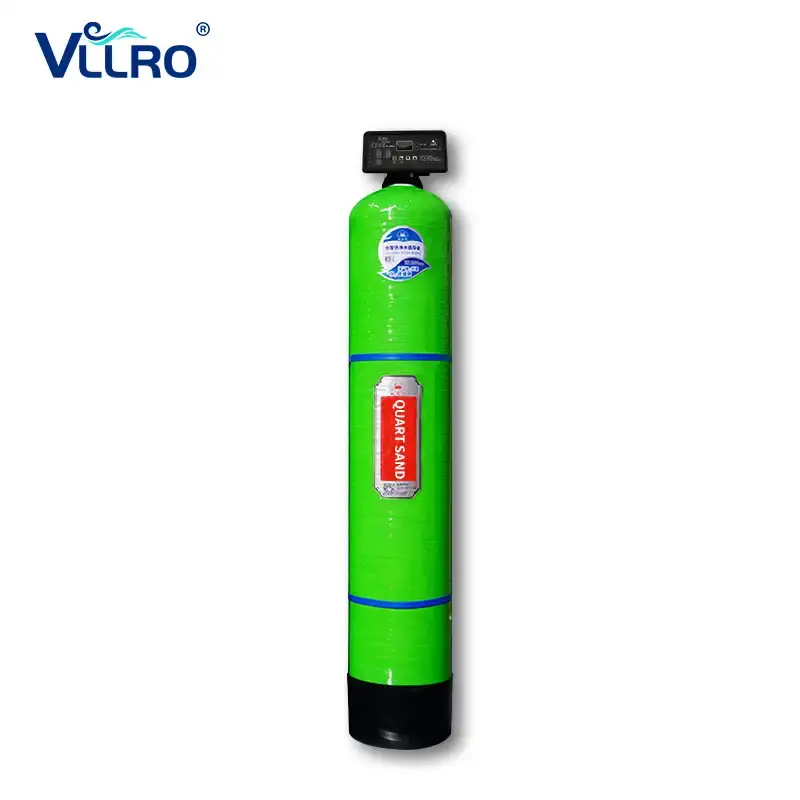
Quartz Sand and multi-media bed: the first coarse barrier that removes turbidity and extends every downstream replacement cycle.

RO Membrane element: the final and most expensive consumable — its service life is a direct function of the pre-treatment replacement cycle.
Why Quality Matters: The VLLRO Standard
Low-quality consumables often have uneven density or low iodine values (in carbon), allowing contaminants to "slip through" the pre-treatment train and attack the RO Membrane. Once chlorine oxidation or hard scaling begins, no cleaning procedure restores the element. VLLRO provides only high-standard Water Filtration Consumables:
- High-Iodine Carbon: Superior adsorption capacity for chlorine and organic chemicals, delivering a stable 6 - 12 month Activated Carbon Replacement interval.
- Gradient-Density PP: Layers of decreasing pore size for maximum dirt-holding capacity, so the PP Filter Cartridge holds more sediment before differential pressure rises.
- Automatic Backwash Systems: Our Smart Chambers automatically flush the pre-filters to extend the life of the Sand Filter Maintenance media inside and cut manual labor.
Sand Filter Maintenance and Stock Planning
Sand Filter Maintenance is the most frequently neglected item on the checklist because the media looks unchanged from the outside. Operators should record inlet and outlet pressure every week: a rising pressure differential means the bed is loading up faster than the replacement cycle assumes. For multi-site operators, keeping a rolling stock of PP Filter Cartridge and Activated Carbon Replacement items removes the downtime risk that a single late shipment can create, and it keeps the RO Membrane Life predictable instead of reactive.
FAQ: Managing Your Consumables
Can I clean and reuse my PP cotton filters?
No. PP cotton is designed to trap particles deep within its fibers. Surface cleaning will not restore its flow or filtration capacity. Always replace with a new VLLRO-certified PP Filter Cartridge, and log the installation date so the next replacement cycle is measured, not guessed.
How does VLLRO simplify consumable management?
Our IoT system tracks every liter of water processed. When a filter nears its capacity, you receive a notification on your smartphone, and you can order replacements directly through our service team to ensure zero downtime and maximum RO Membrane Life.
What is the single biggest cause of premature RO Membrane failure?
Missing the Activated Carbon Replacement window. Once the carbon is exhausted, chlorine passes straight to the membrane and oxidizes the polyamide layer. The element may keep producing water, but salt rejection drops permanently within weeks.
Accio Work Product Encyclopedia Series for VLLRO Water
Related News
- How to Reduce Wastewater in Commercial RO Systems Without Sacrificing Membrane Life
- How to Calculate ROI for a Commercial Water Refilling Station
- How to Design a Borehole Water Pretreatment System for Remote Commercial RO Stations
- The "Brain" Behind the System: How VLLRO's Intelligent IoT Control Platform Revolutionizes Water Management
- The Invisible Shield: Why UV Sterilization is Non-Negotiable for Safe Drinking Water
- The Heart of the System: Why VFD Booster Pumps are Essential for Modern RO Water Stations
Leave me a message