English
- English
- Español
- Português
- русский
- Français
- 日本語
- Deutsch
- tiếng Việt
- Italiano
- Nederlands
- ภาษาไทย
- Polski
- 한국어
- Svenska
- magyar
- Malay
- বাংলা ভাষার
- Dansk
- Suomi
- हिन्दी
- Pilipino
- Türkçe
- Gaeilge
- العربية
- Indonesia
- Norsk
- تمل
- český
- ελληνικά
- український
- Javanese
- فارسی
- தமிழ்
- తెలుగు
- नेपाली
- Burmese
- български
- ລາວ
- Latine
- Қазақша
- Euskal
- Azərbaycan
- Slovenský jazyk
- Македонски
- Lietuvos
- Eesti Keel
- Română
- Slovenski
- मराठी
- Srpski језик

How to Reduce Wastewater in Commercial RO Systems Without Sacrificing Membrane Life
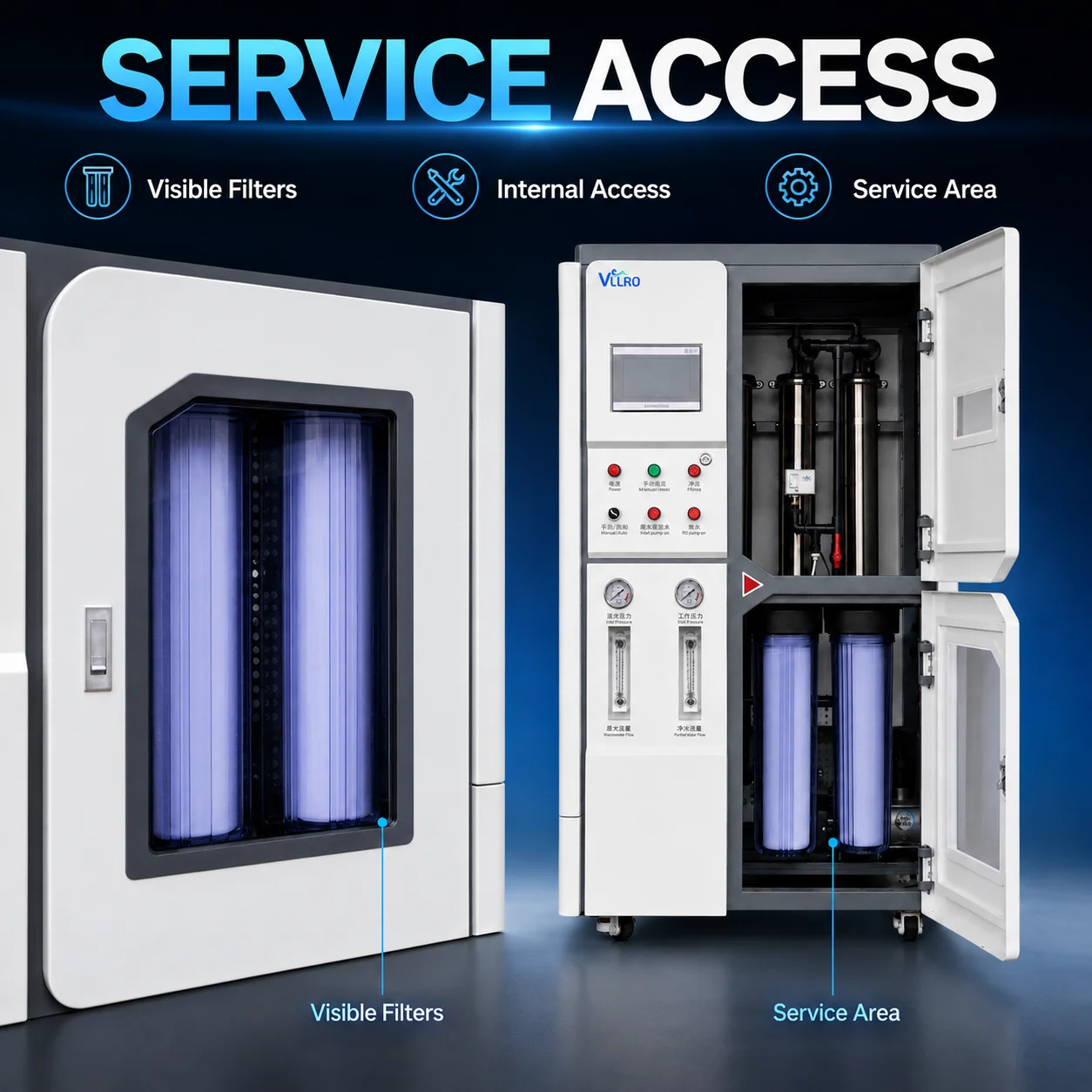
Direct answer: The safest way to reduce wastewater in a commercial RO system is to optimize the complete process—source-water testing, pretreatment, membrane selection, operating recovery, cleaning, and reject-water management—rather than simply closing the reject valve or forcing a higher recovery number. A practical target is the highest recovery that the feed-water chemistry, membrane design, pretreatment, and water-quality requirements can sustain without accelerating scaling, fouling, cleaning frequency, or downtime.
This guide is for B2B buyers, system operators, and engineering teams comparing commercial RO systems for water kiosks, campuses, residential developments, factories, and decentralized water stations.
What does RO recovery actually mean?
RO recovery is the proportion of feed water converted into permeate:
Recovery (%) = Permeate Volume ÷ Feed-Water Volume × 100
The remaining stream is usually called concentrate, reject, or brine. The “wastewater ratio” is not a universal fixed number because it depends on source-water quality, membrane arrangement, recovery design, scaling potential, pretreatment, temperature, pressure, and the required permeate quality.
A supplier should state both the recovery basis and the conditions behind it. A recovery figure without feed-water chemistry, temperature, pressure, flow, and membrane configuration is not sufficient for procurement.
Why can higher recovery damage an RO system?
As water passes through the membrane, rejected salts and other dissolved constituents become more concentrated in the concentrate stream. If the system is pushed beyond its design envelope, the risks can include:
- Mineral scaling on the membrane surface
- Organic or biological fouling
- Higher differential pressure
- More frequent chemical cleaning
- Reduced permeate flow or quality
- Shorter membrane service life
- Unplanned downtime
The correct question is not “How can we make the reject flow as small as possible?” It is “What recovery can the system sustain while maintaining permeate quality and predictable maintenance?”
VLLRO’s commercial RO design approach should therefore start with a water analysis and a process model. The operating target must be validated during commissioning and tracked through normalized flow, conductivity/TDS, pressure, and recovery data.
Which water-quality data should be collected first?
Before changing the wastewater ratio, collect a reliable source-water baseline:
| Data group | Examples | Why it affects recovery |
|---|---|---|
| Dissolved salts | TDS, conductivity, chloride, sulfate | Influences osmotic pressure and concentrate chemistry |
| Scaling indicators | Calcium, magnesium, alkalinity, silica, pH | Determines scaling risk and pretreatment needs |
| Fouling indicators | Turbidity, SDI where applicable, organics, iron, manganese | Influences pretreatment and cleaning frequency |
| Operating conditions | Temperature, pressure, flow, well or utility variability | Changes membrane performance and available capacity |
| Product-water target | Permeate conductivity/TDS and intended use | Sets the quality boundary for optimization |
| Wastewater constraints | Sewer cost, disposal rules, reuse options | Determines the economic value of recovery improvement |
EPA WaterSense at Work recommends facility water management based on assessment, planning, monitoring, operation, maintenance, and benchmarking. Its materials also identify water, energy, cost, and payback calculations as part of evaluating efficiency projects. RO recovery optimization should follow the same measurement-first discipline.
How does pretreatment reduce wastewater indirectly?
Pretreatment does not automatically make a system high-recovery, but it can stabilize the conditions needed for efficient operation. Depending on the source water, the process may include:
- Sediment or multimedia filtration
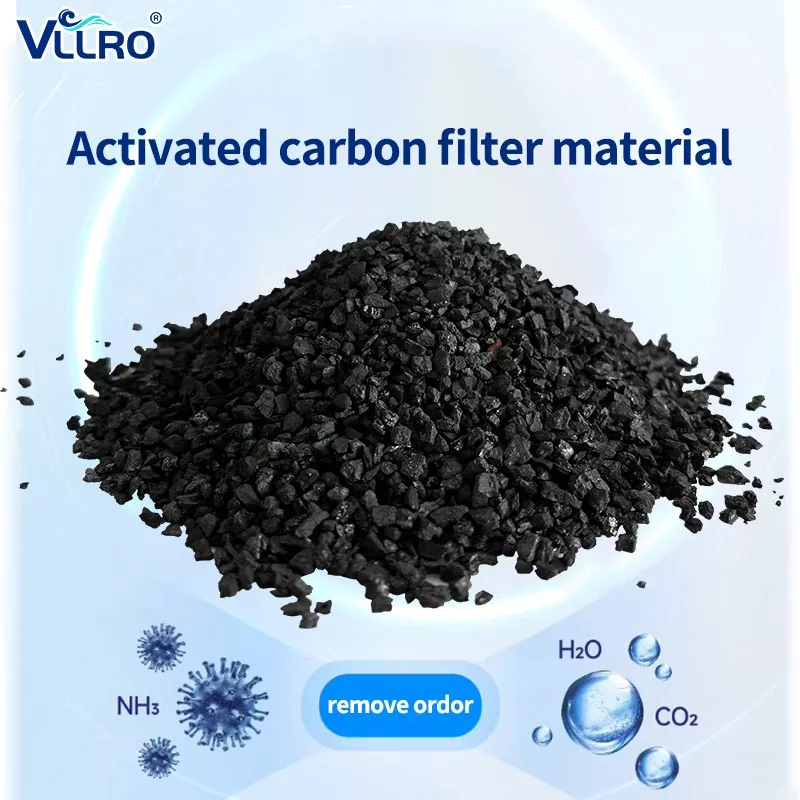
- Activated carbon or dechlorination
- Softening or antiscalant dosing
- Iron and manganese removal
- Fine cartridge filtration
- Microbial control and hygienic design
- pH adjustment where technically justified
The correct sequence depends on the water analysis. For example, a system that receives borehole water with iron, manganese, or hardness may require a different process than a system supplied by treated municipal water. Pretreatment should be selected to protect the membrane and support the intended recovery—not added as a generic checklist.
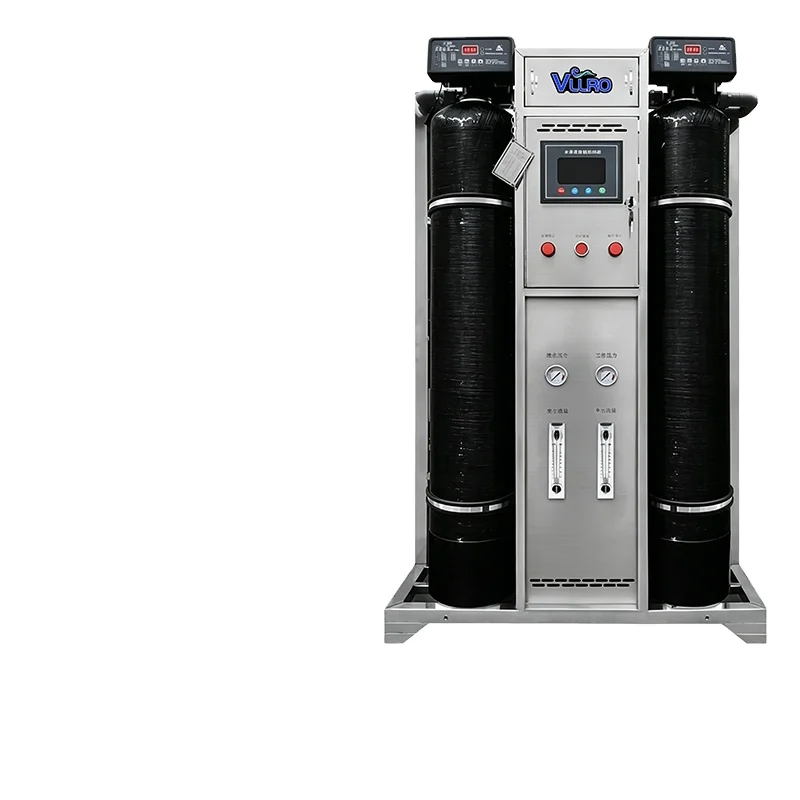
Which operating controls help reduce reject water safely?
Recovery optimization should be implemented through controlled changes and recorded results:
- Establish a baseline for feed flow, permeate flow, reject flow, pressure, temperature, and permeate conductivity.
- Confirm that pretreatment is operating within its design limits.
- Check membrane age, cleaning history, normalized permeate flow, and salt rejection.
- Adjust recovery in small, documented steps rather than making a large valve change.
- Observe pressure, conductivity/TDS, differential pressure, and permeate flow after each change.
- Stop or reverse the adjustment if quality or hydraulic performance drifts outside the approved range.
- Update the operating procedure and alarm thresholds after validation.
A local PLC should protect pumps and membranes even when remote connectivity is unavailable. A cloud or remote-monitoring layer can trend recovery, detect abnormalities, and help compare sites. EPA online water-quality monitoring resources describe online instruments as tools to optimize treatment, improve operations, and detect contamination incidents; those same data principles support RO recovery control.
How can reject water be reused?
Reject water may be suitable for a non-potable use in some projects, but reuse is not automatic. Evaluate:
- Chemical quality and concentration of dissolved constituents
- Intended end use and its quality requirements
- Local plumbing, health, and discharge rules
- Storage and cross-connection controls
- Additional treatment and monitoring
- Seasonal demand and reliability of the reuse application
EPA WaterSense identifies membrane reject water as one possible onsite alternative-water source. It also emphasizes that alternative sources vary in quality and must be matched to the intended use and appropriate treatment. Potential applications may include irrigation, cooling-tower makeup, toilet flushing, cleaning, or other non-potable processes where permitted.
Never connect RO reject to a potable-water line or assume that a reuse application is acceptable without site-specific engineering and regulatory review.
How should wastewater reduction be evaluated financially?
Calculate the value of recovery improvements using actual local costs:
Water and Discharge Savings = Reduced Feed or Discharge Volume × Applicable Unit Cost

Net Annual Benefit = Water and Discharge Savings − Added Energy − Added Maintenance − Added Treatment Cost

Simple Payback = Improvement Investment ÷ Net Annual Benefit
Include the cost of membrane cleaning, replacement, downtime, pretreatment chemicals, pumps, and disposal. A recovery improvement that saves water but doubles cleaning frequency may increase total cost of ownership.
For a commercial water station, also measure the effect on saleable output. If an aggressive recovery setting causes unplanned downtime or inconsistent product quality, the lost revenue and customer trust may exceed the water-charge savings.
What should a B2B buyer request from the supplier?
| Requirement | Evidence to request |
|---|---|
| Recovery claim | Feed-water conditions, membrane model, pressure, temperature, and test basis |
| Water-quality target | Permeate specification and measurement method |
| Pretreatment | Process flow diagram and source-water assumptions |
| Operating envelope | Approved flow, pressure, temperature, recovery, and alarm limits |
| Monitoring | Flow, conductivity/TDS, pressure, tank level, and data-export capability |
| Maintenance | Cleaning triggers, consumables, membrane replacement criteria, and service plan |
| Reuse plan | Quality review, end use, safeguards, and local compliance assumptions |
| Commissioning | Baseline test, acceptance criteria, and operator training |
A reliable proposal should provide a recovery range and explain the trade-offs. A single headline percentage is less useful than a documented operating envelope.
FAQ: Reducing commercial RO wastewater
What is the ideal wastewater ratio for an RO system?
There is no universal ideal ratio. The appropriate recovery depends on water chemistry, membrane configuration, pretreatment, pressure, product-water requirements, and local wastewater constraints.
Can I reduce wastewater by closing the reject valve?
Do not make that change without engineering validation. Restricting reject flow can increase salt concentration, scaling, pressure, fouling, and membrane damage.
Does higher recovery always reduce operating cost?
No. It may reduce feed-water or discharge costs but increase energy, cleaning, pretreatment, membrane replacement, or downtime costs.
What is the role of antiscalant?
Antiscalant may help control specific scaling risks when selected and dosed for the source water and membrane design. It is not a substitute for water analysis or complete pretreatment design.
Can RO reject water be used for irrigation?
It may be possible in some locations, but the water chemistry, crop or landscape tolerance, local rules, storage, and cross-connection controls must be reviewed first.
How can IoT help reduce RO wastewater?
IoT can record feed, permeate, reject, pressure, conductivity/TDS, alarms, and maintenance data. It supports trend-based decisions, but it does not replace process design or operator review.
When should the recovery setting be changed?
Only after establishing a baseline and confirming the adjustment against approved operating limits. Changes should be gradual, recorded, and reversible.
Conclusion
Commercial RO wastewater reduction is a process-engineering and lifecycle-cost decision. Test the source water, select pretreatment for actual risks, define a validated recovery envelope, monitor the system continuously, and evaluate reject-water reuse only for suitable non-potable applications.
For B2B buyers, VLLRO can develop a commercial RO proposal around measurable recovery, membrane protection, local control, remote monitoring, and documented maintenance. The best design is not the one that claims the lowest reject flow. It is the one that delivers stable water quality, predictable service, and the lowest responsible lifecycle cost.
References
Related News
- How to Calculate ROI for a Commercial Water Refilling Station
- How to Design a Borehole Water Pretreatment System for Remote Commercial RO Stations
- The "Brain" Behind the System: How VLLRO's Intelligent IoT Control Platform Revolutionizes Water Management
- The Invisible Shield: Why UV Sterilization is Non-Negotiable for Safe Drinking Water
- Maximizing RO Longevity: The Complete Guide to Water Filtration Consumables and Replacement Cycles
- The Heart of the System: Why VFD Booster Pumps are Essential for Modern RO Water Stations
Leave me a message