English
- English
- Español
- Português
- русский
- Français
- 日本語
- Deutsch
- tiếng Việt
- Italiano
- Nederlands
- ภาษาไทย
- Polski
- 한국어
- Svenska
- magyar
- Malay
- বাংলা ভাষার
- Dansk
- Suomi
- हिन्दी
- Pilipino
- Türkçe
- Gaeilge
- العربية
- Indonesia
- Norsk
- تمل
- český
- ελληνικά
- український
- Javanese
- فارسی
- தமிழ்
- తెలుగు
- नेपाली
- Burmese
- български
- ລາວ
- Latine
- Қазақша
- Euskal
- Azərbaycan
- Slovenský jazyk
- Македонски
- Lietuvos
- Eesti Keel
- Română
- Slovenski
- मराठी
- Srpski језик

How to Remove Iron and Manganese from Groundwater?
How to Remove Iron and Manganese from Groundwater? Sophia‘s Complete Guide
Groundwater is a vital water source for rural homes, small factories, farms, and aquaculture. It’s naturally clean – but often affected by local geology. One of the most common problems I see? Excess iron and manganese. These metals dissolve into groundwater from rock layers, invisible at first, but they cause serious issues for daily life, production, and even health.
I‘m Sophia. Over the years, I’ve helped hundreds of families and business owners fix their iron and manganese removal problems. In this guide, I‘ll show you how to recognize the warning signs and choose the right treatment method – whether you need a simple bucket filter or a full industrial system.
Let’s start with what you can see, smell, and touch.
Iron in Groundwater – 5 Obvious Signs You Can‘t Miss
Iron contamination is easy to spot. Here’s what my clients tell me (and what you should look for):
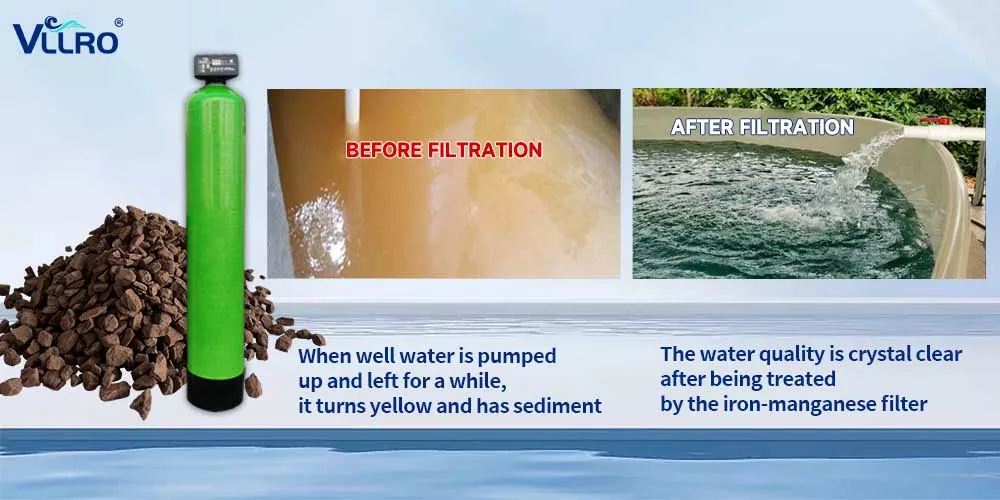
1. Water turns yellow after standing – Freshly pumped water looks clear. But leave it in a glass or bucket for a few hours, and it slowly becomes light yellow. The longer it sits, the darker it gets. This happens because dissolved ferrous iron (Fe²⁺) oxidizes into ferric compounds (rust).
2. Yellow sludge and stains – After a day or two, you‘ll see yellow iron mud at the bottom of the container. Your sink, toilet, or washing machine gets yellow-brown stains that are hard to scrub off.
3. Water turns yellow after boiling – Heat speeds up oxidation. If you boil iron-rich water, it quickly turns yellow or even brown. High iron levels may leave tiny particles floating.
4. Oily film on the surface – Some groundwater develops a thin, rainbow-like film when left standing. That’s not oil – it‘s oxidized iron flocs. Don’t be fooled.
5. Metallic taste and smell – Iron-rich water has a distinct metallic or “blood” taste. It makes tea and coffee taste terrible, and even gives clothes and dishes an unpleasant odor.
Sophia‘s tip: If you notice two or more of these signs, your water almost certainly needs <u>groundwater treatment for iron</u> – don‘t wait until your pipes are clogged.
Manganese in Groundwater – Subtle but Dangerous
Manganese is trickier. It stains less intensely than iron and is often masked by iron’s yellow color. But its effects are serious.
Here‘s what to watch for:
- Masked by iron – When both iron and manganese are present, the yellow iron color hides the black manganese stains. You might not notice manganese until you get a water test.
- Black stains and flaking – If manganese is present without iron, it turns surfaces black (faucets, sinks, toilet tanks). The black residue often flakes off easily – but it comes back.
- Clothes turn dull or gray – Washing laundry in manganese-rich water makes white fabrics look gray or dingy. Colors fade faster, and the damage is permanent.
Most people call me about “black spots” in their dishwasher or toilet tank. That’s usually manganese. A water test will confirm.
Why Iron & Manganese Are a Health and Safety Risk
Some people think, “It’s just rusty water – what‘s the big deal?” The big deal is both health effects and equipment damage.
Health effects
- Iron – Long‑term consumption of high‑iron water can cause nausea, abdominal pain, and stress on the liver.
- Manganese – Chronic exposure damages the nervous system. Symptoms include memory loss, muscle weakness, and tremors. Children are especially vulnerable.
Practical damage
- Water heaters, kettles, and pipes get clogged with rust or black sludge – reducing flow and lifespan.
- Dishes, sinks, and laundry are permanently stained.
- In factories, iron and manganese ruin food processing, textile dyeing, and beverage production – causing product rejects and financial loss.
Chinese drinking water standard limits: iron ≤ 0.3 mg/L, manganese ≤ 0.1 mg/L. If your well exceeds these, treat it immediately.
How to Remove Iron and Manganese – 3 Scenarios, 3 Solutions
The science is simple: convert dissolved iron/manganese into solid particles, then filter them out. But the equipment you need depends on your water volume and contamination level.
I always recommend testing your water first – iron, manganese, pH, and hardness. Then choose from the three scenarios below.
For Home / Small Volume (Iron ≤5 mg/L, Manganese ≤1 mg/L)
Best method: Simple aeration + filtration. No expensive pumps needed.
- Aeration + settling – Pump water into an open tank, stir or spray to mix with air, let it sit for 24 hours. Then use only the clear water from the top. This removes most iron and some manganese.
- Simple manganese sand filter – After aeration, run the water through a bucket or barrel filled with manganese sand (natural filter media). Replace the sand every 1‑3 months.
This works for rural homes or small farms with low daily demand (<1 ton/day). It‘s cheap – but requires manual work.
H3: For Small Communities / Medium Volume (1–100 tons/day, moderate contamination)
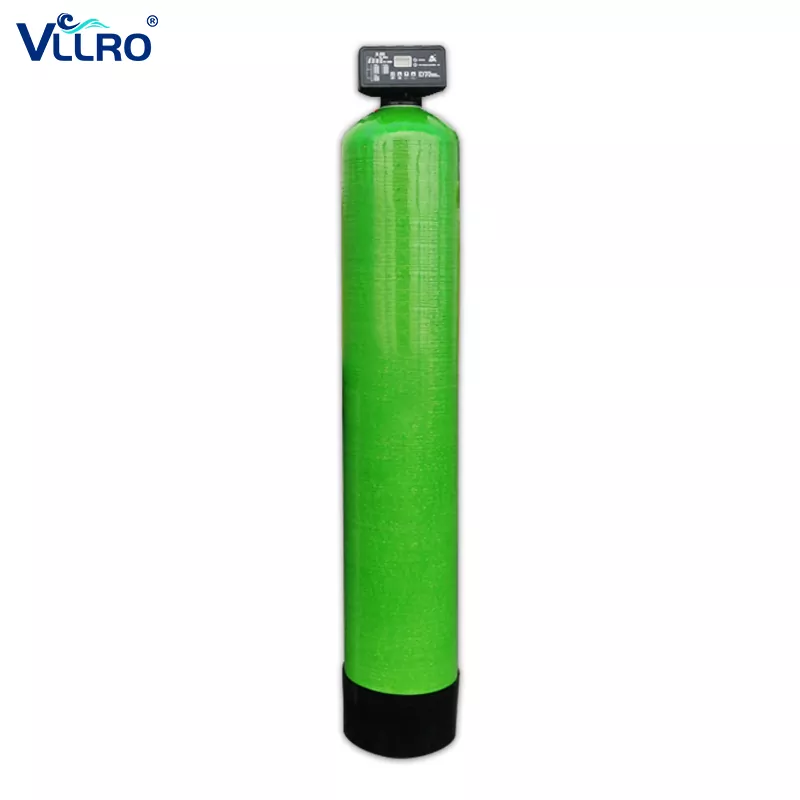
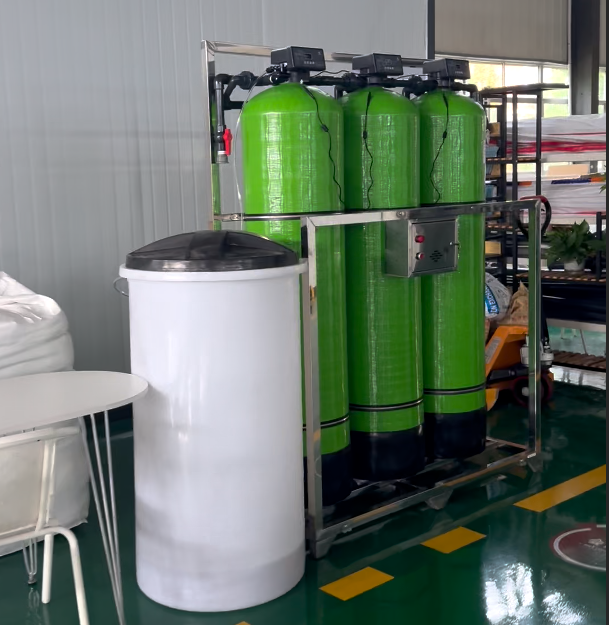
Best method: Automatic iron and manganese removal filter with aeration and catalytic oxidation.
This is what I recommend for most of my clients: schools, apartment buildings, small factories, and hotels.
The system works like this:
1. Aeration – sprays water to add oxygen.
2. Catalytic filtration – water passes through a tank filled with manganese sand that catalyzes the oxidation and traps the solids.
3. Automatic backwash – every 24‑48 hours, the filter cleans itself by reversing flow. No operator needed.
Key advantage: It removes both iron (up to 15 mg/L) and manganese (up to 5 mg/L) simultaneously. Effluent can meet drinking standards.
Sophia‘s choice: For most medium‑scale groundwater treatment for iron and manganese , this is the sweet spot – affordable, automatic, and reliable.*
For Industrial / Heavy Contamination (Iron >15 mg/L, Manganese >5 mg/L)
Best method: Multi‑stage forced oxidation + dual filtration.
When levels are very high or water quality requirements are strict (e.g., beverage factories, pharmaceutical plants), you need a more robust system:
- Chemical oxidation – Inject chlorine, ozone, or potassium permanganate to fully oxidize iron and manganese.
- First stage filter – Removes bulk solids.
- Second stage polisher – Ensures final iron <0.1 mg/L and manganese <0.05 mg/L.
This setup is more expensive but guarantees compliance even for the toughest well water.
Maintenance – Don‘t Skip It
A filter works great – until it doesn’t. Regular maintenance is critical for <u>iron and manganese removal</u> systems.
- Simple home filters – Replace manganese sand every 1‑3 months.
- Automatic filters – Check and refill filter media every 1‑2 years. Clean the aeration nozzle regularly.
- Industrial systems – Follow the manufacturer‘s schedule for chemical dosing and media replacement.
Also, don’t forget to test your water once a year – iron and manganese levels can change over time.
What About Other Contaminants?
Groundwater with iron and manganese often also has high hardness (scale) or turbidity (sand/silt). If that‘s your case, you may need a water softener or a multi‑media filter upstream.
Learn more: [Why Does RO Pretreatment Matter?]
Need a complete solution? Browse our [Commercial RO Systems]with built‑in iron removal.
Related News
- How to Reduce Wastewater in Commercial RO Systems Without Sacrificing Membrane Life
- How to Calculate ROI for a Commercial Water Refilling Station
- How to Design a Borehole Water Pretreatment System for Remote Commercial RO Stations
- The "Brain" Behind the System: How VLLRO's Intelligent IoT Control Platform Revolutionizes Water Management
- The Invisible Shield: Why UV Sterilization is Non-Negotiable for Safe Drinking Water
- Maximizing RO Longevity: The Complete Guide to Water Filtration Consumables and Replacement Cycles
Leave me a message