News

RO Membrane Pressure Drop & Desalination Drop – Troubleshooting Guide?

2026-07-16 0 Leave me a message

How to Troubleshoot RO Membrane Pressure Drop & Desalination Rate Drop? Step by Step Guide


Author: Sophia  

Water Treatment Engineer, VLLRO | 20 years in RO system troubleshooting & maintenance


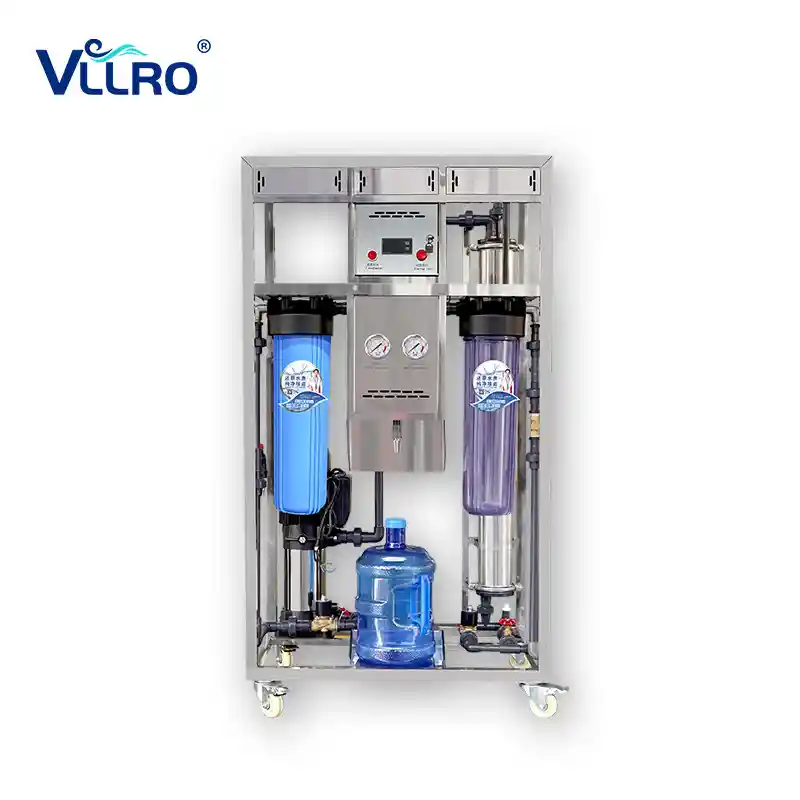
In the operation of 1m³/h integrated RO systems, two common issues often appear together: rising pressure drop across membrane elements and declining desalination rate (increased permeate TDS). Most of the time, they share the same root cause – membrane fouling, scaling, seal damage, or unbalanced operating parameters.


In this guide, I will walk you through a 5‑step standardized troubleshooting process – from basic parameter checks to membrane cleaning and replacement – using real Malaysia government project documentation. This applies to 4‑membrane ULP31‑4040 small RO systems.


Understanding the Two Faults – They Are Connected


 Pressure drop rise – sediment, scale, or biofilm blocks the membrane surface and flow channels. If left unchecked, it causes irreversible membrane compaction.

 Desalination rate drop – fouling, scratches, or seal bypass allow salts to pass into permeate.


In most cases, fouling causes both pressure drop rise and desalination drop. In some cases, only desalination drops (seal leakage or membrane damage) – with no pressure change. Always verify separately.


Step 1 – Basic Parameter Check (5‑Minute Quick Scan)


No disassembly needed. Record operating data to quickly identify the fault category. Design baselines: pressure 0.6‑0.8 MPa, recovery 50%, feed TDS ≤1200 ppm, desalination ≥99.5% .


Check Item

What to Look For

Action

Pressure differential

Compare with newmembrane baseline – rise ≥15% = excessive

Proceed to cleaning

Desalination rate

Drop ≥5% from new = failure

Check seals and membrane

System recovery

>60% = concentrate overconcentration

Adjust valve to 50%

Feed temperature

<20°C = scaling risk; >40°C = permanent aging

Insulate or cool

Supply voltage

Fluctuation >15% = unstable HP pump output

Install voltage stabilizer


Quick Fixes

 Recovery too high: Open concentrate flush valve – restore 1:1 ratio.

 Low temperature: Insulate pipes, maintain 25°C.

 Voltage fluctuation: Add stabilizer to keep PLD2‑11 pump output at 0.6‑0.8 MPa.


Step 2 – Inspect Pretreatment (Most Common Cause)


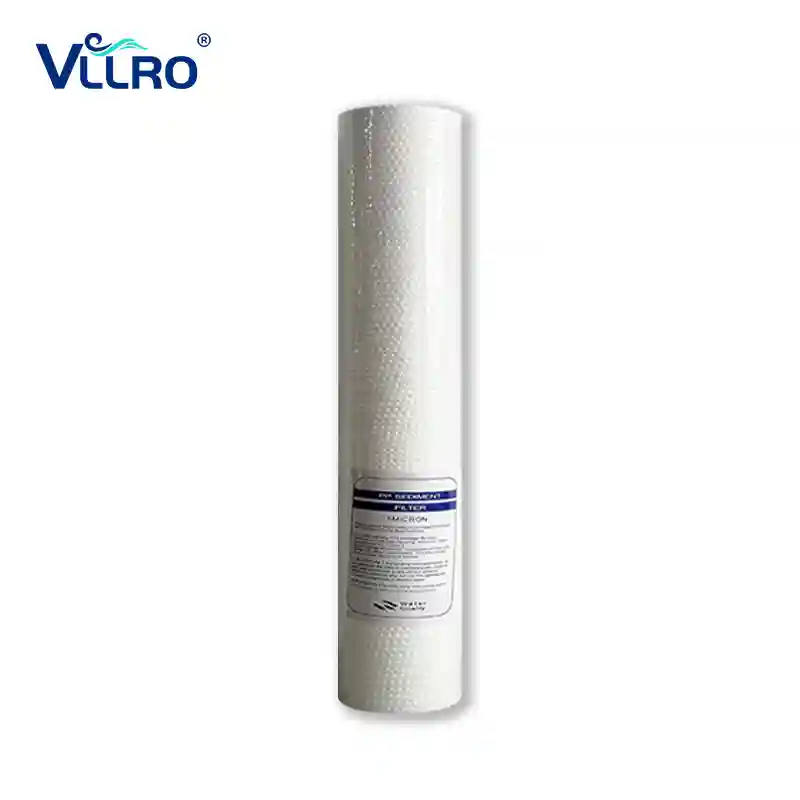
Dual 20‑inch 5μm PP cartridges protect the membrane. Pretreatment failure is the 1 cause of pressure drop rise.


Check 1 – Clogged PP Cartridges

 Symptom: Cartridges turn yellow/black, surface covered with sediment – flow drops, pressure loss increases.

 Fix: Replace with new 5μm PP cartridges. Standard cycle: 3‑6 months; shorten to 2 months for high‑turbidity water.


Check 2 – Missing Chlorine Removal or Softening

 Chlorine oxidizes the membrane separation layer – desalination drop is permanent.

 Hardness causes calcium/magnesium scale – blocks channels and raises pressure drop.

 Fix: Add activated carbon filter for chlorine; add water softener for hardness.


Check 3 – Excessive Feed Suspended Solids

Feed TDS near 1200 ppm or high turbidity exceeds pretreatment capacity.

 Fix: Add multi‑media filter to reduce suspended solids.


Step 3 – Inspect Piping, Valves & Membrane Seals (Desalination Drop Only – Normal Pressure)


If pressure drop is normal but desalination has dropped sharply – the problem is not fouling – it is seal bypass.


1. Concentrate Flush Valve (Solenoid) Fault

 Stuck or leaking valve allows concentrate to mix with permeate – TDS rises.

 Fix: Disassemble and clean valve core; replace if damaged (DN20 220V solenoid valve).


2. O‑Ring & Brine Seal Aging

 Cracks or deformation allow feed water to bypass the membrane – desalination drops sharply with no pressure change.

 Fix: Replace all seals with new ones; apply food‑grade silicone grease during installation.


3. Pipe Joint Leaks

 DN20 PVC connections leaking – pressure unstable, flow distribution affected.

 Fix: Tighten all clamps and joints.


Step 4 – Membrane Fouling Inspection (Both Pressure Drop & Desalination Drop)


Remove membrane elements from housings. Identify fouling type by visual inspection – choose corresponding cleaning method:


Fouling Type

Appearance

Cleaning Method

Inorganic scale (CaCO₃, sulfate)

White hard crystals on surface

Citric acid circulation wash

Biofilm / Organic

Slippery yellowbrown slime

Alkaline chemical wash

Sediment / Rust

Yellowbrown solids at feed end

Lowpressure highflow forward flush


 Post‑Cleaning Validation

Run for 2 hours, then re‑measure:

 Pressure drop returned to near‑new level (rise <10%)

 Desalination recovery to ≥99%, permeate TDS ≤10 ppm


If both conditions are met – problem solved. If not – membrane is irreversibly damaged – proceed to replacement.


Step 5 – Irreversible Membrane Damage – Replace


If all above checks and cleanings fail, replace the RO membrane if any one condition applies:


1. Pressure drop rise ≥15% – cleaning does not reduce it.

2. Desalination drop ≥5% from new standard.

3. Permeate flow drop ≥10% at same pressure.

4. Physical damage – scratches, tears, internal leakage.

5. Service life reached 2‑3 years with persistent decay.


Standard replacement: Vontron ULP31‑4040 – replace all 4 membranes as a set to ensure balanced flow and stable desalination.


Daily Prevention – Avoid Recurrence


1. Replace PP cartridges on schedule – protect membrane from particles.

2. Lock system recovery at 50% – never arbitrarily close the concentrate valve.

3. Enable automatic flush – daily timed rinse reduces fouling accumulation.

4. Keep low/high pressure switches active – protect against dry‑running and overpressure.

5. Maintain feed temperature 5‑40°C – avoid accelerated aging.

6. Keep daily log – record pressure, TDS, desalination – detect anomalies early.


Summary


Troubleshooting RO membrane pressure drop and desalination rate drop follows a clear 5‑step logic:


1. Parameter check → 2. Pretreatment inspection → 3. Seal & valve inspection → 4. Membrane cleaning → 5. Membrane replacement


Most light fouling issues are resolved by replacing PP cartridges and chemical cleaning. Seal bypass only needs seal replacement. If pressure and desalination remain abnormal after treatment – the membrane has reached end‑of‑life – replace with ULP31‑4040 membranes. Regular maintenance and controlled operating parameters significantly reduce fault frequency and extend membrane life.


Ready to Troubleshoot Your RO System?


Explore [RO Membrane Replacement Options]

Request a [Free System Diagnostic]– send us your operating logs for professional assessment.

Contact Sophia‘s team – mention “Pressure Drop Guide” for priority support.

Related News
Leave me a message
X
We use cookies to offer you a better browsing experience, analyze site traffic and personalize content. By using this site, you agree to our use of cookies. Privacy Policy
RejectAccept