English
- English
- Español
- Português
- русский
- Français
- 日本語
- Deutsch
- tiếng Việt
- Italiano
- Nederlands
- ภาษาไทย
- Polski
- 한국어
- Svenska
- magyar
- Malay
- বাংলা ভাষার
- Dansk
- Suomi
- हिन्दी
- Pilipino
- Türkçe
- Gaeilge
- العربية
- Indonesia
- Norsk
- تمل
- český
- ελληνικά
- український
- Javanese
- فارسی
- தமிழ்
- తెలుగు
- नेपाली
- Burmese
- български
- ລາວ
- Latine
- Қазақша
- Euskal
- Azərbaycan
- Slovenský jazyk
- Македонски
- Lietuvos
- Eesti Keel
- Română
- Slovenski
- मराठी
- Srpski језик

What Makes a Carbon Steel Pressure Tank a Reliable Choice for Industrial Water Systems?
Article Summary
A Carbon Steel Pressure Tank is often chosen because it delivers a practical balance of strength, cost control, pressure stability, and customization. For buyers managing water treatment systems, fire protection lines, irrigation networks, booster pump assemblies, or industrial process water, the real challenge is rarely finding a tank in name alone. The harder part is choosing a vessel that can handle working pressure, resist corrosion, fit available space, match the medium being stored, and remain economical over years of service.
In this article, we explain how a Carbon Steel Pressure Tank solves common buyer concerns, what technical points deserve close attention before purchase, and why working with an experienced manufacturer such as Jianyun Zhishui (Qingdao) Industrial Technology Co., Ltd. can reduce project risk from design to delivery.
Table of Contents
- Outline
- Why do buyers still choose carbon steel pressure tanks?
- Which customer pain points should a good tank solve?
- How does a carbon steel pressure tank support different applications?
- What technical factors should be checked before ordering?
- How can buyers compare carbon steel with other tank materials?
- What helps extend service life and reduce maintenance pressure?
- Why does manufacturer capability matter so much?
- Conclusion
- FAQ
Outline
- Key reasons carbon steel remains a practical pressure vessel material
- Main purchasing concerns from industrial and commercial buyers
- Typical use cases in water systems, fire systems, and agricultural projects
- Important specification points before confirming production
- A side-by-side comparison of material options
- Useful ways to improve durability and lifecycle value
- The role of manufacturing quality, inspection, and support
Why Do Buyers Still Choose Carbon Steel Pressure Tanks?

Many customers begin with the same question: if several tank materials are available, why is the Carbon Steel Pressure Tank still so widely used? The answer is simple. In many industrial and water-related systems, carbon steel offers the kind of performance buyers actually need without pushing the project budget too far.
A well-manufactured tank made from quality carbon steel plate provides dependable structural strength, stable pressure resistance, and broad design flexibility. It can be produced in a wide range of capacities, diameters, and wall thicknesses. It also adapts well to added internal linings, external coatings, support legs, nozzles, flanges, and instrumentation ports. That flexibility matters when each project has different media conditions, site dimensions, operating temperatures, and pressure targets.
Buyers also appreciate that carbon steel is familiar, serviceable, and cost-effective. In real purchasing decisions, this matters more than abstract material preference. A tank is not selected to look advanced on paper. It is selected to work safely, fit into the project, and stay within budget.
- Strong load-bearing capacity for pressurized systems
- Wide size and structure customization options
- Lower initial cost than many premium materials
- Suitable for water supply, process water, fire systems, and irrigation support
- Easy to integrate with pumps, valves, and pipeline assemblies
Which Customer Pain Points Should a Good Tank Solve?
Customers are rarely worried about the tank alone. They are worried about the failure costs around the tank. A weak supplier can cause delivery delays. Inadequate welding can create leakage risk. Poor coating can shorten service life. Limited customization can force expensive site rework. A vague specification can even create pressure mismatch after installation.
A dependable Carbon Steel Pressure Tank should reduce those risks instead of adding to them. It should help customers solve practical pain points such as unstable pipeline pressure, insufficient buffer capacity, fast corrosion in humid or outdoor environments, and difficulty matching existing system layouts.
This is especially important for project owners who must balance technical reliability with procurement efficiency. A buyer does not want to spend weeks coordinating extra design changes because the first supplier could not provide the right nozzle orientation, anti-corrosion treatment, or test documents.
| Common Buyer Concern | Why It Matters | What a Better Tank Solution Should Offer |
|---|---|---|
| Corrosion risk | Shortens tank life and increases replacement cost | Proper surface treatment, internal lining options, and durable external coating |
| Pressure instability | Affects pump performance and system reliability | Accurate vessel sizing and pressure-rated structural design |
| Non-standard installation space | Can delay projects and increase field modification costs | Custom dimensions, connection layout, and support structure |
| Unclear quality control | Creates hidden safety and compliance concerns | Material traceability, welding control, pressure testing, and inspection records |
| Budget pressure | Impacts total project feasibility | Balanced design that controls cost without sacrificing performance |
How Does a Carbon Steel Pressure Tank Support Different Applications?
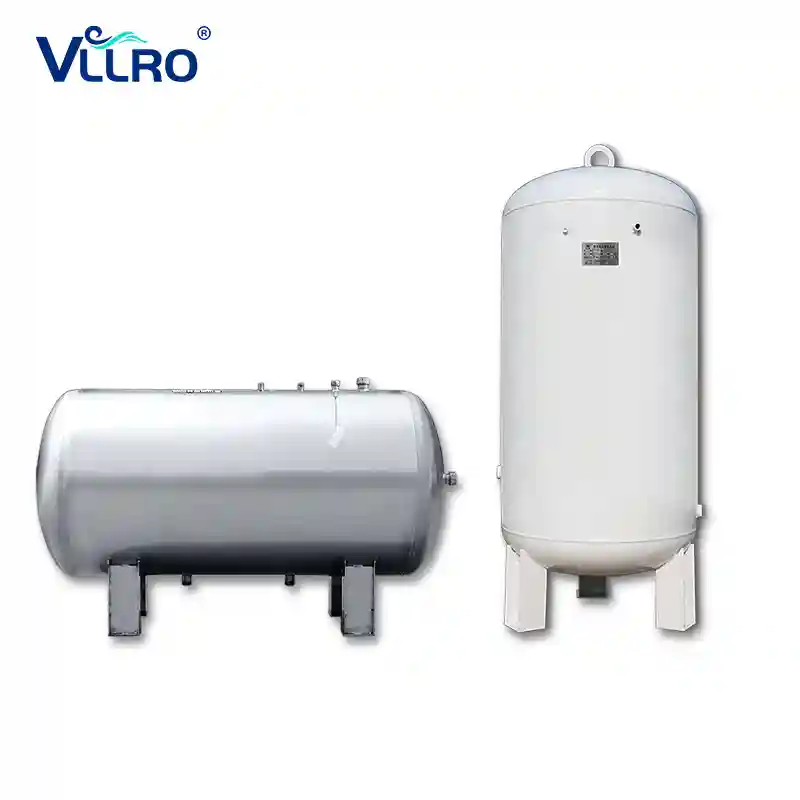
One reason the Carbon Steel Pressure Tank stays relevant is that it performs well across many operating environments. In water treatment projects, it can help stabilize line pressure, support pump operation, and provide intermediate storage under controlled conditions. In fire protection systems, it supports pressure maintenance and readiness. In agriculture, it offers an economical way to improve water delivery consistency. In industrial utilities, it acts as a practical buffer vessel for process and service water.
Not every project requires the same configuration. Some tanks need stronger anti-corrosion treatment because the operating environment is humid or chemically aggressive. Others need larger volume because the pump cycling frequency must be reduced. Some require strict nozzle placement because the tank must align with an existing skid or piping network. That is why customization is not a luxury feature. It is part of making the system work properly.
- Booster pump systems that need pressure buffering
- Fire protection systems that require stable standby pressure
- Agricultural irrigation projects needing economical pressurized storage support
- Industrial water systems with varying flow demand
- Commercial building services where installation space is limited
What Technical Factors Should Be Checked Before Ordering?
Before placing an order, buyers should define more than tank volume. A successful project depends on matching the vessel to the real operating conditions. Pressure rating, medium, temperature, corrosion exposure, installation orientation, inlet and outlet size, coating system, and testing requirements should all be considered early.
This is also where many buyers save or lose time. If the supplier only quotes a generic product, the customer may later discover that the tank needs design revision. A stronger manufacturer will ask the right questions at the beginning and help confirm the most suitable structure.
| Specification Point | Why It Should Be Confirmed Early |
|---|---|
| Working pressure and design pressure | Determines wall thickness, structural safety, and compliance approach |
| Tank capacity | Affects buffering performance, pump cycling, and system stability |
| Stored medium | Influences lining, anti-corrosion treatment, and seal selection |
| Installation location | Outdoor and humid sites may require stronger protective treatment |
| Nozzle layout | Helps avoid difficult field modifications after delivery |
| Inspection and testing needs | Supports quality assurance and smoother project acceptance |
For many buyers, the smartest move is to share project drawings, operating data, and any special site limits as early as possible. That reduces miscommunication and leads to a more accurate tank solution.
How Can Buyers Compare Carbon Steel with Other Tank Materials?
Material selection should be based on application needs rather than trend preference. Stainless steel may be suitable where a cleaner finish or stronger corrosion resistance is required. Composite or specialty materials may work in narrower conditions. But for many pressure applications involving water systems, a Carbon Steel Pressure Tank remains one of the most practical choices because it combines mechanical strength with manageable cost.
| Material | Main Advantage | Main Limitation | Typical Decision Logic |
|---|---|---|---|
| Carbon Steel | Strong, versatile, and budget-friendly | Needs proper anti-corrosion protection | Chosen when value, strength, and customization are priorities |
| Stainless Steel | Better natural corrosion resistance | Higher upfront cost | Used when medium purity or corrosion conditions justify premium spend |
| FRP or Composite | Lightweight and corrosion resistant in some uses | May have pressure or structural limitations depending on design | Considered when weight reduction is critical and conditions are suitable |
The best choice is not always the most expensive material. It is the one that performs reliably in the actual operating environment without creating avoidable cost elsewhere in the project.
What Helps Extend Service Life and Reduce Maintenance Pressure?

Customers often focus on purchase price first, but service life determines real value. A lower-priced tank becomes expensive if it corrodes early, leaks unexpectedly, or forces frequent shutdowns. That is why durability planning matters from the first stage of selection.
To make a Carbon Steel Pressure Tank last longer, buyers should look at protective coatings, internal treatment options, manufacturing quality, and operating discipline together. These elements work as a system. A good coating cannot fully compensate for weak welding. A strong vessel design cannot prevent damage if the operating pressure is routinely exceeded.
- Choose a coating system suited to the installation environment
- Consider internal lining or anti-corrosion treatment for demanding media
- Confirm pressure testing before shipment
- Inspect supports, nozzles, and weld zones during routine maintenance
- Prevent long-term overpressure and poor drainage around outdoor tanks
- Work with suppliers that provide clear technical documentation
When these details are handled correctly, the tank becomes a stable part of the system rather than a recurring maintenance problem.
Why Does Manufacturer Capability Matter So Much?
Even the right material can become the wrong purchase if the manufacturer lacks process control. Pressure tanks are not ordinary metal containers. They depend on disciplined fabrication, controlled welding, suitable forming processes, accurate dimensioning, and inspection before dispatch.
This is where the manufacturer’s practical experience becomes visible. Buyers should evaluate whether the supplier can understand application needs, support customization, keep quality records, and communicate clearly during production. A capable partner does more than sell a tank. It helps reduce uncertainty across the entire procurement cycle.
Jianyun Zhishui (Qingdao) Industrial Technology Co., Ltd. understands that customers are not simply buying a vessel. They are buying confidence that the tank will fit the project, work under pressure, and arrive with the details properly handled. That includes thoughtful design support, controlled fabrication, reasonable anti-corrosion solutions, and practical communication throughout the order process.
For global buyers, that support becomes even more important. Remote procurement always carries a communication risk. A manufacturer with strong project understanding can close that gap by confirming specifications early and delivering a solution that is easier to install and use.
Conclusion
A Carbon Steel Pressure Tank remains a dependable choice because it answers the questions buyers care about most. Is it strong enough? Can it be customized? Will it support the system reliably? Can it stay within budget? When designed and manufactured well, the answer to all four is yes.
For water treatment, fire protection, irrigation, and industrial utility projects, the right tank should help stabilize performance, reduce avoidable maintenance, and fit real-world installation demands. That is why careful specification and the right manufacturing partner matter just as much as material selection.
If you are planning a new project or replacing an existing vessel, working with an experienced supplier can make the process far more efficient. Jianyun Zhishui (Qingdao) Industrial Technology Co., Ltd. is ready to support your pressure tank requirements with practical solutions tailored to your system. If you want a tank that matches your operating conditions, project budget, and installation needs, contact us today for a customized solution and a fast, professional response.
FAQ
1. What is a Carbon Steel Pressure Tank commonly used for?
It is commonly used in water supply systems, pump booster systems, fire protection networks, irrigation projects, and industrial water applications where stable pressure and buffering capacity are needed.
2. Is a Carbon Steel Pressure Tank suitable for outdoor installation?
Yes, but outdoor service usually requires appropriate external coating and, in some cases, additional anti-corrosion measures depending on humidity, salt exposure, or other environmental conditions.
3. Can the tank be customized for specific projects?
Yes. Capacity, dimensions, nozzle arrangement, support type, coating system, and pressure design can often be customized to fit different project requirements.
4. How do buyers choose the right tank size?
The correct size depends on system flow, pump cycling requirements, working pressure, and buffer demand. Sharing project parameters with the manufacturer helps ensure a more accurate recommendation.
5. How can service life be improved?
Service life can be improved through proper coating selection, suitable internal protection, quality fabrication, pressure testing, and regular inspection during operation.
Related News
- How Does the 304 Stainless Steel Water Supply Purifier Machine Deliver Zero‑Waste Safe Drinking Water for Rural Homes?
- How Does a Containerized RO Plant Deliver Turnkey Pure Water Anywhere in the World?
- How Does a Reverse Osmosis Water Treatment System Deliver Consistent Pure Water for Commercial and Industrial Applications?
- How Does an Industrial Reverse Osmosis Water Purifier Deliver Reliable High‑Purity Water for Manufacturing and Processing?
- Why Is a Softening Water Filter the Smart Choice for Scale‑Free Water and Extended Appliance Life?
- How Does a Reverse Osmosis Water-Making Machine Deliver Safe, Pure Drinking Water for Communities and Businesses?
Leave me a message