English
- English
- Español
- Português
- русский
- Français
- 日本語
- Deutsch
- tiếng Việt
- Italiano
- Nederlands
- ภาษาไทย
- Polski
- 한국어
- Svenska
- magyar
- Malay
- বাংলা ভাষার
- Dansk
- Suomi
- हिन्दी
- Pilipino
- Türkçe
- Gaeilge
- العربية
- Indonesia
- Norsk
- تمل
- český
- ελληνικά
- український
- Javanese
- فارسی
- தமிழ்
- తెలుగు
- नेपाली
- Burmese
- български
- ລາວ
- Latine
- Қазақша
- Euskal
- Azərbaycan
- Slovenský jazyk
- Македонски
- Lietuvos
- Eesti Keel
- Română
- Slovenski
- मराठी
- Srpski језик

Why Is a Containerized RO Plant the Ultimate Mobile Solution for Global Clean Water Challenges?
As global water scarcity increases, industries, remote communities, and emergency relief operations require rapid, reliable, and highly efficient water purification systems. Traditional decentralized or fixed infrastructure can take months to construct, incurring massive civil engineering and logistics costs. Today we post to explore how the Containerized RO Plant by VLLRO—a leading industrial water treatment manufacturer based in Qingdao, China—presents a game-changing, plug-and-play solution. We dive deep into its engineering design, advanced multi-stage filtration technology, real-world high-altitude applications, and customization options that make it an indispensable asset for modern global water management.
1. Understanding the Containerized RO Plant Concept
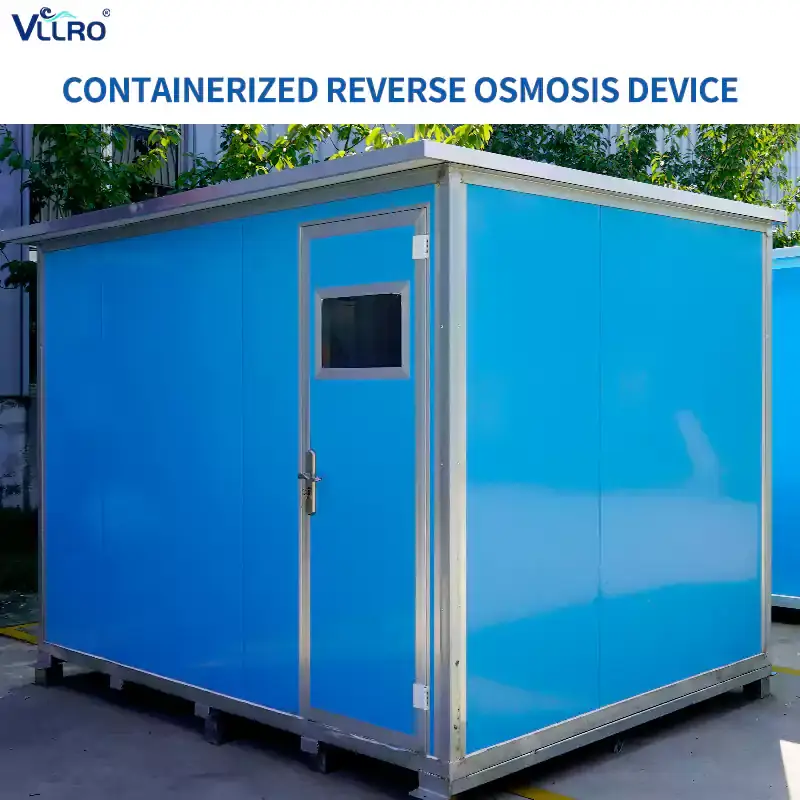
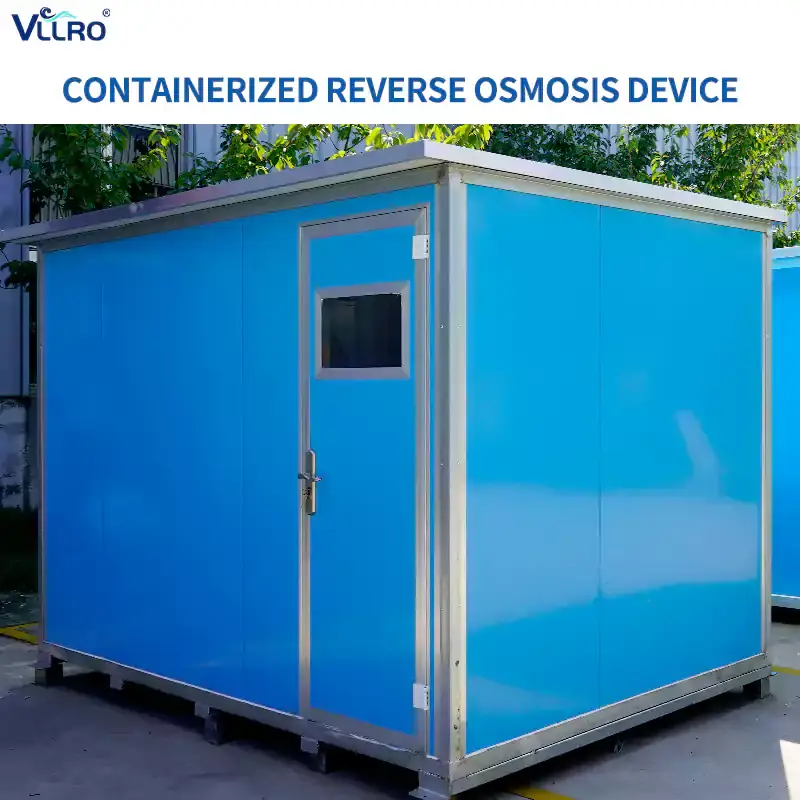
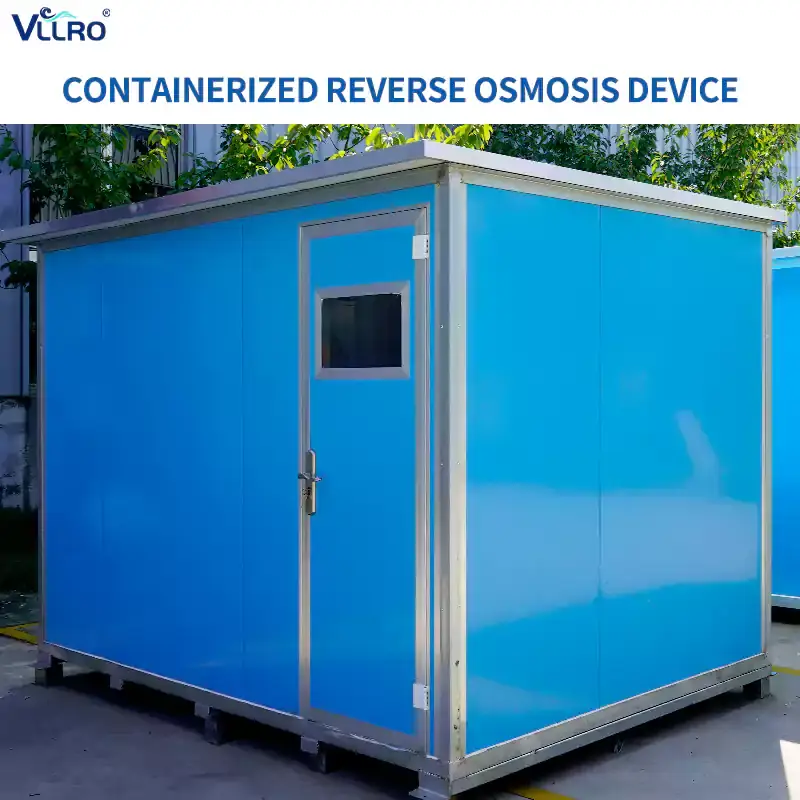
A Containerized RO Plant represents the evolution of large-scale water treatment from permanent civil structures into modular, portable industrial units. Produced completely within the specialized manufacturing facilities of VLLRO, these systems consolidate all necessary pretreatment filters, high-pressure pumps, reverse osmosis membrane arrays, chemical dosing units, and electrical control panels inside a standard ISO maritime container.
By utilizing structural containers (such as standard 20-foot or 40-foot shipping units), the entire facility becomes easily transportable via standard logistics networks, including sea freight, rail, and heavy-duty trucks. Once the unit arrives on site, the installation process is straightforward. Operators only need to connect the main water inlet, the main power supply lines, and the product water discharge pipes to begin producing direct drinking water.
2. Core Technical Specifications & Engineering Design
Every industrial water system built by VLLRO integrates highly standardized manufacturing processes with precision components. The internal multi-stage filtration process is engineered to handle variable raw water qualities, reducing turbidity, removing heavy metals, and filtering out micro-contaminants down to a molecular level.
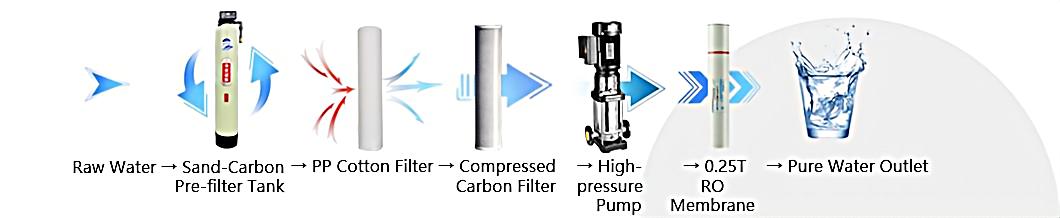
The 5-Stage Filtration and Processing Flow
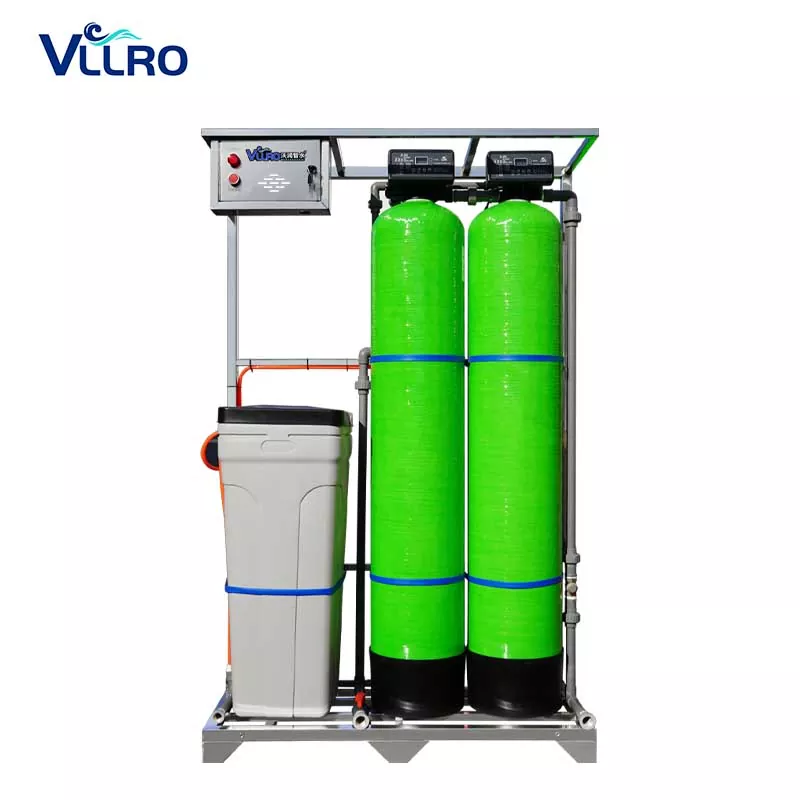
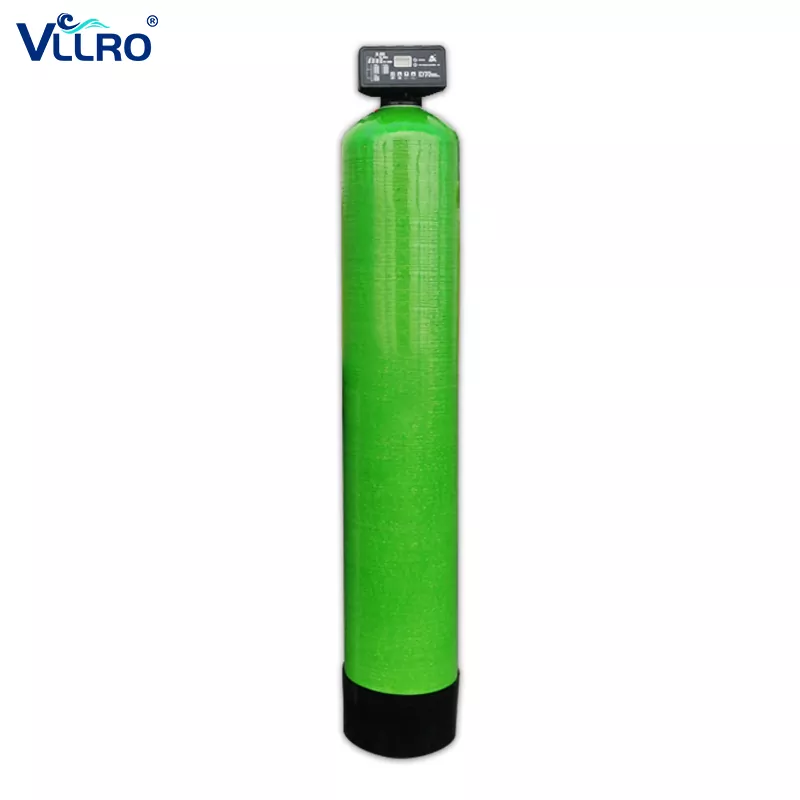
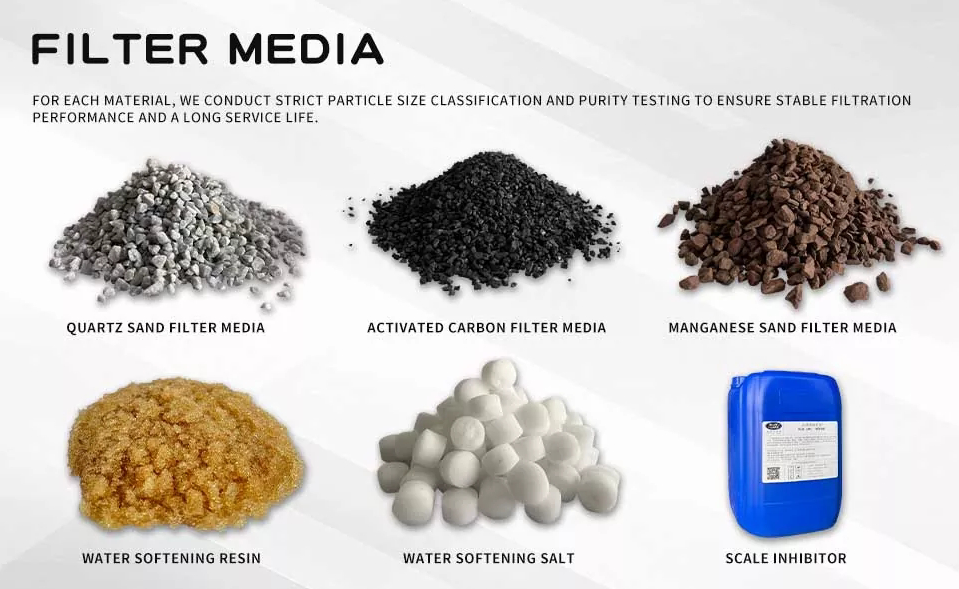
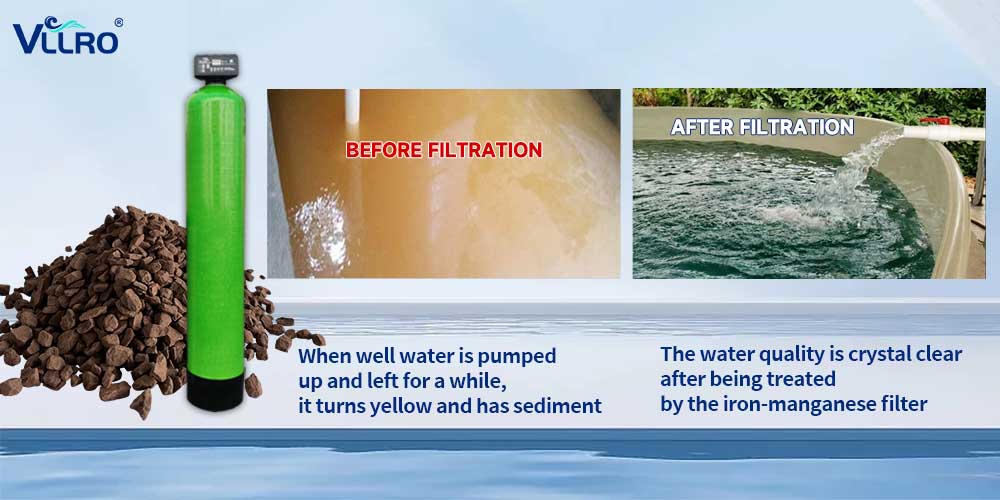
• Stage 1: Quartz Sand Media Filtration – Extracted raw water passes through layers of graded silica sand to trap large particulate matter, suspended solids, silt, and rust.
• Stage 2: Activated Carbon Adsorption – Removes organic compounds, chlorine, unpleasant odors, and chemical byproducts to protect downstream components.
• Stage 3: Scale Inhibitor Dosing System – Injects specialized scale inhibitors to prevent hardness minerals (calcium and magnesium) from precipitating on the membrane surfaces.
• Stage 4: PP Micron Sediment Filtration – Acts as a final mechanical barrier, catching any stray fine particulates down to 1–5 microns before water enters the high-pressure stage.
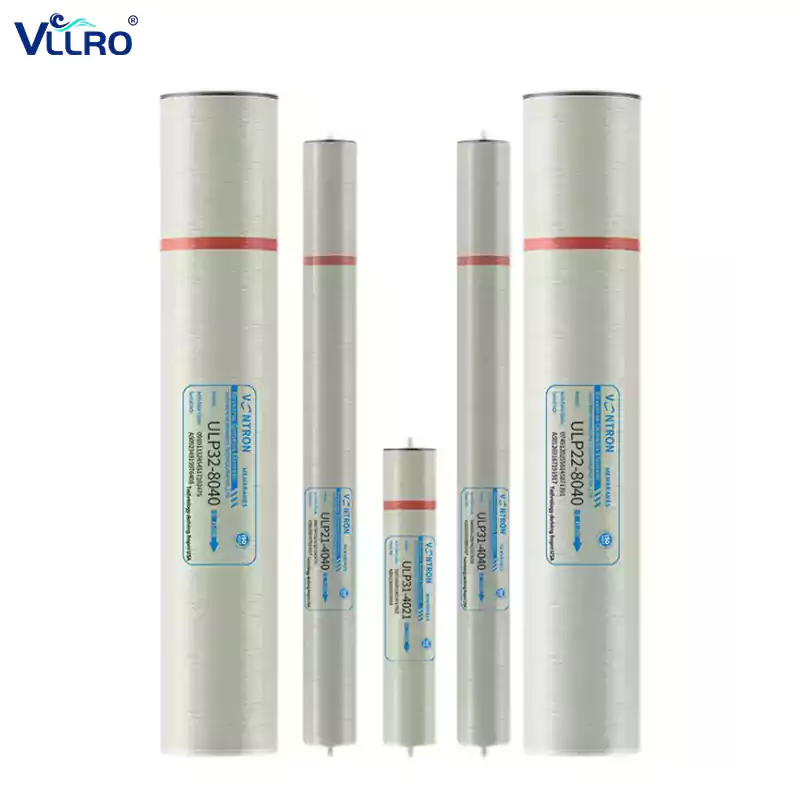
• Stage 5: High-Rejection RO Membranes – Water is pressurized through polyamide thin-film composite membranes with a filtration accuracy of 0.0001 microns, effectively stripping away dissolved salts, bacteria, and viruses.
| Feature/Specification | Standard Configuration Parameters |
| Enclosure Structure | Heavy-duty ISO Standard Container (20ft or 40ft options) |
| Membrane Filtration Accuracy | 0.0001 microns |
| Wastewater Recovery Optimization | Highly efficient 1:1 wastewater-to-pure-water ratio |
| Core Framework Material | Robot-welded structural stainless steel / Carbon steel |
| Pre-Testing Standard | 72-hour extreme pressure simulation factory testing |
| Control Interfaces | Integrated CNC automated control panel / Optional PLC |
3. Key Operational Advantages of Mobile Systems
Investing in a decentralized, self-contained water treatment unit offers distinct logistical and financial benefits over building conventional stationary concrete water plants.
• Minimized Civil Construction & Lower Costs: Traditional installations require extensive blueprint designs, site excavation, building permits, and prolonged concrete pouring. A containerized system sits directly on a level concrete pad or firm ground, minimizing upfront civil engineering costs.
• Extensive Pre-Testing and Reliability: In the VLLRO factory, each integrated system undergoes a rigorous 72-hour extreme pressure simulation test. This comprehensive quality check verifies structural seals, pipeline integrity, and automatic valves under peak loads before the unit is packed into a wooden protective crate for shipping.
• Enhanced Resource Efficiency: Traditional reverse osmosis equipment often operates with a wasteful 1:3 recovery ratio, losing three liters of source water for every single liter of pure water generated. VLLRO systems incorporate optimized hydraulics to balance flows, achieving an efficient 1:1 recovery ratio that significantly lowers daily operational expenditures.
• High-Precision Digital Manufacturing: The chassis, structural pipe networks, and protective enclosures are fabricated using computerized laser cutting machinery and automated welding robots. This eliminates manual variation, ensuring millimeter-level precision across all high-pressure fittings.
4. Diverse Industrial and Humanitarian Applications
Due to its robust construction and autonomous operation, the Containerized RO Plant serves multiple sectors around the globe, providing reliable clean water in diverse environments.
Industrial Projects and Infrastructure Development
Large-scale infrastructure groups, such as international rail and highway construction firms, use these systems to provide process water and potable drinking water directly to staff housing units and mixing stations in remote areas.
Remote Municipalities and Developing Communities
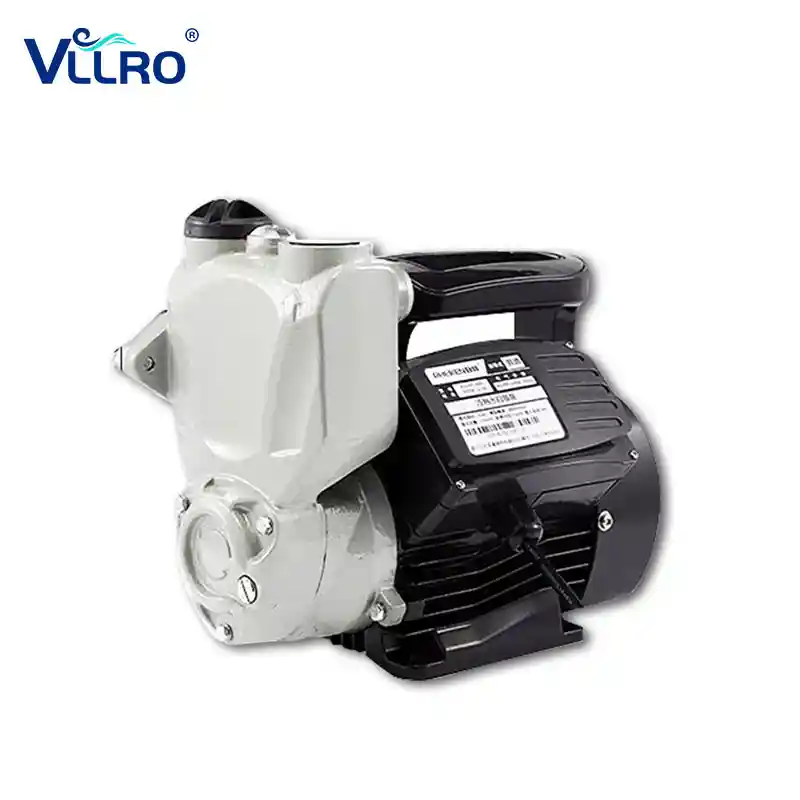
In areas with limited municipal infrastructure, these plants function as standalone community water stations. Rugged internal booster pumps and durable primary filtration elements ensure that schools, medical centers, and agricultural operations receive reliable water from local wells, rivers, or brackish sources.
Commercial Tourism and Coastal Resorts
In regions such as Southeast Asia and the Middle East, hotels and resorts utilize containerized setups to treat groundwater or desalinate sea water. This provides guests with reliable drinking water without requiring bulky, visually unappealing construction projects on pristine coastal land.
5. Real-World Case Study: Extreme High-Altitude Operation
Operating industrial machinery in hostile environments requires tailored engineering that accounts for climate extremes. A primary example of this adaptability is found on the Qinghai-Xizang Plateau, often referred to as the roof of the world.
Environmental Challenges Faced
• Sub-zero winter temperatures reaching minus tens of degrees Celsius.
• Low atmospheric pressure affecting pump performance.
• Limited local maintenance infrastructure and technical personnel.
The Tailored VLLRO Solution
To maintain consistent water supply for schools, regional medical clinics, and communities across the plateau, VLLRO customized the plant's enclosure with advanced thermal insulation blankets and automated space heating systems.
The structural components were treated to prevent freezing, and the electrical logic was programmed to run low-flow circulation cycles during idle periods. This prevents ice formation within the core reverse osmosis membranes and ensures continuous operation despite the sub-zero external climate.
6. Tailored Engineering: Deep OEM/ODM Customization
Because raw water composition changes dramatically between a coastal borehole and an inland river, standardized solutions are not always sufficient. VLLRO leverages an experienced team of water purification and mechanical engineers to provide thorough non-standard customization for global clients.
• Raw Water Property Profiling: Engineers evaluate specific water parameters—including Total Dissolved Solids (TDS), total hardness, iron levels, and turbidity—to determine the optimal balance of filtration media.
• Component & Footprint Customization: Equipment sizes, physical footprint dimensions, exterior paint colors, brand logos, and specific controller preferences can be adjusted to match existing on-site systems.
• Flexible Component Selection: Based on operational budgets and performance targets, clients can select specific premium brands for high-pressure pumps, internal piping materials, and specialized RO membranes.
7. Frequently Asked Questions (FAQ)
How long does it take to deploy a Containerized RO Plant on site?
Because the internal components are fully assembled, wired, and tested inside the factory before shipment, physical on-site installation usually takes only a few hours. Once positioned on a flat surface, local technicians simply connect the external inlet lines, power cables, and product water lines to begin production.
What routine maintenance is required for these mobile systems?
Routine maintenance includes replacing primary PP cotton filter elements, checking chemical levels in the scale inhibitor dosing tank, and executing routine backwashes on the quartz sand and activated carbon media. The integrated laser-marked serial numbers make tracking and ordering replacement parts simple.
How does the system perform in freezing climates?
For cold environments, systems can be fitted with insulated internal wall panels, space heaters, and automated low-temperature recirculation loops. These additions keep the internal temperature safe, protecting the filtration media and high-pressure valves from freezing.
Conclusion & Cooperation Invitation
Overcoming complex water quality issues requires durable equipment and proven manufacturing experience. Whether you manage a remote mining installation, a regional infrastructure development, or a commercial facility facing strict regulatory requirements, the Containerized RO Plant offers long-term reliability and low operational overhead.
Our team of experienced application engineers is ready to analyze your raw water data, provide clear technical schematics, and manufacture a system tailored to your exact specifications. Don't let water quality constraints slow down your operations. Contact us today to discuss your project needs and receive a comprehensive, obligation-free technical quotation.
Related News
- How to Reduce Wastewater in Commercial RO Systems Without Sacrificing Membrane Life
- How to Calculate ROI for a Commercial Water Refilling Station
- How to Design a Borehole Water Pretreatment System for Remote Commercial RO Stations
- The "Brain" Behind the System: How VLLRO's Intelligent IoT Control Platform Revolutionizes Water Management
- The Invisible Shield: Why UV Sterilization is Non-Negotiable for Safe Drinking Water
- Maximizing RO Longevity: The Complete Guide to Water Filtration Consumables and Replacement Cycles
Leave me a message