English
- English
- Español
- Português
- русский
- Français
- 日本語
- Deutsch
- tiếng Việt
- Italiano
- Nederlands
- ภาษาไทย
- Polski
- 한국어
- Svenska
- magyar
- Malay
- বাংলা ভাষার
- Dansk
- Suomi
- हिन्दी
- Pilipino
- Türkçe
- Gaeilge
- العربية
- Indonesia
- Norsk
- تمل
- český
- ελληνικά
- український
- Javanese
- فارسی
- தமிழ்
- తెలుగు
- नेपाली
- Burmese
- български
- ລາວ
- Latine
- Қазақша
- Euskal
- Azərbaycan
- Slovenský jazyk
- Македонски
- Lietuvos
- Eesti Keel
- Română
- Slovenski
- मराठी
- Srpski језик

How Can Reverse Osmosis Equipment Turn Unreliable Source Water Into Process-Ready Water?
Abstract
If your operation depends on clean, consistent water, you already know the pain: scale that clogs heat exchangers, unpredictable TDS that ruins product batches, membranes that foul too fast, and “mystery downtime” that always shows up at the worst time. Reverse Osmosis Equipment is often the fastest path to repeatable water quality—but only when it’s selected, configured, and supported the right way.
This article breaks down what buyers actually need: how to match an RO system to your raw water and daily demand, how pretreatment prevents expensive membrane failures, how to spot “looks cheap now, costs more later” designs, and what acceptance criteria to request before you sign off. Along the way, we’ll share practical field lessons similar to what engineering teams at Jianyun Zhishui (Qingdao) Industrial Technology Co., Ltd. see in real projects—especially where water conditions change by season.
Table of Contents
- What Problems Should Reverse Osmosis Equipment Actually Solve?
- What Is Reverse Osmosis Equipment, and What Isn’t It?
- How Do You Size an RO System Without Guesswork?
- Which Pretreatment Steps Prevent Membrane Drama?
- Where Do Operating Costs Hide, and How Do You Control Them?
- What Makes an RO System Reliable for Daily Production?
- What Should You Ask for During Commissioning and Acceptance?
- Which Issues Are Most Common, and What Fixes Work First?
- FAQ
- Conclusion
Outline
- Define the business problems: quality, uptime, compliance, and cost predictability.
- Explain the RO process in plain language: pressure, membrane separation, and concentrate.
- Show sizing inputs buyers must provide (and what to do if you don’t have them).
- Map pretreatment choices to raw water risks (turbidity, hardness, organics, iron, microbes).
- Reveal operating cost levers: recovery, pump efficiency, cleaning frequency, automation.
- Provide a commissioning checklist and acceptance criteria you can put in a purchase order.
- Include a troubleshooting table and a practical FAQ.
What Problems Should Reverse Osmosis Equipment Actually Solve?
Most buyers don’t wake up dreaming about membranes. They want outcomes: predictable water quality, fewer shutdowns, and confidence that the system won’t become a maintenance black hole. Done right, Reverse Osmosis Equipment should address pain points like these:
- Unstable incoming water: municipal, groundwater, river, or mixed sources that swing by season or shift.
- Scaling and deposits: hardness, silica, or carbonate scale causing blocked pipes and declining heat transfer.
- Quality-sensitive processes: boilers, food and beverage, electronics rinsing, pharmaceuticals, laboratories, and more.
- Wastewater pressure: concentrate disposal costs or restrictions that make recovery rate a real business issue.
- Hidden downtime: frequent cartridge changes, unpredictable cleaning cycles, and emergency membrane replacements.
A buyer mindset that saves money
Don’t start with “How many liters per hour?” Start with “What happens if water quality drifts for one day?” That answer determines how robust your Reverse Osmosis Equipment should be—especially automation, alarms, and pretreatment.
What Is Reverse Osmosis Equipment, and What Isn’t It?

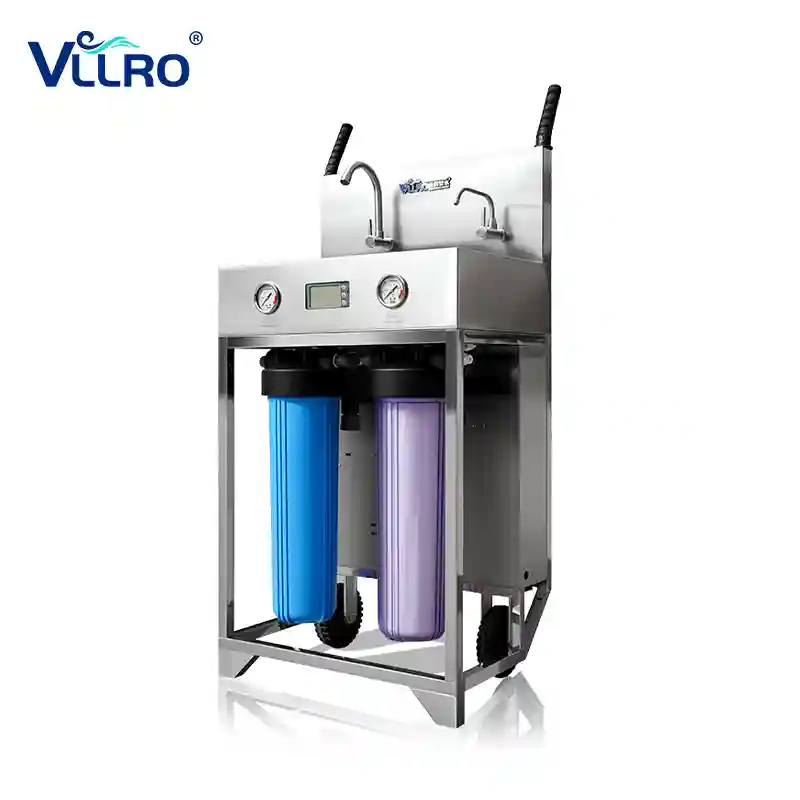
Reverse Osmosis Equipment uses pressure to push water through a semi-permeable membrane. Water molecules pass; most dissolved salts, many organics, and microorganisms are rejected and exit as concentrate (sometimes called “brine” or “reject”). That’s the core idea.
What RO is great at: reducing TDS, improving taste/odor when paired with carbon, lowering many contaminants, and delivering repeatable quality.
What RO is not: a magic box that ignores turbidity, iron, bio-growth, or hardness. Those problems must be handled upfront.
Why so many RO projects fail quietly
The system “works” on day one, then the flow drops month by month. The root cause is usually simple: raw water risks weren’t measured, or pretreatment was undersized. When engineering teams talk about “membrane protection,” they mean everything around the membrane: filters, chemical dosing, flushing strategy, and controls.
How Do You Size an RO System Without Guesswork?
A good supplier will ask for inputs you may not have on hand. That’s normal. The trick is knowing what matters most, and what you can estimate safely until lab results arrive.
The minimum inputs that matter
- Daily required permeate volume: average and peak demand (production shifts matter).
- Target water quality: TDS target, conductivity, hardness, and any process-specific limits.
- Raw water analysis: TDS, hardness, alkalinity, silica, iron/manganese, turbidity/SDI, organics, chlorine.
- Constraints: installation footprint, power limits, and concentrate discharge options.
A simple sizing worksheet buyers can use
| Question | Why it matters | Rule-of-thumb starting point |
|---|---|---|
| How many m³/day of product water? | Defines membrane area, pump sizing, and storage needs | Use peak-day demand, not monthly average |
| How stable is your raw water source? | Determines pretreatment strength and automation | Seasonal swings = add monitoring and buffer tanks |
| Can you dispose concentrate easily? | Recovery rate affects discharge cost and water use | If disposal is expensive, optimize recovery carefully |
| What uptime do you need? | Drives redundancy (N+1), spare parts, and alarms | Critical lines often justify redundancy |
If you don’t have a water report yet
Start by collecting at least two samples from different times (morning vs afternoon, dry season vs rainy season). Even basic numbers (TDS, hardness, turbidity) can prevent a mismatched Reverse Osmosis Equipment design.
Which Pretreatment Steps Prevent Membrane Drama?
Pretreatment is where reliability is either built—or quietly sabotaged. Below is a practical decision matrix to connect raw water risks to pretreatment choices.
| Raw water challenge | What it does to RO | Typical pretreatment approach | Buyer tip |
|---|---|---|---|
| High turbidity / suspended solids | Fast fouling, pressure rise, flow loss | Multimedia filtration + cartridge filters; sometimes UF | Ask for SDI target and how it’s verified |
| Chlorine or oxidants | Can damage many membrane types | Activated carbon or chemical dechlorination | Confirm residual oxidant limits at RO inlet |
| Hardness / scaling risk | Scale forms, permeate drops, cleaning frequency rises | Softener and/or antiscalant dosing | Demand a recovery plan that avoids chronic scaling |
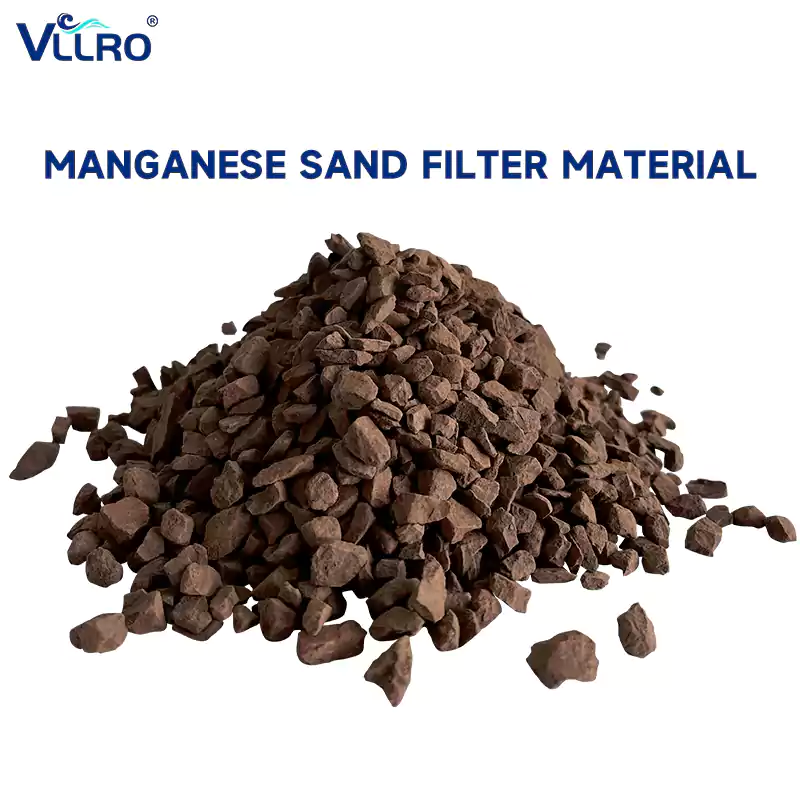
| Iron / manganese | Fouling, staining, bio-growth acceleration | Oxidation + media filtration or dedicated removal media | Ask for iron spec at RO inlet, not just raw water |
| High organics / odor | Biofouling and taste issues downstream | Carbon, UF, optimized disinfection strategy | Ask how biofouling is controlled long-term |
A common “five-step” flow that many projects start with
- Media filtration to reduce particles
- Carbon (or equivalent) to manage organics and oxidants
- Chemical dosing (antiscalant / pH adjustment) when required
- Cartridge filters as the final physical barrier
- RO membrane separation, plus flushing/cleaning provisions
The right pretreatment is not “more parts.” It’s the smallest, simplest set of steps that keeps the membrane stable. That’s why experienced teams (including Jianyun Zhishui (Qingdao) Industrial Technology Co., Ltd.) typically design from the water report backward.
Where Do Operating Costs Hide, and How Do You Control Them?
The purchase price is loud; operating cost is quiet. Over a system’s life, the usual cost drivers are: energy, consumables, cleaning chemicals, labor, membrane replacement, and downtime. The best Reverse Osmosis Equipment designs make those costs predictable.
Cost levers you can influence at the design stage
- Recovery rate: Higher recovery saves feed water but can increase scaling risk if pushed too far.
- Pump efficiency and controls: Proper pump selection, stable pressure control, and smart ramping reduce waste.
- Automation and alarms: Catching a pressure rise early can prevent a “cleaning turned into replacement” situation.
- Clean-in-place readiness: If cleaning is hard, it gets delayed—and the membranes pay the price.
- Spare parts strategy: A small spares kit can prevent days of waiting when a sensor fails.
A quick question that exposes long-term cost
Ask the supplier: “What is your expected cleaning frequency under my raw water conditions, and what triggers cleaning?” The quality of that answer tells you how deeply they understand your application.
What Makes an RO System Reliable for Daily Production?
Reliability is less about “premium components” and more about consistency: stable pretreatment performance, correct membrane loading, dependable sensors, and a control logic that protects the system from operator mistakes.
Reliability features worth prioritizing
- Clear instrumentation: pressure gauges/ transmitters before and after key stages, plus conductivity monitoring.
- Automatic flushing: reduces fouling during starts/stops and after production cycles.
- Smart interlocks: prevents running the system when pretreatment conditions are unsafe (for example, poor inlet quality).
- Service-friendly layout: cartridge changes and sampling points should be easy, not a 45-minute puzzle.
- Scalable design: room to expand if your water demand grows—without replacing the whole system.
If you’re comparing vendors, don’t just compare flow and rejection numbers. Compare how they protect the membrane when real life happens: a dirty tank, a sudden turbidity spike, a power interruption, or an operator who “just pressed start.”
What Should You Ask for During Commissioning and Acceptance?
Commissioning is where you convert promises into proof. A strong acceptance plan should include: baseline performance, water quality verification, safety checks, and training.
A practical acceptance checklist
- Performance baseline: permeate flow, recovery, operating pressure, and conductivity at stable conditions.
- Water quality targets: measured values vs. your required limits (not “typical”).
- Alarm verification: confirm that high pressure, low flow, and conductivity deviations actually trigger warnings/stops.
- Flushing and cleaning readiness: validate flush cycles and confirm CIP connections and procedures.
- Documentation package: drawings, parts list, consumables schedule, and a startup/shutdown SOP.
- Operator training: how to interpret trends (pressure rise, conductivity drift) before problems become failures.
The most overlooked request
Ask for a simple “trend sheet” template: daily readings to log (pressures, flows, conductivity). This single habit extends membrane life dramatically and keeps Reverse Osmosis Equipment predictable.
Which Issues Are Most Common, and What Fixes Work First?

When something goes wrong, teams often jump to “replace the membrane.” That’s usually the most expensive guess. Start with symptoms, confirm with measurements, and fix upstream causes first.
| Symptom | Likely cause | First actions that usually help |
|---|---|---|
| Permeate flow drops steadily | Fouling from solids or bio-growth; pretreatment drift | Check differential pressures; verify SDI/turbidity; confirm flush cycle; schedule cleaning if trend persists |
| Operating pressure rises quickly | Scaling or clogged cartridges | Replace cartridges; review antiscalant/softener performance; confirm recovery isn’t too high |
| Permeate conductivity increases | Membrane damage, O-ring leak, oxidant exposure | Check chlorine residual at RO inlet; inspect seals; isolate stages if possible; review recent cleaning/chemical events |
| Frequent cleaning needed | Undersized pretreatment or unstable raw water | Upgrade pretreatment step(s); add monitoring; adjust operation schedule and flushing strategy |
| Unexpected downtime from small components | Weak instrumentation plan or no spares | Standardize sensors; keep spares for critical items; simplify service access |
If your Reverse Osmosis Equipment is “always dirty,” it’s rarely the membrane’s fault. It’s usually a mismatch between raw water reality and pretreatment assumptions.
FAQ
Does Reverse Osmosis Equipment remove bacteria and viruses?
RO membranes reject many microorganisms, but system-level safety depends on pretreatment, proper sealing, and hygienic operation. For applications with strict microbiological requirements, projects often combine RO with additional barriers or disinfection strategies.
How often should membranes be replaced?
There isn’t a single “right” number. Membrane life depends on feed water, pretreatment performance, and how consistently the system is operated. With stable conditions and disciplined monitoring, membranes can last much longer than in systems that run without trend tracking.
Is higher recovery always better?
Higher recovery reduces feed water consumption but increases concentration on the membrane surface, which can accelerate scaling. The best designs balance recovery with long-term stability—especially if concentrate disposal or water costs are major concerns.
What information should I send to a supplier to get an accurate proposal?
Share your daily demand (average and peak), target water quality, raw water test report (even a basic one helps), and site constraints such as power, available space, and concentrate discharge conditions. This allows the supplier to propose a Reverse Osmosis Equipment configuration that won’t “look fine” but fail later.
What makes a proposal feel professional instead of generic?
Look for specifics: clear pretreatment rationale, expected operating pressure range, recovery assumptions, instrumentation list, cleaning strategy, and acceptance criteria. A proposal that reads like it understands your water is the one that usually performs.
Conclusion
The best Reverse Osmosis Equipment is the one you barely have to think about: it delivers stable water quality, flags problems early, and fits your operation instead of forcing your operation to fit it. If you’re choosing between options, prioritize pretreatment logic, monitoring, serviceability, and a commissioning plan that proves performance.
Ready to match an RO system to your water conditions and production goals?
Tell us your source water, target quality, and daily demand, and we’ll help you narrow down a practical configuration that avoids common failures. For project support from Jianyun Zhishui (Qingdao) Industrial Technology Co., Ltd., contact us to start a quick technical review and get a proposal that fits your site—not a template.
Related News
- What Are the Main Stages of an Industrial Water Purification Process?
- How to Reduce Wastewater in Commercial RO Systems Without Sacrificing Membrane Life
- How to Calculate ROI for a Commercial Water Refilling Station
- How to Design a Borehole Water Pretreatment System for Remote Commercial RO Stations
- The "Brain" Behind the System: How VLLRO's Intelligent IoT Control Platform Revolutionizes Water Management
- The Invisible Shield: Why UV Sterilization is Non-Negotiable for Safe Drinking Water
Leave me a message