English
- English
- Español
- Português
- русский
- Français
- 日本語
- Deutsch
- tiếng Việt
- Italiano
- Nederlands
- ภาษาไทย
- Polski
- 한국어
- Svenska
- magyar
- Malay
- বাংলা ভাষার
- Dansk
- Suomi
- हिन्दी
- Pilipino
- Türkçe
- Gaeilge
- العربية
- Indonesia
- Norsk
- تمل
- český
- ελληνικά
- український
- Javanese
- فارسی
- தமிழ்
- తెలుగు
- नेपाली
- Burmese
- български
- ລາວ
- Latine
- Қазақша
- Euskal
- Azərbaycan
- Slovenský jazyk
- Македонски
- Lietuvos
- Eesti Keel
- Română
- Slovenski
- मराठी
- Srpski језик

How Are Membrane Elements Selected for Industrial and Municipal Water Treatment Systems?
Abstract
Membrane elements play a critical role in modern water treatment, desalination, and process separation systems. Their performance directly influences water quality, operating cost, system reliability, and long-term sustainability. This article provides an in-depth, technically grounded analysis of membrane elements, focusing on how they are evaluated, specified, and applied across industrial and municipal sectors. The discussion integrates structural principles, material science, operating parameters, system compatibility, and lifecycle considerations, while addressing common technical questions faced by engineers and procurement professionals.

Table of Contents
- 1. Overview of Membrane Elements and Core Applications
- 2. Structural Design, Materials, and Technical Parameters
- 3. System Integration, Operation, and Performance Control
- 4. Selection Logic, FAQs, and Industry Outlook
1. Overview of Membrane Elements and Core Applications
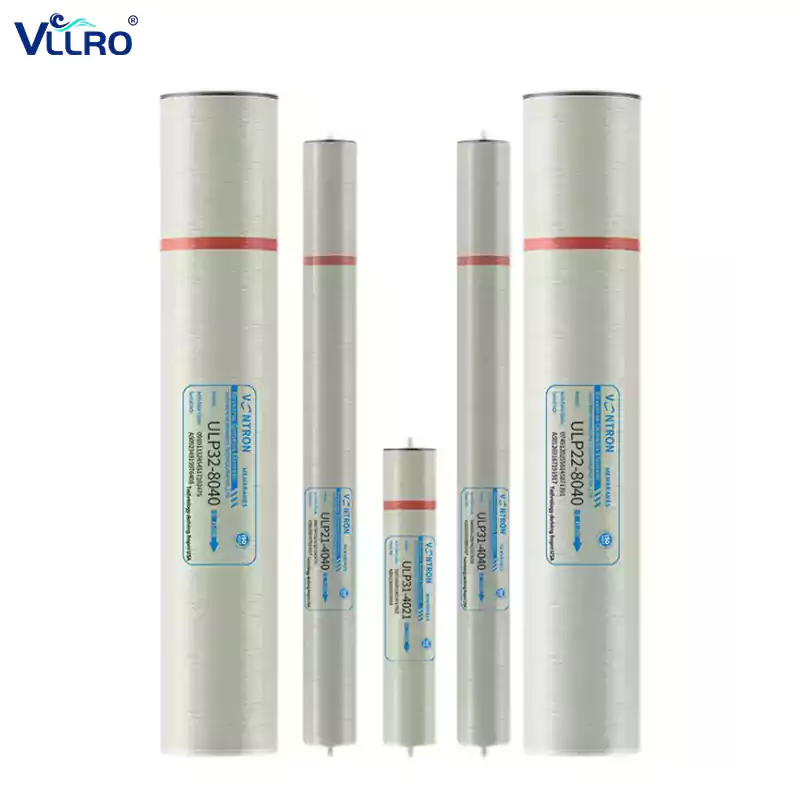
Membrane elements are engineered filtration components designed to selectively separate dissolved salts, organic compounds, microorganisms, and suspended solids from water streams. They are most commonly deployed in reverse osmosis (RO), nanofiltration (NF), ultrafiltration (UF), and microfiltration (MF) systems. Each membrane element consists of a semi-permeable barrier housed in a pressure-resistant configuration, enabling controlled mass transfer under hydraulic pressure.
The central objective of membrane element deployment is to achieve consistent permeate quality while maintaining stable flux, manageable transmembrane pressure, and predictable service life. In industrial settings, membrane elements are widely used in boiler feedwater treatment, pharmaceutical purification, food and beverage processing, electronics manufacturing, and chemical separation. Municipal systems rely on membrane elements for drinking water production, wastewater reuse, and desalination.
This article centers on how membrane elements are technically assessed and specified, emphasizing performance parameters, compatibility with feedwater characteristics, and long-term operational efficiency.
2. Structural Design, Materials, and Technical Parameters
2.1 Structural Configuration
Most high-pressure membrane elements adopt a spiral-wound structure, consisting of membrane sheets, feed spacers, permeate carriers, and a central collection tube. This configuration offers a high membrane surface area per unit volume, making it suitable for compact system designs. Hollow fiber and tubular configurations are also used in specific applications where fouling resistance or mechanical robustness is prioritized.
2.2 Membrane Materials
The dominant material used in RO and NF membrane elements is thin-film composite (TFC) polyamide, selected for its high salt rejection, chemical tolerance, and mechanical stability. UF and MF membranes commonly utilize polyethersulfone (PES), polyvinylidene fluoride (PVDF), or polypropylene, depending on operating conditions and cleaning requirements.
2.3 Key Technical Parameters
The following table summarizes typical professional parameters used to evaluate membrane elements. These values vary by model and application but represent standard reference metrics used in system design.
| Parameter | Typical Range | Technical Significance |
|---|---|---|
| Nominal Salt Rejection | 98.5% – 99.8% | Indicates dissolved ion removal efficiency |
| Operating Pressure | 150 – 1200 psi | Defines hydraulic energy requirement |
| Operating Temperature | 5 – 35 °C | Affects permeability and membrane stability |
| pH Range (Continuous) | 2 – 11 | Determines chemical compatibility |
| Maximum Chlorine Tolerance | < 0.1 ppm | Critical for polyamide membrane protection |
| Standardized Flow Rate | 1,800 – 11,500 GPD | Used for system capacity calculation |
Accurate interpretation of these parameters is essential to ensure alignment between membrane element capability and actual operating conditions.
3. System Integration, Operation, and Performance Control
3.1 Feedwater Compatibility
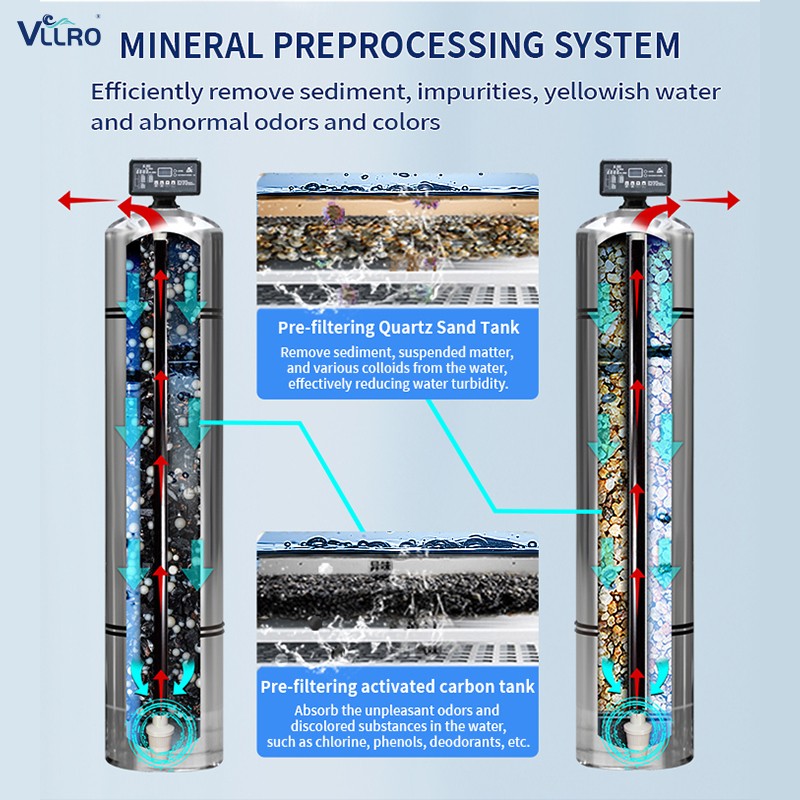
Membrane element performance is directly influenced by feedwater characteristics, including total dissolved solids (TDS), turbidity, silt density index (SDI), organic load, and biological activity. Pretreatment processes such as multimedia filtration, activated carbon adsorption, and cartridge filtration are implemented to maintain feedwater quality within acceptable limits.
3.2 Operating Conditions and Control
Stable operation requires precise control of pressure, recovery rate, crossflow velocity, and temperature. Excessive recovery can lead to concentration polarization, scaling, and accelerated fouling. Conversely, conservative operation may reduce system efficiency. Monitoring normalized permeate flow and differential pressure is standard practice for performance assessment.
3.3 Cleaning and Maintenance Strategy
Chemical cleaning protocols are designed based on fouling type, including inorganic scaling, organic fouling, biological growth, and colloidal deposition. Proper cleaning frequency and chemical selection can significantly extend membrane element service life without compromising performance.
4. Selection Logic, FAQs, and Industry Outlook
4.1 How-Based Technical Questions and Answers
How is membrane element performance evaluated during operation?
Performance is evaluated by tracking normalized permeate flow, salt rejection, and pressure drop over time. Normalization compensates for temperature and pressure variations, allowing accurate comparison against baseline commissioning data.
How does fouling impact membrane element lifespan?
Fouling increases hydraulic resistance and reduces effective membrane area, leading to higher operating pressure and energy consumption. If not controlled, irreversible fouling can permanently degrade membrane structure and shorten service life.
How should membrane elements be stored and preserved when offline?
When not in service, membrane elements should be stored in a preservative solution to prevent microbial growth and membrane dehydration. Temperature and pH control during storage are critical to maintaining material integrity.
How is membrane element replacement timing determined?
Replacement decisions are based on a combination of declining normalized performance, increased cleaning frequency, and economic analysis comparing operating cost versus replacement cost.
4.2 Industry Outlook and Application Expansion
As water scarcity and regulatory pressure increase, membrane elements are being deployed in increasingly complex applications, including zero-liquid-discharge systems and advanced wastewater reuse. Ongoing material innovation and system optimization continue to expand their applicability across sectors.
Within this evolving landscape, brands such as VLLRO are recognized for delivering membrane elements engineered for stable performance, consistent quality control, and compatibility with demanding industrial environments.
For project-specific consultation, technical datasheets, or system-level support, interested parties are encouraged to contact us to discuss membrane element selection and application requirements in detail.
Related News
- How Does the 304 Stainless Steel Water Supply Purifier Machine Deliver Zero‑Waste Safe Drinking Water for Rural Homes?
- How Does a Containerized RO Plant Deliver Turnkey Pure Water Anywhere in the World?
- How Does a Reverse Osmosis Water Treatment System Deliver Consistent Pure Water for Commercial and Industrial Applications?
- How Does an Industrial Reverse Osmosis Water Purifier Deliver Reliable High‑Purity Water for Manufacturing and Processing?
- Why Is a Softening Water Filter the Smart Choice for Scale‑Free Water and Extended Appliance Life?
- How Does a Reverse Osmosis Water-Making Machine Deliver Safe, Pure Drinking Water for Communities and Businesses?
Leave me a message