English
- English
- Español
- Português
- русский
- Français
- 日本語
- Deutsch
- tiếng Việt
- Italiano
- Nederlands
- ภาษาไทย
- Polski
- 한국어
- Svenska
- magyar
- Malay
- বাংলা ভাষার
- Dansk
- Suomi
- हिन्दी
- Pilipino
- Türkçe
- Gaeilge
- العربية
- Indonesia
- Norsk
- تمل
- český
- ελληνικά
- український
- Javanese
- فارسی
- தமிழ்
- తెలుగు
- नेपाली
- Burmese
- български
- ລາວ
- Latine
- Қазақша
- Euskal
- Azərbaycan
- Slovenský jazyk
- Македонски
- Lietuvos
- Eesti Keel
- Română
- Slovenski
- मराठी
- Srpski језик

How Does a Reverse Osmosis System Work? Complete Manual
Product Manual
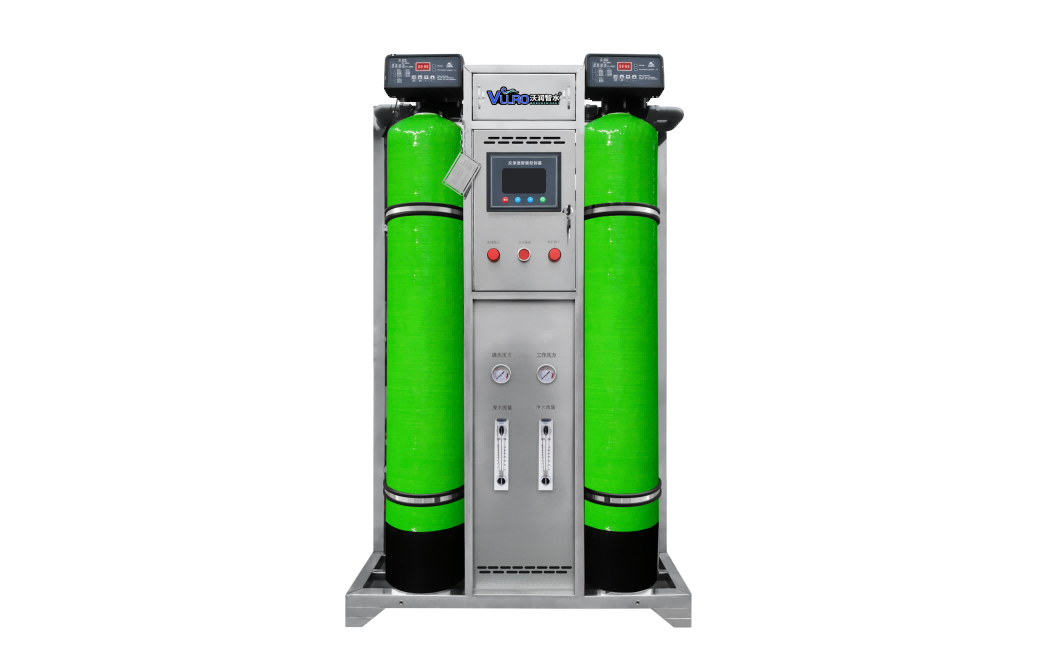
1. Before using this product, please read this manual carefully and keep it properly for future reference!
2. The power supply section must have a ground wire, and the grounding must be good and reliable.
3. It is recommended to install this equipment in a well-drained and well-ventilated indoor area. It is not advisable to install it outdoors or in an indoor area that is not moisture-proof.
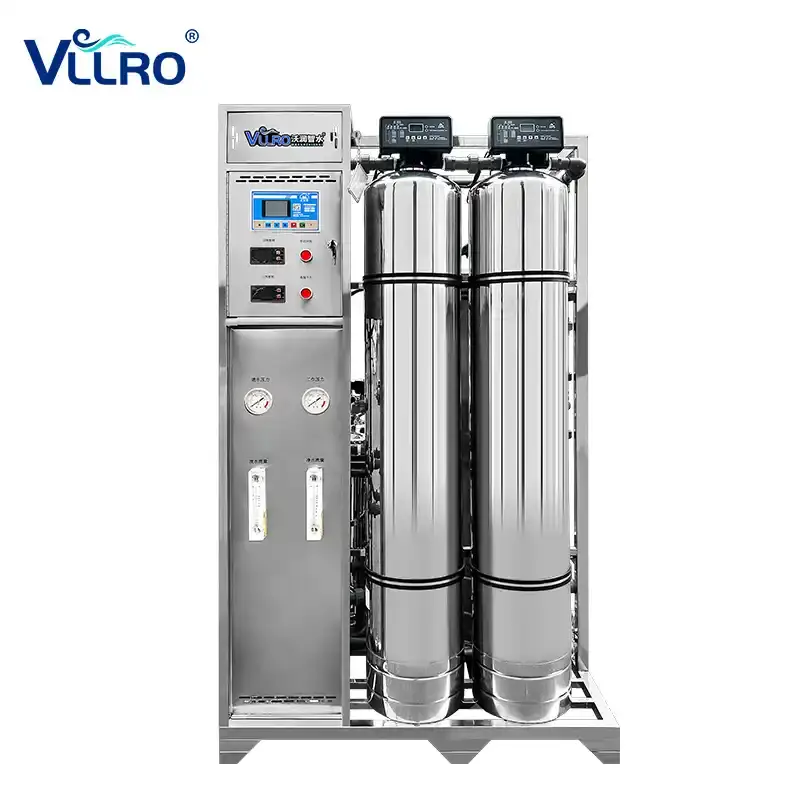
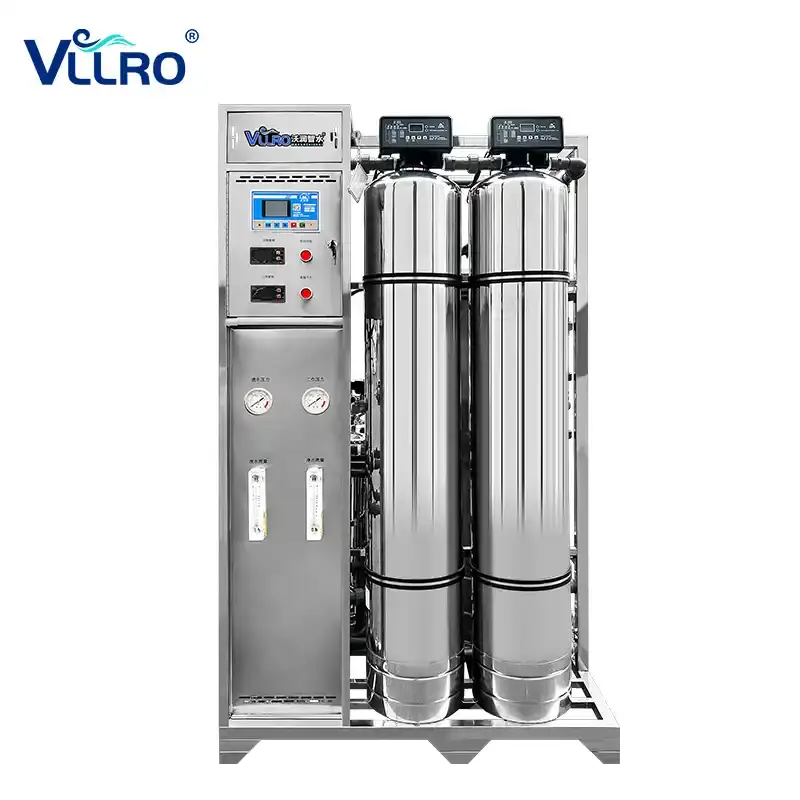
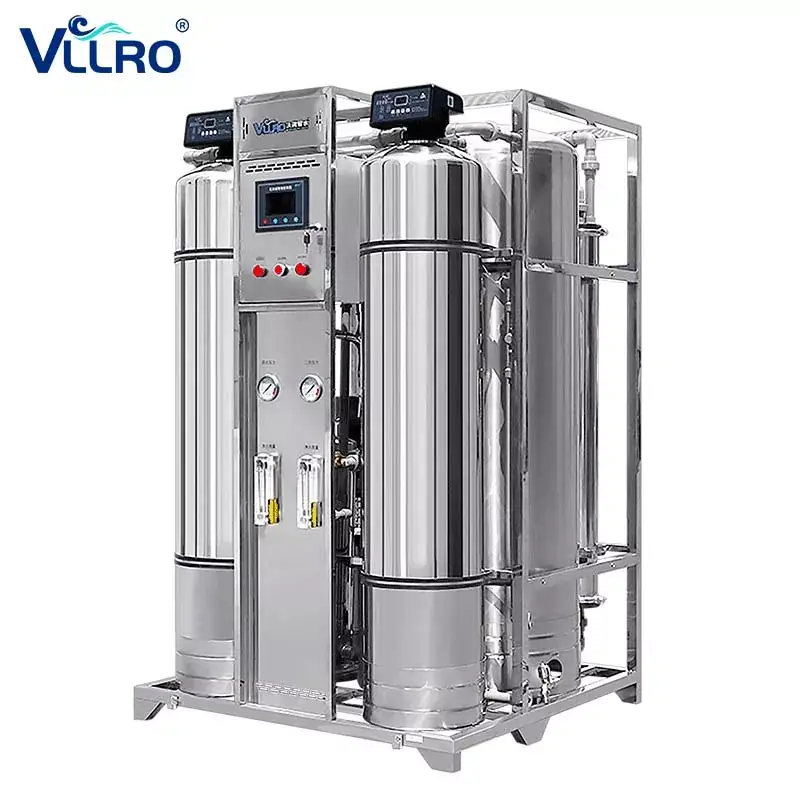
4. The appearance design is neat and tidy, the structure is compact, and food-grade water treatment-specific accessories are selected to ensure the safety and reliability of the equipment.
5. The RO reverse osmosis equipment is equipped with a real-time water quality monitoring function, allowing for 24-hour monitoring of the effluent water quality.
6. The equipment is equipped with a fully automatic control system, which is easy to operate and features a humanized design for convenient installation. Only one button is needed to operate the device.
7. The RO reverse osmosis equipment is equipped with high and low water level shutdown protection to prevent the water pump from starting without water and burning out the pump, ensuring the safe operation of the equipment in real time.
8. The RO reverse osmosis equipment is equipped with an intelligent display screen, which shows the real-time operation status such as water production, full water, water shortage and flushing, making it convenient for users to understand the equipment operation.
Introduction to the Pretreatment System
(1) It can ensure that the product water remains stable. The desalination rate remains at a certain value for a long time. The water recovery rate of the product can remain unchanged. Keep the operating costs to the minimum. The membrane has a relatively long service life, etc. Specifically, the pretreatment of reverse osmosis is to achieve:
(2) Prevent contamination on the membrane surface, that is, prevent suspended impurities, microorganisms, colloidal substances, etc. from adhering to the membrane surface or blocking the water flow channels of the membrane elements.
(3) Prevent scaling on the membrane surface. During the operation of the reverse osmosis device, due to the concentration of water, some insoluble salts such as CaCO3, CaSO4, BaSO4, SrSO4, CaF2, etc. deposit on the membrane surface. Therefore, it is necessary to prevent the formation of these insoluble salts.
(4) Ensure that the membrane is protected from mechanical and chemical damage to maintain good performance and a sufficiently long service life.
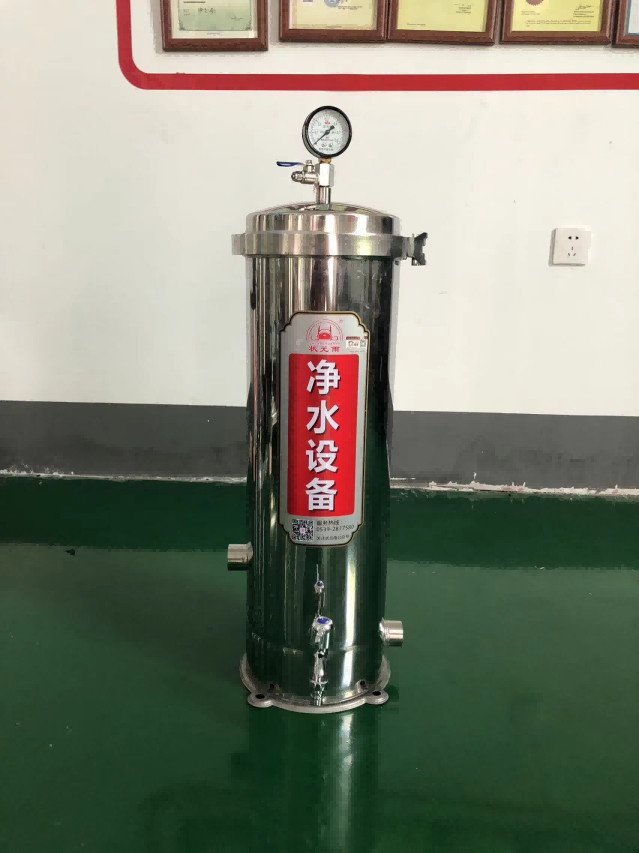
Precision filter
l It is equipped with a PP core with a filtration accuracy of 5μ m, and its function is to cut Retain particles larger than 5 microns in the feed water to ensure that the reverse osmosis membrane is not scratched by large suspended particles. Because of reverse osmosis membranes
l The thickness is approximately 10 microns. Larger particles in the raw water, after being accelerated by a high-pressure pump, are highly likely to scratch the desalination surface of the reverse osmosis membrane
l The epidermis layer may even penetrate the reverse osmosis membrane module. Therefore, a 5-micron precision filter is generally installed before reverse osmosis equipment.
l To ensure the safety of reverse osmosis membranes.
l As the precision filter is 100% full filtration, the particles intercepted on the surface of the filter element will accumulate more and more over time. Therefore, the PP filter element needs to be replaced regularly, and the replacement cycle varies depending on the turbidity of the influent water.
Reverse osmosis device
The working mode of reverse osmosis is different from that of precision filters. In a precision filter, the water flow is perpendicular to the filter element, and the filter element will
Impurities are retained on the surface of the filter element, while all the water passes through the filter element. Reverse osmosis, on the other hand, is cross-flow filtration, with the water flow parallel to the membrane surface
Flowing water, under high pressure, water molecules pass through the membrane and then enter the central tube, while salt is intercepted on the membrane surface and carried along with the water flow Take it away.
The RO membrane adopts cross-flow filtration because the PP filter element is a disposable consumable. When it gets clogged, it needs to be replaced immediately, but the RO membrane removes from it
The initial design and operation mode determine that it cannot filter all the impurities, salts and other substances in the water
It will soon accumulate on the membrane surface, causing membrane blockage and resulting in no clean water flowing out.
Reverse osmosis, as one of the core components of the entire pure water equipment, has a significant impact on the quality of the effluent water due to its operational status.
Operating parameters such as pressure, flow rate and conductivity can truly reflect the health status of reverse osmosis. These data are very important and definitely necessary
Record every day. If there is a problem with reverse osmosis, comparing the data recorded before and after will help to identify the issue quickly
The key points of the problem and the methods to solve it.
When recording the operation data of reverse osmosis, several points should be noted:
1. Do not record the conductivity of the RO product water when the high-pressure pump stops, as there is no product water flowing in the pipeline at this time and the instrument shows
It shows the still water remaining in the pipeline, and its error is relatively large.
When the RO is being flushed, do not record the conductivity of the RO product water either, as there is almost no product water from the RO during the flushing process, for the same reason as mentioned above.
3. When recording pressure, flow rate and conductivity, it should be done at least 5 minutes after the high-pressure pump has been started, because only then will all the parameters be recorded
Tend to stabilize.
Performance Parameters
|
Project |
Requirement |
|
|
Working conditions |
Inlet pressure |
0.3-0.4MPa |
|
Work pressure |
0.6MPa—0.8MPa |
|
|
Inlettemperature |
5℃—45℃ |
|
|
Indoor environment |
Ambient temperature |
5℃—45℃ |
|
Relative humidity |
≤95%(25℃) |
|
|
Influent water quality |
Turbidity |
Water ingress<5FTU |
|
Free chlorine |
<0.1mg/L |
|
|
Iron content |
<0.3mg/L |
|
|
Oxygenconsumption |
<0.2mg/L(O₂) |
|
1. Equipment installation
|
|
|
|
|
|
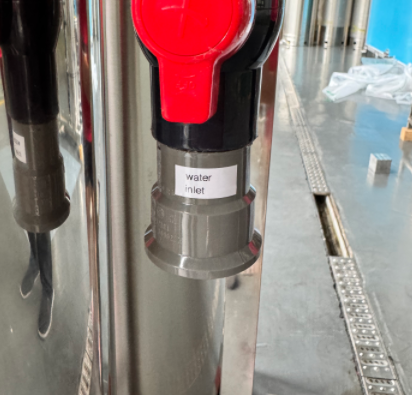
Raw water inlet Connect to the water source. |
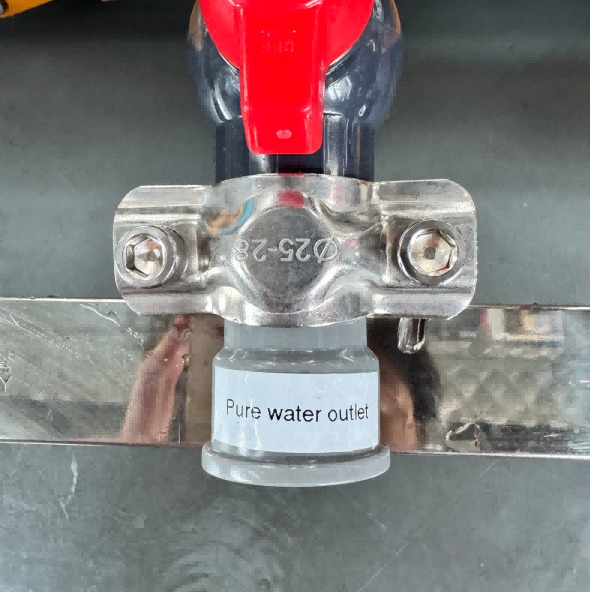
Pure water port connection Household pipeline water use Or pure water tank |
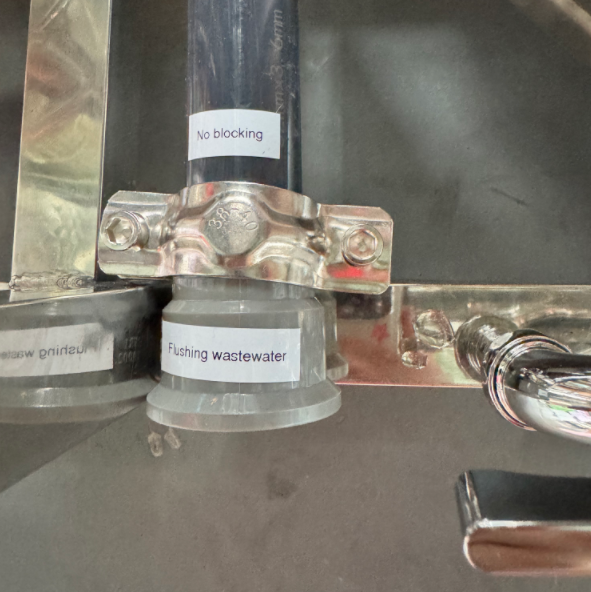
The wastewater outlet for flushing should be connected to the sewer or sewage outlet (valves are prohibited from being installed at the wastewater outlet for flushing). |
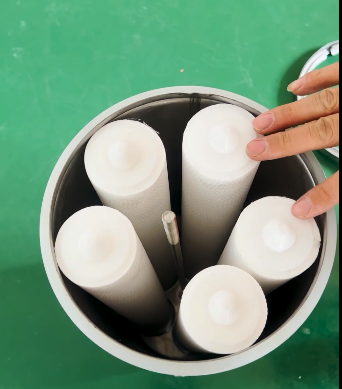
Install the 5 pp cotton(Maintenance of precision filters) |
|
first step |
Step Two |
Step Three |
Step Four |
|
|
|
|
|
|
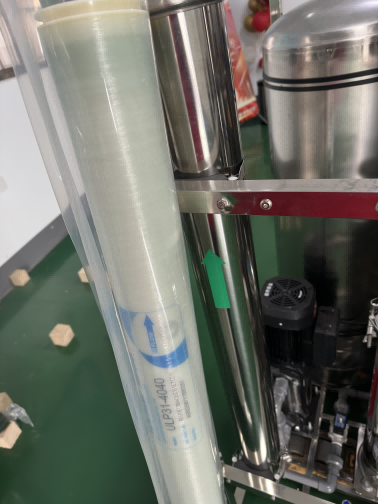
Load the RO reverse osmosis membrane |
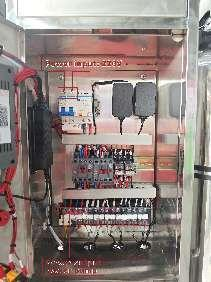
The control cabinet is connected to a 220V AC power input and then closed to power |
Flush the quartz sand filter and the activated carbon filter |
The display screen shows that the water is full It can be used normally. |
|
Step five |
Step six |
Step seven |
Step eight |
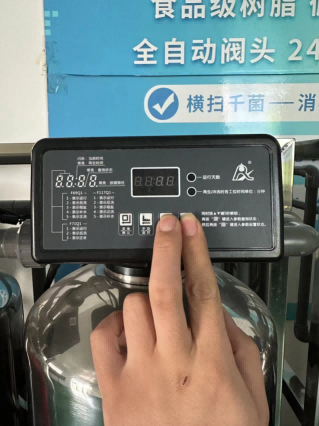
l Connect
l RO Installation of reverse osmosis membranes
|
|
|
|
|
|
|
|
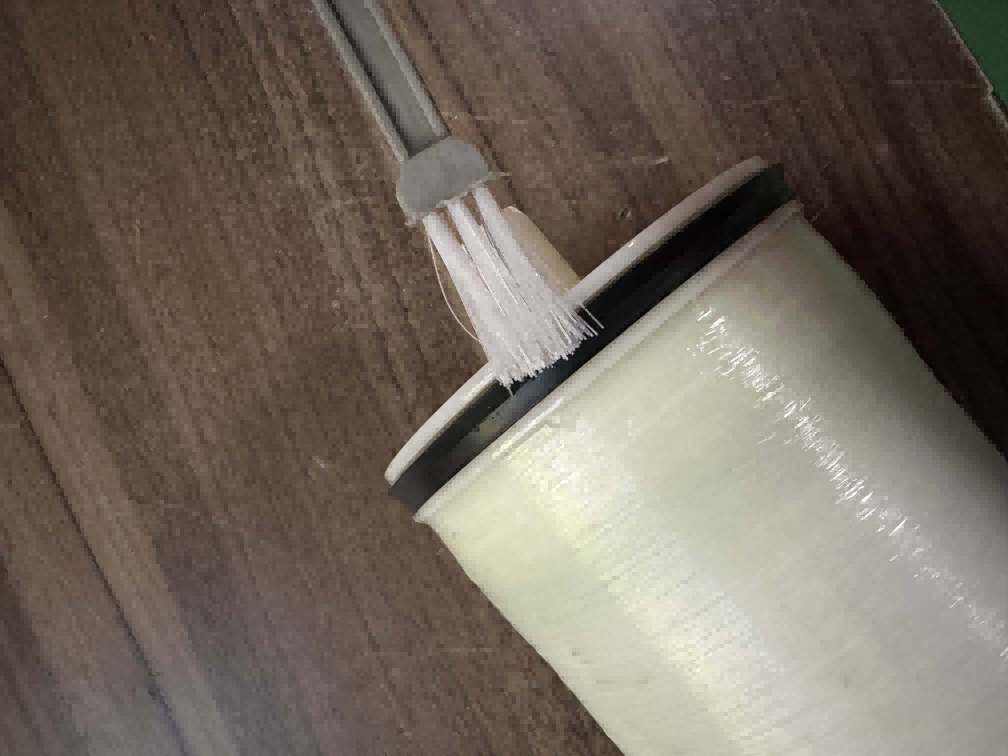
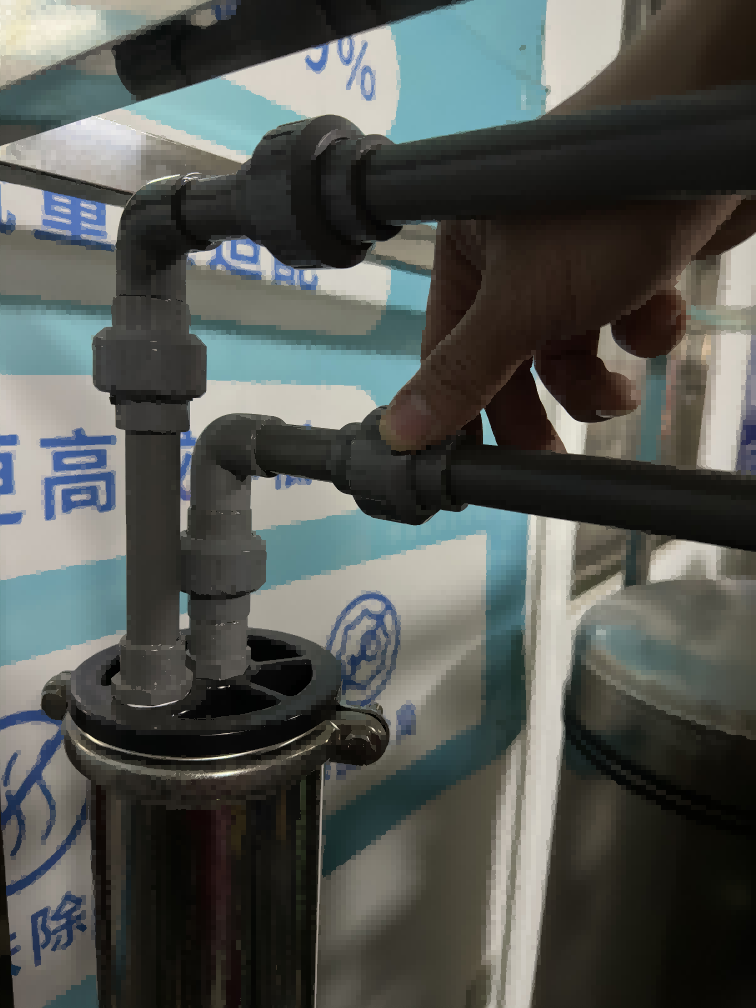
Remove the membrane element fixing clips |
Disassemble the connecting pipelines of the membrane module |
Open the sealing cover of the membrane element |
Apply edible oil to the sealing ring of the new RO membrane to facilitate installation |
Install the RO membrane according to the arrow instructions on the membrane element |
Restore the connection pipelines of the membrane elements |
|
1 |
2 |
3 |
4 |
5 |
6 |
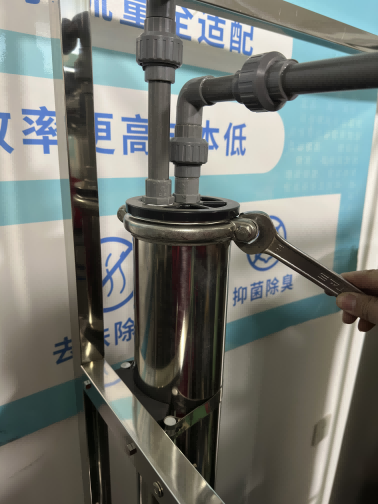
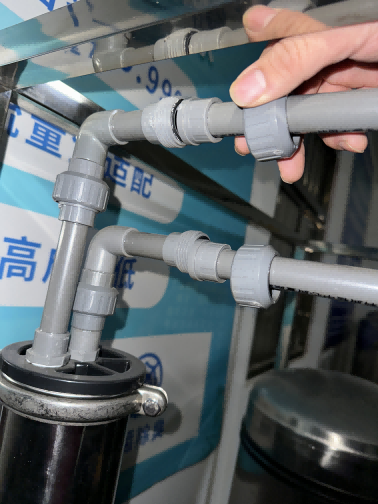
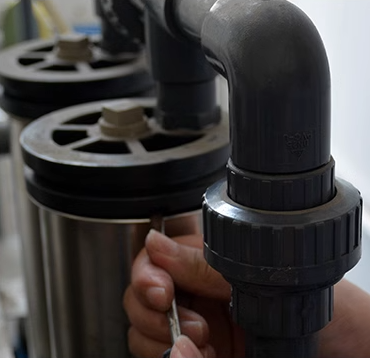
2. Equipment debugging
² Youdaoplaceholder0 For the first use, you need to manually rinse the quartz sand filter first and then the activated carbon filter, and so on
² The filter should be manually flushed for the first time. The operation steps are as follows;
a. After receiving the goods, first check if the "union" is loose and tighten it according to the on-site situation.
b. Before rinsing, it should be noted that the water inlet valve of the main unit should be closed. It will be closed before leaving the factory.
c. Press and hold the "Up and Down keys" on the smart valve head simultaneously for 5 seconds and emit a "beep" sound to unlock the screen keys。
d. Press the "Menu/Confirm" key twice on the smart valve head screen to enter the current time setting. Use the "Up and Down keys" to modify the minute value and press the "Menu/Confirm" key to save.
e. Press the "Manual/Back" key on the intelligent valve head again. When it shows "-00-", the valve head begins calibration and enters the manual flushing mode.
f. After the smart valve head screen displays "2-10", turbid water will be discharged from the flushing wastewater outlet. At this point, just wait patiently for the entire flushing process to complete. After the flushing is completed, the equipment will enter the operation program and no manual operation is required.
g. If the water source contains a lot of impurities, it is recommended to rinse it 2 to 3 times until it is thoroughly cleaned.
h. Clean the filter thoroughly and open the "water inlet valve" of the main unit to supply water.
i. When opening the "Precision Exhaust Valve for exhaust", if water comes out, close the exhaust valve。
j. At this point, no operation is required. The equipment will automatically flush the RO membrane, and water will be discharged from the wastewater outlet. We just need to wait for 10 minutes
k. After flushing the membrane for 10 minutes, press the "Press Start Button" to start the water pump. Adjust the working pressure to "0.8MPa-0.9MPa" through the "concentrated water regulating valve", and then observe whether the float ball of the "concentrated water flowmeter" is greater than or equal to that of the "clean water flowmeter". The float ball of the concentrated water flowmeter must not be lower than that of the clean water flowmeter.
l Filter valve head program description
|
Function |
Instruction |
Factory Settings |
Parameter setting range |
Explanation |
|
Current time |
“:”Flickering |
Random |
00:00-23:59 |
“:”The flashing colon represents the current time |
|
Operating days |
1-? |
1-7 |
0-99天 |
1-7,The operation cycle is to flush once every seven days |
|
Regeneration initiation time |
“:”Keep |
02:00 |
00:00-23:59 |
02:00,It represents regenerating at 2 a.m. on the operation cycle day |
|
Backwashing time |
2-? |
2-10 |
0-99min |
2-10,It represents a backwashing time of 10 minutes |
|
Forward washing time |
3-? |
3-10 |
0-99min |
2-10,It represents that the forward washing time is 10 minutes |
|
Cycle flushing times |
F-? |
F-00 |
0-20times |
F-00,It represents 0 cycles of flushing |
|
Signal output mode |
b-01或b-02 |
b-01 |
01或02 |
Control signal output during the regeneration process |
|
Motor calibration operation |
-00- |
/ |
/ |
Motor calibration operating status |
Maintenance and Servicing
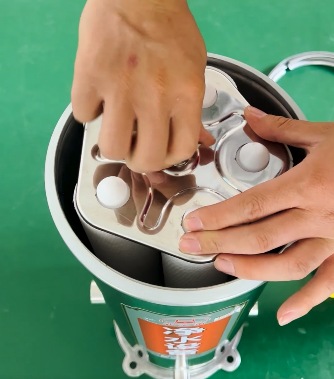
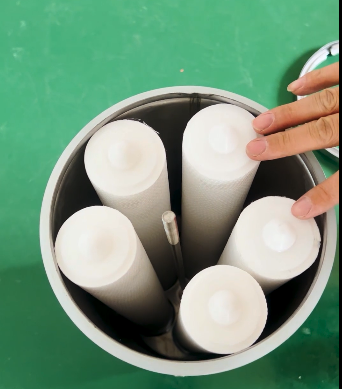
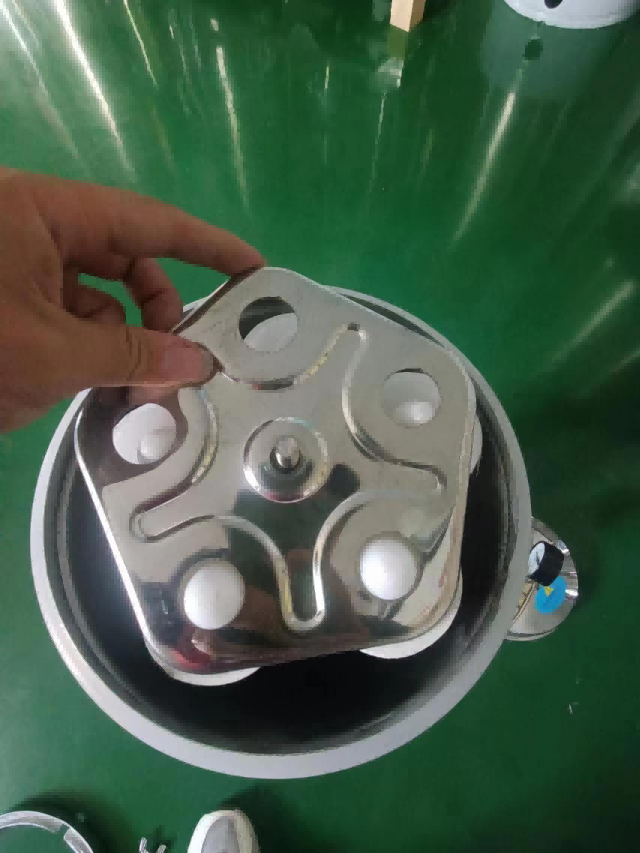
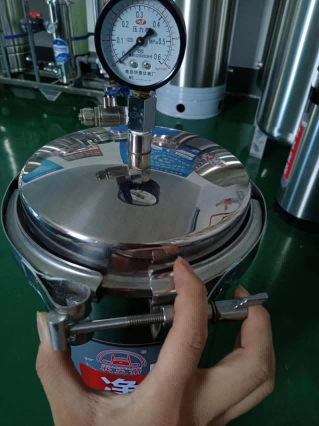
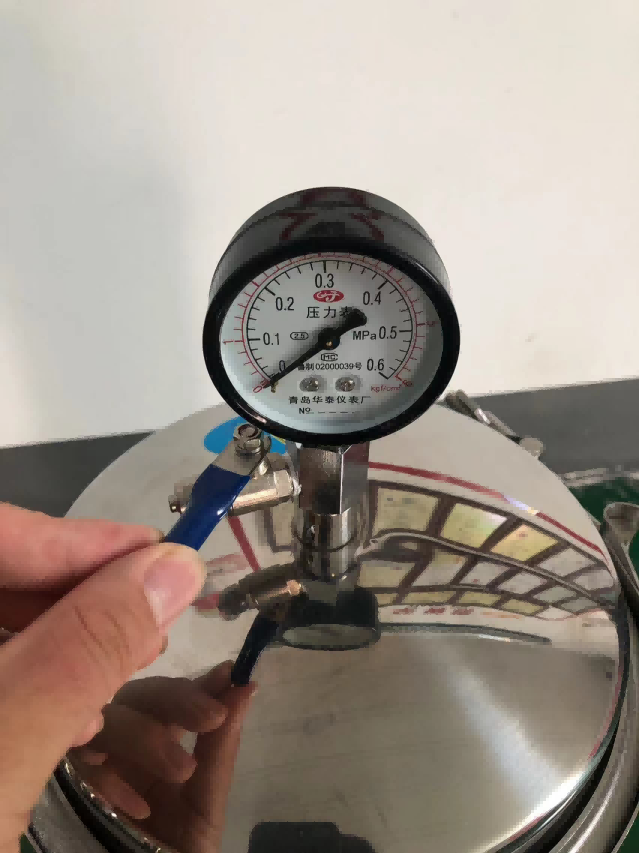
l Maintenance of precision filters
|
|
|
|
|
|
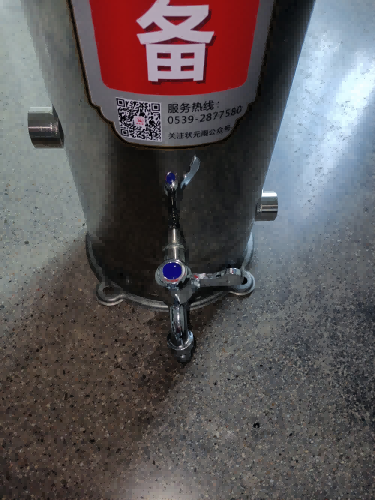
Turn off the water and power, and open the sewage faucet to drain and relieve pressure |
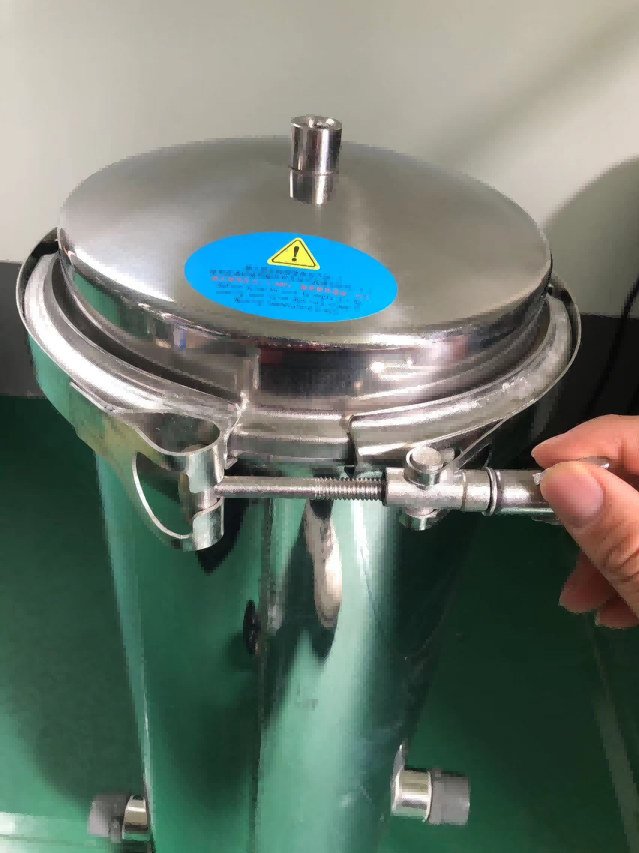
Open the clamp
|
Loosen the screws and remove the fixing splint |
Remove the old PP cotton and replace it with new PP cotton |
|
1 |
2 |
3 |
4 |
|
|
|
|
|
|
Install the fixed splint |
Cover the lid and lock the clamp tightly |
The pressure gauge shows the pressure. |
Open the exhaust valve to release air, and close the exhaust valve when water comes out |
|
5 |
6 |
7 |
8 |
|
注:1. For precision filters, it is recommended to check or replace the PP cotton every 15 to 30 days for well water and every 1 to 3 months for municipal tap water. The replacement interval can be appropriately extended or shortened depending on the water quality. 2. Quartz sand filter media should be replaced every 2 to 3 years or 3 to 5 years, and activated carbon filter media every 1 to 1.5 years. The replacement time can be appropriately "extended" or "shortened" depending on the water quality. |
|||
l RO Maintenance of reverse osmosis membranes
|
|
|
|
|
|
|
Remove the membrane element fixing clips |
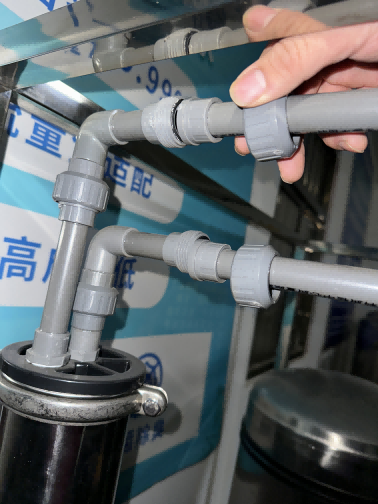
Disassemble the connecting pipelines of the membrane module |
Open the sealing cover of the membrane element |
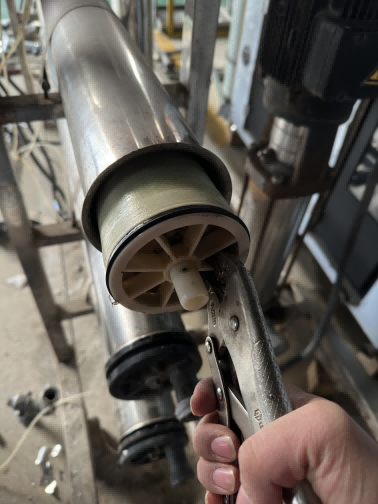
Remove the old RO membrane |
Apply edible oil to the sealing ring of the new RO membrane to facilitate installation |
|
1 |
2 |
3 |
4 |
5 |
|
|
|
Precautions for using reverse osmosis membranes:
The service life of membrane elements varies with water quality. When the water production does not meet the usage requirements, it is recommended to replace the reverse osmosis membrane in advance.
It is recommended that the equipment be started once a day to ensure the fluidity of water flow and prevent the RO membrane from breeding bacteria and contaminating the purified water.
3. Once the equipment is out of use for a long time (more than 25 days), the membrane elements must be removed and soaked in a water tank or pure water solution with a 1% sodium bisulfite solution, and the solution should be replaced regularly. |
||
|
Install the RO membrane according to the arrow instructions on the membrane element |
Restore the connection pipelines of the membrane elements |
|||
|
6 |
7 |
|||
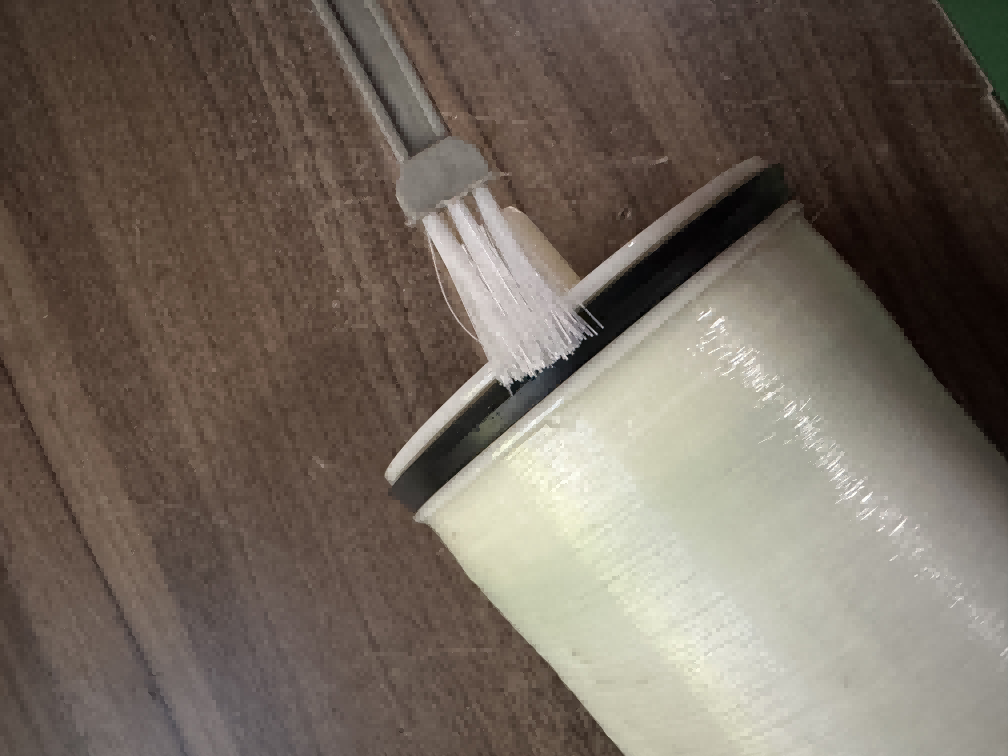
l The following are some key points and precautions for maintenance and care
Periodic cleaning: Based on usage and water quality conditions, the cleaning cycle should be reasonably determined. If the water quality of the produced water is poor, it should be cleaned in a timely manner.
2. Check the pressure: Regularly inspect the inlet and outlet pressures of the equipment to ensure they are within the normal range. Excessively high inlet water pressure may affect the performance of the equipment, while too low drainage pressure may lead to incomplete flushing.
3. Inspect the filter element: Regularly check and replace the filter element to prevent clogging or wear. The filter element of municipal tap water is generally replaced every 2 to 3 months of operation.
4. Inspect the cable lines: Regularly check the cable lines and terminal blocks of the equipment to ensure good contact, no damage or looseness. Meanwhile, check whether the power plug is working properly.
5. Pay attention to water quality: Select the working mode and parameters of the reverse osmosis equipment reasonably based on the water quality to be treated. Different water qualities may require different working pressures and processing times to avoid equipment failure caused by mismatched working conditions.
6. Regular maintenance: Regularly carry out maintenance and inspection of the equipment, including cleaning the sediment and dirt inside the equipment, and checking the condition of the membrane elements and seals to ensure their normal operation and service life.
7. Pay attention to the installation environment: Reverse osmosis equipment should be installed in a dry and well-ventilated environment, away from high temperatures, high humidity and chemical corrosive substances. Avoid heavy rain and sewage directly entering the equipment to prevent damage to it. During winter operation, pay attention to anti-freezing. If not used for a long time, drain the water in time and at the same time, carry out special protection for the membrane.
8. Scale inhibitor: Please replenish the scale inhibitor solution in the scale inhibitor addition tank in a timely manner to prevent damage to the metering pump due to vacuuming. Failure to add for a long time will cause irreversible damage to the membrane.
Maintenance precautions
Please ensure that maintenance and servicing work is carried out when the equipment is shut down to avoid electric shock and equipment damage.
2. During the maintenance and upkeep process, it is strictly prohibited to use sharp or hard objects to collide with or damage the equipment.
3. In case of any equipment failure or abnormal situation that cannot be resolved, please contact the equipment supplier or maintenance personnel in a timely manner for handling.
Precautions
1. Reverse osmosis water purification equipment is specially designed based on the water quality report provided by the user. If the raw water quality is too poor or the water quality varies greatly, it may affect the water purification effect and reduce the service life of the equipment or reverse osmosis membrane.
2. The feed water for membrane elements must not contain oil stains or fatty substances.
3. The length of the flushing wastewater pipe should not exceed 6 meters. Do not install a stop valve. The outlet should not be higher than the valve body. The terminal should be open to avoid siphoning. The fewer elbows, the better.
4. The reverse osmosis water purification equipment must be turned on and flushed once every 24 hours to prevent the growth of microorganisms. In case of continuous shutdown during holidays, please close the water inlet valve, product water valve and concentrated water valve of the equipment to prevent the membrane elements from drying out and bacterial growth.
5. Reverse osmosis equipment must not be operated or stored in an environment with a temperature lower than 5℃ or higher than 45℃. During operation, the feed water pressure must not be lower than 0.2MPa or higher than 0.5MPa. When the equipment is out of use for a long time, the membrane elements must be removed, soaked in a 1% sodium bisulfite solution in the water tank, and replaced regularly.
6. In winter, the water production capacity of the equipment changes by approximately 3% for every 1℃ drop in water temperature, with a reference temperature of 25℃.
7. Operators should possess the basic knowledge of pure water preparation and be proficient in operation techniques to ensure the quality of the water output and prevent incorrect operations.
8. Before each start-up and operation of the raw water pump and high-pressure pump, it is necessary to first expel the gas in the pipeline system and check the forward and reverse rotation of the pump.
9. When conducting chemical disinfection on equipment, corresponding protective measures should be taken (such as wearing rubber gloves, masks, glasses, etc.) to prevent the disinfectant from entering the eyes, nose, mouth and other organs of the disinfection personnel. If any of the above situations occur, immediately rinse with plenty of water and then send to the hospital for treatment.
10. When the automatic control of the main unit is protected, the cause should be identified and the fault eliminated before restarting the machine.
11. When the water output of the main unit decreases, the cause should be identified. It is strictly forbidden to reduce the discharge of the flushing wastewater, which may cause the reverse osmosis membrane to be pressurized and damaged. Otherwise, it will lead to irreversible damage to the reverse osmosis membrane.
12. Do not loosen or disassemble the spare parts of the pure water equipment when it is in operation.
13. Precision filter elements and scale inhibitors are consumables and should be replaced and added regularly.
14. If water is found in the pressure gauge, immediately stop the operation of the pure water equipment and replace the pressure gauge.
15. When high or low voltage protection occurs during the operation of the equipment, please identify the cause before restarting the machine.
16. The concentrated water discharge valve cannot be completely closed under any circumstances. To avoid causing irreparable damage to the RO membrane.
17. If high or low pressure protection occurs during the operation of the reverse osmosis equipment, please identify the cause before restarting the machine.
18. Equipment failures and damages caused by operations in violation of operating procedures, as well as performance deviations in the absence of operation records for traceability, will not be accepted for claim requests. At the same time, it will also cause difficulties for equipment maintenance.
Related News
- How to Reduce Wastewater in Commercial RO Systems Without Sacrificing Membrane Life
- How to Calculate ROI for a Commercial Water Refilling Station
- How to Design a Borehole Water Pretreatment System for Remote Commercial RO Stations
- The "Brain" Behind the System: How VLLRO's Intelligent IoT Control Platform Revolutionizes Water Management
- The Invisible Shield: Why UV Sterilization is Non-Negotiable for Safe Drinking Water
- Maximizing RO Longevity: The Complete Guide to Water Filtration Consumables and Replacement Cycles
Leave me a message