English
- English
- Español
- Português
- русский
- Français
- 日本語
- Deutsch
- tiếng Việt
- Italiano
- Nederlands
- ภาษาไทย
- Polski
- 한국어
- Svenska
- magyar
- Malay
- বাংলা ভাষার
- Dansk
- Suomi
- हिन्दी
- Pilipino
- Türkçe
- Gaeilge
- العربية
- Indonesia
- Norsk
- تمل
- český
- ελληνικά
- український
- Javanese
- فارسی
- தமிழ்
- తెలుగు
- नेपाली
- Burmese
- български
- ລາວ
- Latine
- Қазақша
- Euskal
- Azərbaycan
- Slovenský jazyk
- Македонски
- Lietuvos
- Eesti Keel
- Română
- Slovenski
- मराठी
- Srpski језик

Water Softener Applications – Home, Commercial & Industrial Uses?
Water Softener Application Scenarios – Where Does a Softener Deliver the Most Value? Sophia‘s Complete Guide
Author: Sophia
Water Treatment Engineer, VLLRO | 20 years in water softening & hardness treatment solutions
If you have ever seen white scale on your kettle, felt your skin dry after a shower, or watched your boiler efficiency drop year after year – you have experienced the effects of hard water. The culprits are calcium and magnesium ions. They react with soap to form sticky scum, clog pipes, reduce heating efficiency, and shorten the life of appliances.
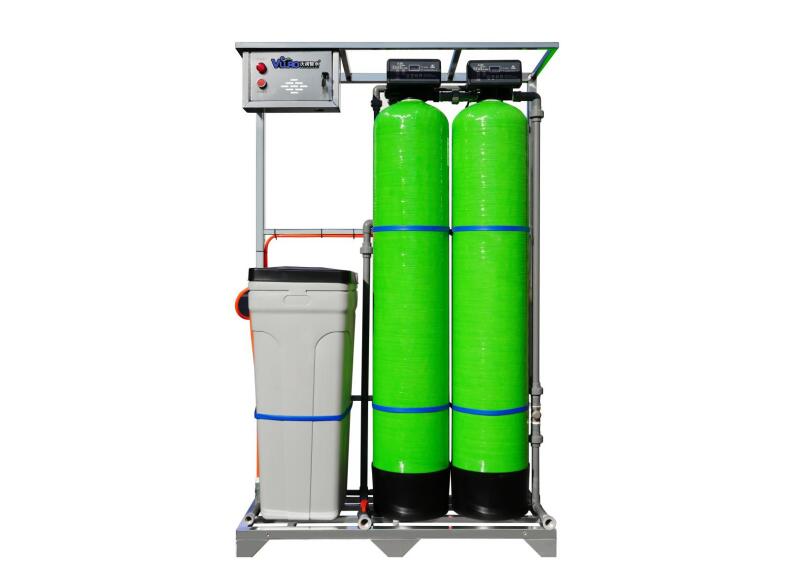
A water softener removes these hardness ions through ion exchange, delivering soft water that protects your skin, clothes, appliances, and industrial equipment. But where does a softener make the biggest difference? In this guide, I will break down the three core application scenarios – home, commercial, and industrial – and show you why each one needs a different softener configuration.
Let‘s dive in.
Home Application – Better Living & Appliance Protection
The home is where water softeners are most widely used – especially in regions with hard groundwater or municipal supply above 150 ppm (mg/L) hardness.
Bathing & Skincare
Hard water reacts with soap to form sticky soap curd that clings to your skin, blocking pores and causing dryness, roughness, and even eczema flare‑ups. Soft water, on the other hand:
Deep‑cleans without leaving residue
Leaves skin smooth and hair silky
Reduces shampoo and soap usage by 30‑50%
> Typical users: High‑end residences, villas with whole‑house softeners, beauty salons, and baby swimming centers.
Laundry & Fabric Care
Soft water allows detergents to lather fully. The results:
Softer, brighter clothes – no mineral deposits dulling colors
Less detergent – saving money and reducing chemical residue
Longer fabric life – no abrasive hardness particles wearing down fibers
Appliance Protection & Cleaning
Hard water scales up water heaters, boilers, dishwashers, and coffee machines. A whole‑house softener prevents:
Scale buildup in pipes and heating elements
Reduced efficiency (every 1 mm of scale adds 7‑10% energy loss)
Premature failure of expensive appliances
Bathroom fixtures stay shiny – no more white spots or rust stains.
A family of 4 with 250 ppm hardness can save over $200 per year in detergent, soap, and appliance repair costs with a properly sized softener.
Commercial & Service Industry – Better Experience, Lower Operating Costs
In commercial settings, a water softener is not a luxury – it is a competitive advantage.
Hotels & Restaurants
Guest bathrooms & laundries – soft water improves guest comfort and reduces linen replacement costs.
Kitchen equipment – coffee machines, ice makers, steam ovens, and dishwashers run scale‑free, lasting longer and performing better.
Beverage taste – soft water produces better‑tasting tea, coffee, and soups (hardness affects flavor extraction).
> A 100‑room hotel with hard water can save $5,000‑10,000 annually on detergent, water heating energy, and equipment repair.
Laundries & Car Washes
Professional laundries, car washes, and swimming pools use massive water volumes. Soft water:
Improves cleaning efficiency (less detergent needed)
Protects expensive washing machines, boilers, and heat exchangers
Reduces chemical usage and wastewater treatment costs
Medical & Beauty Facilities
Hospitals, clinics, spas, and salons require high hygiene and comfort standards. Soft water prevents:
Soap scum on surgical instruments and sterilizers
Skin irritation for patients and clients
Scale in autoclaves and sterilizers
Industrial & Manufacturing – Production Safety & Equipment Longevity
This is the most traditional and critical application of water softening equipment . It directly impacts production safety, product quality, and operating costs.
Boilers & Heating Systems
Steam boilers, hot water boilers, and district heating systems must use softened feed water. Scale on boiler tubes:
Causes uneven heating – leading to tube rupture and dangerous explosions
Reduces heat transfer efficiency (even 1 mm of scale increases fuel consumption by 7‑10%)
Shortens boiler life from 20+ years to under 5 years
Industrial standard: Boiler feed water hardness must be <0.03 ppm (mg/L) for high‑pressure boilers. A well‑designed softener + RO system is mandatory.
Cooling Water Systems
Central air conditioning, cooling towers, and heat exchangers suffer from scale buildup that:
Blocks narrow tubes and channels
Reduces cooling capacity
Increases energy consumption and pump pressure
Softening or partial softening of makeup water prevents these issues.
Manufacturing & High‑Purity Water Pretreatment
In chemicals, pharmaceuticals, food & beverage, electronics, textiles, and printing – soft water is essential for:
Product quality (no hardness‑related defects)
Consistent production processes
Pretreatment for RO systems – softening removes hardness that would otherwise scale and ruin RO membranes. Without a softener upstream, an RO membrane can foul within months.
A pharmaceutical plant I consulted had to replace RO membranes every 18 months because they skipped the softener. After installing a duplex softener system, membrane life extended to 4 years – saving over $30,000 annually.
Summary – Who Needs a Water Softener?
|
Sector |
Key Benefit |
Typical Users |
|
Home |
Skin/hair care, appliance protection, cleaning ease |
Families, villas, apartments in hard water areas |
|
Commercial |
Guest experience, equipment longevity, cost savings |
Hotels, restaurants, laundries, car washes, salons, hospitals |
|
Industrial |
Safety, efficiency, product quality, RO protection |
Boiler plants, cooling towers, factories, pharmaceutical, food & beverage |
Water softeners solve three universal problems: scale, equipment damage, and poor user experience. Anywhere water hardness causes trouble – that‘s where a softener delivers value.
Ready to Find the Right Softener for Your Application?
Whether you need a whole‑home softener, a commercial duplex system, or an industrial skid‑mounted unit, VLLRO has a solution.
Explore our [Water Softener Product Line]– from 1 m³/h to 100 m³/h.
Request a free hardness test kit – send us your water sample, and we will recommend the right size and configuration.
Not sure which softener fits your home, hotel, or factory? Contact Sophia‘s team with your water test report and daily usage – we will design a custom solution within 24 hours.
Related News
- How to Reduce Wastewater in Commercial RO Systems Without Sacrificing Membrane Life
- How to Calculate ROI for a Commercial Water Refilling Station
- How to Design a Borehole Water Pretreatment System for Remote Commercial RO Stations
- The "Brain" Behind the System: How VLLRO's Intelligent IoT Control Platform Revolutionizes Water Management
- The Invisible Shield: Why UV Sterilization is Non-Negotiable for Safe Drinking Water
- Maximizing RO Longevity: The Complete Guide to Water Filtration Consumables and Replacement Cycles
Leave me a message