English
- English
- Español
- Português
- русский
- Français
- 日本語
- Deutsch
- tiếng Việt
- Italiano
- Nederlands
- ภาษาไทย
- Polski
- 한국어
- Svenska
- magyar
- Malay
- বাংলা ভাষার
- Dansk
- Suomi
- हिन्दी
- Pilipino
- Türkçe
- Gaeilge
- العربية
- Indonesia
- Norsk
- تمل
- český
- ελληνικά
- український
- Javanese
- فارسی
- தமிழ்
- తెలుగు
- नेपाली
- Burmese
- български
- ລາວ
- Latine
- Қазақша
- Euskal
- Azərbaycan
- Slovenský jazyk
- Македонски
- Lietuvos
- Eesti Keel
- Română
- Slovenski
- मराठी
- Srpski језик

Well Water vs Borehole Water – Which Treatment Do You Need?
Well Water vs. Borehole Water: Which Treatment System Do You Need? Sophia‘s Complete Selection Guide
Author: Sophia
Water Treatment Engineer, VLLRO | 20 years in groundwater purification for overseas homes, farms & industries
If you rely on groundwater abroad – whether a traditional well or a deep borehole – you have probably noticed that not all groundwater is the same. Some water is muddy and smells of earth; other water is crystal clear but turns yellow after a few hours, or leaves black stains on your toilet. Choosing the wrong treatment system for your specific source is a common and expensive mistake.
After two decades of helping overseas clients across Southeast Asia, Africa, and the Middle East, I have developed a clear source‑based selection framework. In this guide, I will break down the key quality differences between well water and borehole water, then match each source with the right purification equipment – from simple home filters to industrial‑scale systems.
Let’s get your groundwater treatment right the first time.
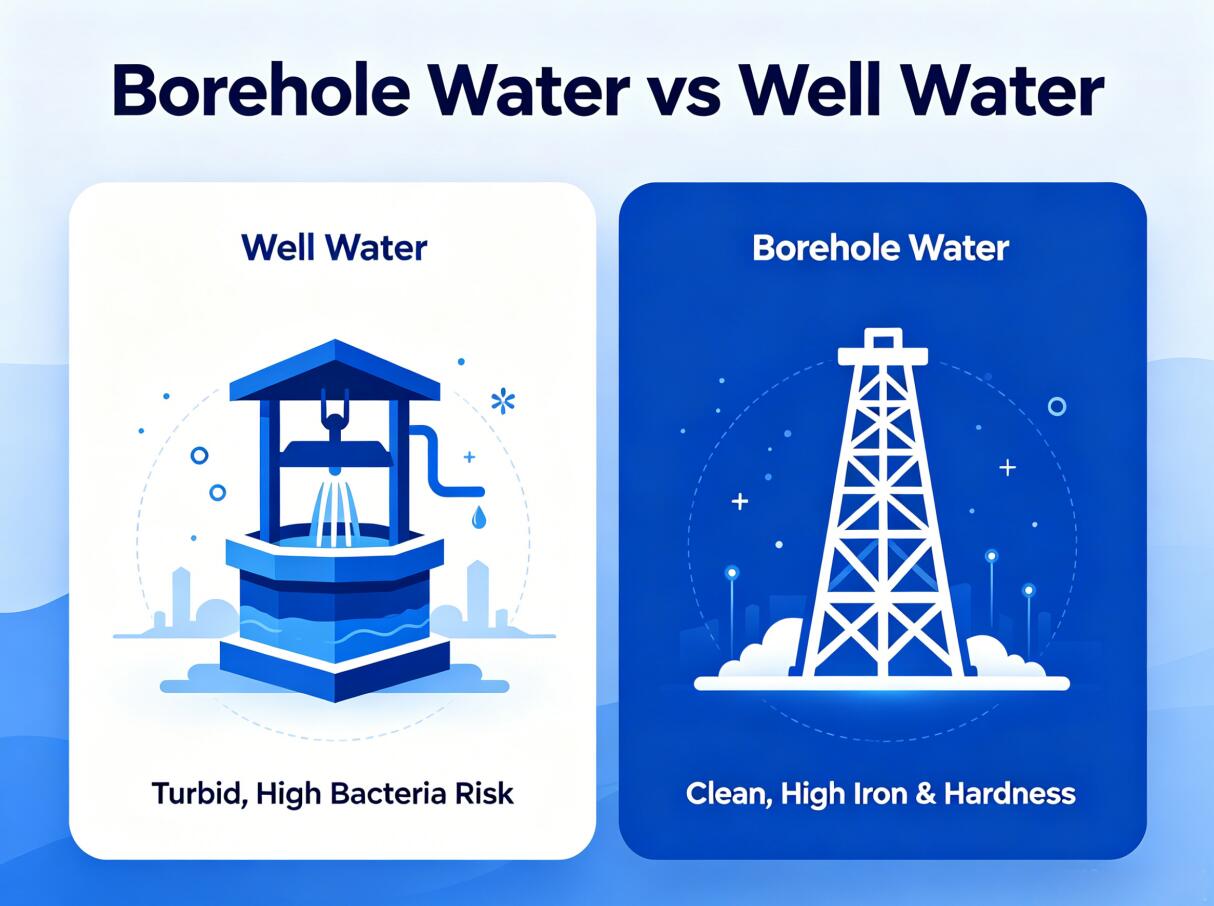
The Critical Differences – Well Water vs. Borehole Water
Many people assume all groundwater is similar. But the depth and geology make a massive difference. Here is a comparison table based on real field data:
|
Parameter |
Traditional Well Water (<15m depth) |
Deep Borehole Water (>20m to 100m+) |
|
Turbidity / Sediment |
High – especially after rain, easily clogs filters |
Very low – clear, almost no visible particles |
|
Bacteria (E. coli) |
High risk – surface runoff, sewage, animal waste infiltration |
Minimal – naturally protected by rock/clay layers |
|
Iron & Manganese |
Low – rarely exceeds limits |
Commonly high – anoxic deep layers dissolve Fe²⁺ and Mn²⁺, causing yellow/black stains |
|
Hardness (Ca/Mg) |
Moderate – some scale |
Often very high – thick scale on kettles and pipes |
|
Organic matter / Pesticides |
Possible – from farms or septic tanks |
Almost none – no surface contamination |
|
Odor / Taste |
Earthy, musty, or rotten |
Usually clean; sometimes hydrogen sulfide (rotten egg smell) |
|
Water stability |
Fluctuates with seasons and rainfall |
Stable year round, unaffected by weather |
> �� A client in Nigeria had a shallow well with no iron but constant bacterial contamination. Another client in South Africa had a deep borehole with perfect microbiology but iron at 5 mg/L – his white laundry turned orange. Same “groundwater,” totally different treatment.
Best Treatment Systems for Well Water (Shallow, High Sediment & Bacteria)
Core problems: High turbidity, bacteria, organic contaminants, seasonal fluctuations.
1. Household / Small Residential (1‑5 families)
My recommended well water treatment chain for safe drinking:
Sediment pre‑filter (strainer or spin‑down) – catches large sand and debris
PP sediment cartridge (5μm or 1μm) – reduces turbidity to clear
Ultrafiltration (UF) membrane (0.01‑0.1μm) – removes bacteria, cysts, colloids – no electricity needed for UF
UV sterilizer – kills 99.9% of remaining bacteria and viruses
Typical package: Pre‑filter → PP → UF → UV (zero wastewater, retains minerals)
> For very turbid wells, add a multi‑media sand filter before the PP cartridge – it lasts much longer.
2. Commercial / Small Community (Schools, small camps, guesthouses)
Multi‑media filter (sand + anthracite) – handles high sediment loads without frequent cartridge changes
Activated carbon filter – removes earthy taste, odors, trace pesticides
UV sterilizer (commercial size) – ensures microbiological safety
Optional: chlorination + contact tank for very high bacterial risk
3. Special Note – Odor + Turbidity Combo
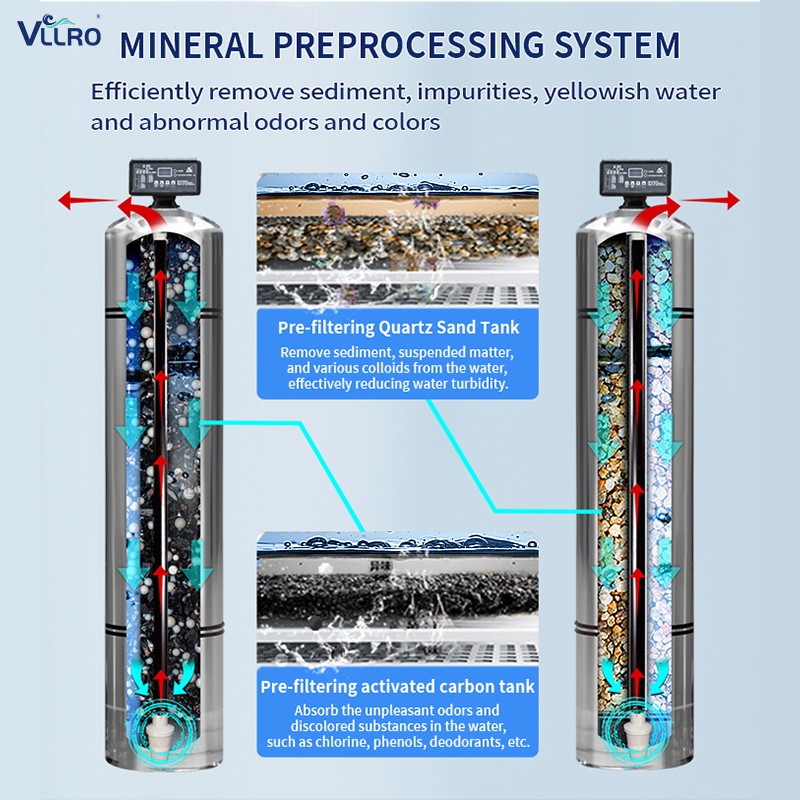
If your well water has both musty smell and visible sediment, start with sand + carbon dual tank – the standard foundation.
Best Treatment Systems for Borehole Water (Deep, High Iron/Manganese & Hardness)
Core problems: Iron, manganese, hardness (scale), occasional H₂S (rotten egg smell). Bacteria and sediment are usually not issues.
1. Household / Small Residential
The essential borehole water purification chain:
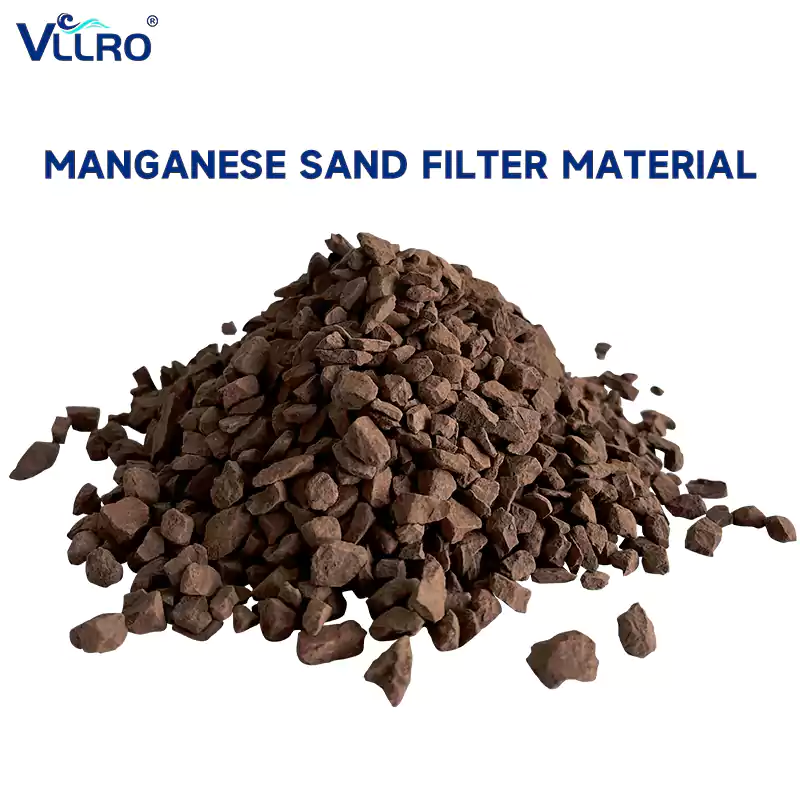
Iron & manganese removal filter (manganese sand media) – oxidizes and traps Fe²⁺ and Mn²⁺. This solves yellow/black water and metallic taste.
Water softener (ion exchange resin) – removes calcium and magnesium to prevent scale on water heaters, pipes, and appliances.
Post carbon filter (optional) – polishes taste, removes any residual odor.
> If your borehole also has a slight rotten egg smell (H₂S), add an aeration step before the manganese sand filter – or use a catalytic carbon filter.
2. Commercial / Industrial (Schools, factories, hotels, large communities) – Overseas Main Demand
For larger flow rates, you need properly sized tanks:
Manganese sand filter (automatic backwash) – the workhorse for iron/manganese removal
Automatic water softener (dual tank or single with reserve) – continuous soft water for boilers, RO pretreatment, or laundry
Activated carbon filter – polishes H₂S and any remaining odor
Reverse osmosis (RO) system – only if you need demineralized or drinking water. Important: RO must be preceded by iron removal and softening – otherwise the membrane will foul or scale within months.
3. Large Engineering Projects (Centralized water supply, mining camps)
Integrated iron removal + softening skid
Full RO plant with complete pretreatment train – multi‑media + manganese sand + carbon + softener + cartridge + RO
How to Select the Right System for Your Water Source – A Simple Decision Flow
Follow this logic when you receive a water test report:
1. Measure turbidity and bacteria – If high, you have well‑type water. Start with sediment filters and UV.
2. Measure iron & manganese – If iron >0.3 mg/L or manganese >0.1 mg/L, you need a manganese sand filter regardless of source depth.
3. Measure hardness – If >150 mg/L as CaCO₃, add a water softener.
4. Check for odor – Earthy smell → carbon filter; rotten egg (H₂S) → aeration + catalytic carbon or chlorine injection.
5. Only add RO if you need very low TDS for drinking or industrial processes – and always protect it with proper pretreatment.
> I always tell my clients: “Test first, then spend.” A $200 water test can save you $5,000 in wrong equipment.
Sophia‘s Final Recommendations & Next Steps
Choosing between well water treatment and borehole water purification is not about brand or price – it is about matching technology to your specific water chemistry.
Shallow well with muddy, bacteria‑laden water? → Pre‑filter + PP + UF + UV (zero waste, mineral retention).
Deep borehole with clear water but iron stains and scale? → Manganese sand filter + water softener (plus optional RO for drinking).
Large commercial project? → Build a complete pretreatment train before any RO system – never skip iron removal and softening.
Explore our [Groundwater Treatment Product Line]– from 1 m³/day home units to 100 m³/day industrial skids.
Not sure which system fits your source? Send me your water test report and daily water usage. I will design a customized solution – free of charge.
Related News
- How to Reduce Wastewater in Commercial RO Systems Without Sacrificing Membrane Life
- How to Calculate ROI for a Commercial Water Refilling Station
- How to Design a Borehole Water Pretreatment System for Remote Commercial RO Stations
- The "Brain" Behind the System: How VLLRO's Intelligent IoT Control Platform Revolutionizes Water Management
- The Invisible Shield: Why UV Sterilization is Non-Negotiable for Safe Drinking Water
- Maximizing RO Longevity: The Complete Guide to Water Filtration Consumables and Replacement Cycles
Leave me a message