English
- English
- Español
- Português
- русский
- Français
- 日本語
- Deutsch
- tiếng Việt
- Italiano
- Nederlands
- ภาษาไทย
- Polski
- 한국어
- Svenska
- magyar
- Malay
- বাংলা ভাষার
- Dansk
- Suomi
- हिन्दी
- Pilipino
- Türkçe
- Gaeilge
- العربية
- Indonesia
- Norsk
- تمل
- český
- ελληνικά
- український
- Javanese
- فارسی
- தமிழ்
- తెలుగు
- नेपाली
- Burmese
- български
- ລາວ
- Latine
- Қазақша
- Euskal
- Azərbaycan
- Slovenský jazyk
- Македонски
- Lietuvos
- Eesti Keel
- Română
- Slovenski
- मराठी
- Srpski језик

What Makes Reverse Osmosis Equipment the Key to High-Quality Water Purification?
Table of Contents
-
What Is Reverse Osmosis Equipment and How Does It Work?
-
Why Reverse Osmosis Systems Are Crucial for Pure Water Production
-
How Reverse Osmosis Equipment Integrates with Pure Water and Ultrafiltration Systems
-
Future Trends, Advantages, and FAQs about Reverse Osmosis Equipment
What Is Reverse Osmosis Equipment and How Does It Work?
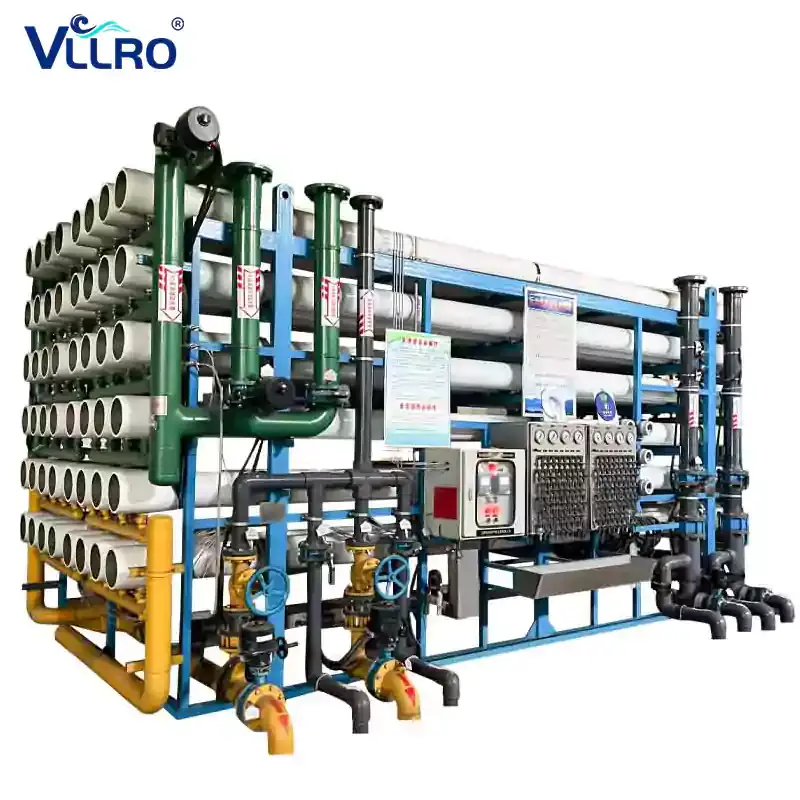
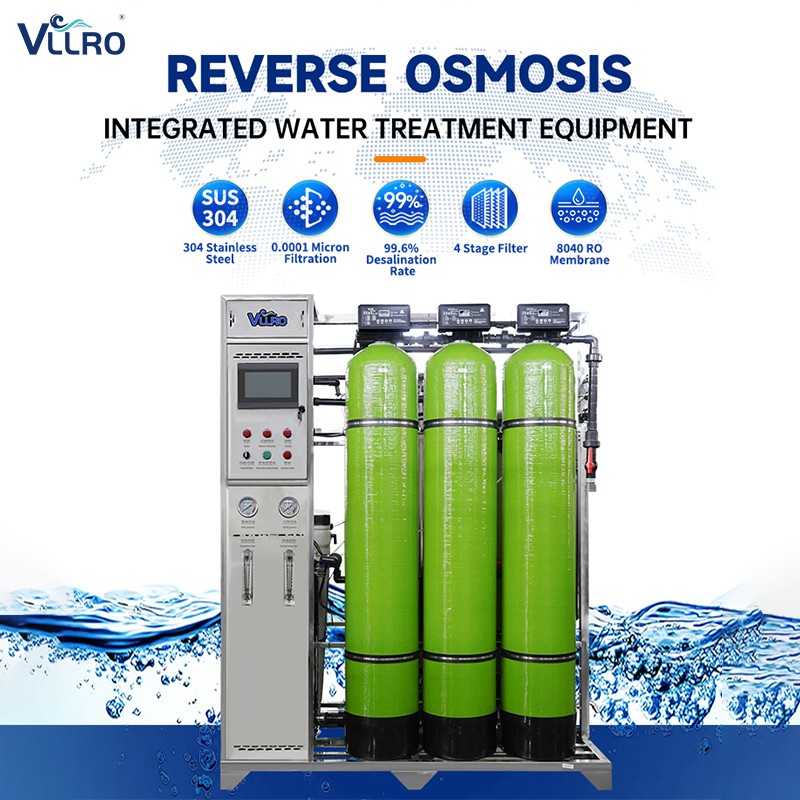
Reverse Osmosis Equipment is a highly efficient water purification system that removes impurities, salts, bacteria, and dissolved solids through a semipermeable membrane. It operates on the principle of applying pressure to overcome natural osmotic pressure, forcing water molecules through the membrane while rejecting contaminants.

The core process of reverse osmosis involves several stages — pre-filtration, high-pressure pumping, membrane separation, and post-filtration. Each stage ensures the removal of a wide range of impurities, from suspended solids to microscopic ions, producing clean and safe drinking or industrial-use water.
Key Working Principles:
-
Pre-Filtration: Removes sediment, chlorine, and other large particles that could damage the membrane.
-
High-Pressure Pumping: Applies sufficient pressure to push water through the RO membrane.
-
Membrane Separation: Allows only water molecules to pass, rejecting impurities.
-
Post-Filtration: Polishes the purified water to achieve the desired quality.
Typical Applications:
-
Drinking water purification
-
Food and beverage processing
-
Pharmaceutical production
-
Power generation and boiler feedwater
-
Semiconductor manufacturing
Product Parameters of Reverse Osmosis Equipment
| Parameter | Description |
|---|---|
| Model Range | 250 LPH – 50,000 LPH |
| Membrane Type | Spiral-wound polyamide thin-film composite |
| Operating Pressure | 150–1000 psi (10–70 bar) |
| Salt Rejection Rate | 95–99.8% |
| Recovery Rate | 45–75%, adjustable |
| Feed Water Source | Tap water, well water, seawater, brackish water |
| Material of Construction | Stainless steel 304/316 or FRP |
| Power Requirement | 220V/380V, 50/60Hz |
| Automation Level | Semi-automatic / Fully automatic |
| Control System | PLC with digital monitoring screen |
| Flow Meter & Pressure Gauge | Integrated for accurate performance control |
| Cleaning System | CIP (Clean-In-Place) system optional |
The flexibility of the RO system design makes it suitable for both small-scale and large-scale operations, ensuring stable performance under varying water conditions.
Why Reverse Osmosis Systems Are Crucial for Pure Water Production
Water quality directly impacts industrial processes, product consistency, and health standards. Reverse Osmosis Equipment ensures that all unwanted impurities—such as heavy metals, bacteria, and dissolved salts—are efficiently removed, making it a cornerstone of modern purification systems.

Key Advantages:
-
High Efficiency: Removes up to 99.8% of total dissolved solids (TDS).
-
Low Energy Consumption: Advanced membranes reduce the need for high pressure.
-
Compact Design: Modular and space-saving for various installation environments.
-
Long Lifespan: High-grade membranes and components ensure years of reliable operation.
-
Consistent Output: Delivers uniform water quality regardless of source variation.
Environmental Benefits:
Reverse Osmosis systems minimize chemical usage compared to traditional purification methods. The process significantly reduces the need for water softeners and ion exchange resins, leading to less chemical discharge and lower maintenance costs.
Why Choose RO for Industrial Applications?
Industries such as pharmaceuticals, power generation, and food manufacturing demand high-purity water. Reverse Osmosis Equipment provides the most cost-effective and sustainable method to achieve consistent results without compromising safety or efficiency.
How Reverse Osmosis Equipment Integrates with Pure Water and Ultrafiltration Systems
Reverse Osmosis Equipment often works in combination with other purification units such as Pure Water Systems and Ultrafiltration (UF) Systems to achieve comprehensive water treatment solutions.
(a) Pure Water System
A Pure Water System is typically the downstream process after reverse osmosis, refining the already purified water for applications requiring extremely low levels of dissolved solids, such as laboratory testing, electronics manufacturing, and medical applications.
Key Features of Pure Water System:
-
Multi-stage polishing filters
-
Deionization or mixed-bed ion exchange modules
-
Ultraviolet (UV) sterilization
-
Automatic conductivity monitoring
-
Compact, skid-mounted design
Typical Parameters of Pure Water System
| Parameter | Specification |
|---|---|
| Output Water Conductivity | ≤ 0.2 µS/cm |
| TOC (Total Organic Carbon) | ≤ 50 ppb |
| Flow Rate | 100–10,000 LPH |
| UV Sterilizer Wavelength | 254 nm |
| Material | SUS304 / SUS316 Stainless Steel |
| Control Type | PLC Touch Panel Control |
| Storage Tank | HDPE / Stainless Steel Options |
The Pure Water System ensures ultra-clean water by combining reverse osmosis with polishing processes. This makes it ideal for producing ultrapure water that meets international laboratory or industrial standards.
(b) Ultrafiltration (UF) System
The Ultrafiltration System acts as a pre-treatment or polishing unit in a water purification line. It employs hollow-fiber or tubular membranes to remove suspended solids, colloids, bacteria, and macromolecules from raw or pretreated water.

Core Features of Ultrafiltration System:
-
Removes particles as small as 0.01 micron
-
Operates under low pressure
-
High flux and recovery rate
-
Resistant to chlorine and chemical cleaning agents
-
Can be used before RO to extend membrane life
Typical Parameters of Ultrafiltration System
| Parameter | Specification |
|---|---|
| Pore Size | 0.01–0.1 µm |
| Operating Pressure | 1–4 bar |
| Material | PVDF / PES Membrane |
| Flow Rate | 500–20,000 LPH |
| Operating Temperature | 5–45°C |
| Cleaning Type | Automatic Backwash / CIP System |
| Expected Lifespan | 3–5 Years |
By combining Ultrafiltration and Reverse Osmosis, users can achieve superior purification efficiency and reduce membrane fouling, ensuring longer equipment life and higher water recovery.
Future Trends, Advantages, and FAQs about Reverse Osmosis Equipment
Future Trends in Reverse Osmosis Technology
As global demand for clean water continues to rise, Reverse Osmosis technology is evolving to meet environmental and industrial challenges. Key future developments include:
-
Energy-Efficient Membranes: New-generation membranes reduce operating pressure, cutting energy costs by up to 30%.
-
Smart Monitoring Systems: IoT-enabled sensors for real-time water quality and performance tracking.
-
Modular Design Evolution: Systems that can be easily scaled or upgraded according to capacity needs.
-
Zero-Liquid Discharge (ZLD) Integration: Ensures complete recycling of wastewater for sustainable production.
-
Advanced Pretreatment Options: Integration with UF and nanofiltration to reduce fouling and extend RO lifespan.
These innovations make RO systems more adaptable, efficient, and environmentally friendly—paving the way for a sustainable water purification future.
Frequently Asked Questions (FAQ)
Q1: How often should Reverse Osmosis membranes be replaced?
A1: Typically, RO membranes last between 2 to 5 years depending on feed water quality, operating pressure, and maintenance. Proper pre-filtration and periodic cleaning can extend membrane life significantly.
Q2: Can Reverse Osmosis Equipment remove all types of contaminants?
A2: RO systems can remove up to 99.8% of dissolved salts, bacteria, and heavy metals. However, pre-filtration or UF systems may be required to remove larger particles or specific contaminants before entering the RO unit.
Q3: What maintenance is required for Reverse Osmosis Equipment?
A3: Regular maintenance includes pre-filter replacement every 3–6 months, membrane cleaning every 6–12 months, and monitoring of pressure, flow rate, and conductivity. A well-maintained system ensures stable performance and longer service life.
Conclusion
Reverse Osmosis Equipment is the backbone of modern water purification systems, providing reliable, high-quality water for domestic, commercial, and industrial use. When integrated with Pure Water Systems and Ultrafiltration Systems, it forms a complete purification chain that meets the strictest standards for purity and efficiency.
As industries continue to seek sustainable and energy-efficient solutions, Reverse Osmosis Equipment remains at the forefront of innovation and practicality. With advanced materials, automated control, and modular design, it represents the future of clean water technology.
For reliable and high-performance solutions, VLLRO offers state-of-the-art Reverse Osmosis Equipment tailored to various industries and water conditions. To learn more about product specifications, customization, and system integration — Contact Us today to discover how VLLRO can provide your ideal water purification solution.
Related News
- How to Reduce Wastewater in Commercial RO Systems Without Sacrificing Membrane Life
- How to Calculate ROI for a Commercial Water Refilling Station
- How to Design a Borehole Water Pretreatment System for Remote Commercial RO Stations
- The "Brain" Behind the System: How VLLRO's Intelligent IoT Control Platform Revolutionizes Water Management
- The Invisible Shield: Why UV Sterilization is Non-Negotiable for Safe Drinking Water
- Maximizing RO Longevity: The Complete Guide to Water Filtration Consumables and Replacement Cycles
Leave me a message