English
- English
- Español
- Português
- русский
- Français
- 日本語
- Deutsch
- tiếng Việt
- Italiano
- Nederlands
- ภาษาไทย
- Polski
- 한국어
- Svenska
- magyar
- Malay
- বাংলা ভাষার
- Dansk
- Suomi
- हिन्दी
- Pilipino
- Türkçe
- Gaeilge
- العربية
- Indonesia
- Norsk
- تمل
- český
- ελληνικά
- український
- Javanese
- فارسی
- தமிழ்
- తెలుగు
- नेपाली
- Burmese
- български
- ລາວ
- Latine
- Қазақша
- Euskal
- Azərbaycan
- Slovenský jazyk
- Македонски
- Lietuvos
- Eesti Keel
- Română
- Slovenski
- मराठी
- Srpski језик

Which Water Tank Fits Your Site?
Abstract
A water tank sounds simple—until it leaks, breeds odors, fails inspection, or can’t meet peak demand when your production line, building, or irrigation schedule is on the line. This guide breaks down how to choose a Water Tank that matches your real-world constraints: capacity sizing, materials, hygiene, installation conditions, climate, monitoring, and maintenance. You’ll also get a supplier checklist, a comparison table, and FAQs to help you avoid common purchasing traps and reduce long-term cost and downtime.
Contents
- Outline
- The pain points most buyers meet too late
- How to size a Water Tank without guessing
- Materials and construction options
- Keeping stored water clean and stable
- Installation realities that change the right choice
- Maintenance, monitoring, and risk control
- Cost: purchase price vs lifecycle cost
- Supplier questions and a buying checklist
- FAQ
- Closing thoughts
Outline
- Define the job: potable, process, firefighting reserve, irrigation, rainwater, or buffer storage.
- Size for reality: average use + peak demand + safety reserve + refill time.
- Choose a material: match water chemistry, temperature, corrosion risk, and hygiene requirements.
- Plan the install: footprint, access, foundation, seismic/wind, insulation, and piping layout.
- Protect water quality: vents, covers, drainage, cleaning access, and control of stagnation.
- Design for upkeep: sensors, overflow protection, leak detection, and maintenance schedule.
- Evaluate lifecycle cost: not just “cheapest today,” but downtime, repairs, and compliance risk.
The pain points most buyers meet too late
1) “It holds water… until it doesn’t.”
Leaks rarely announce themselves politely. A minor seam issue or poor joint design can become a shutdown, property damage event, or contamination risk. The real cost isn’t the patch—it’s the disruption.
Tip: prioritize structural design, joint integrity, and access for inspection—not only capacity.
2) Bad taste, odor, or algae growth.
Stored water can degrade when light enters the tank, when vents aren’t protected, or when the tank is hard to clean. Stagnation and temperature swings can make things worse, especially in warm climates or intermittent use.
Tip: opaque walls, screened vents, proper overflow design, and a cleaning manway matter more than many catalogs admit.
3) “We installed it… and then discovered the site constraints.”
Doorway widths, lifting points, crane access, foundation loading, and pipe routing can turn an “easy purchase” into a long site argument. Choosing the wrong form factor is a classic delay trigger.
4) Compliance surprises.
Some applications need specific hygienic standards, protective coatings, or testing documentation. If you only discover that after delivery, you may be stuck reworking, re-certifying, or re-buying.
How to size a Water Tank without guessing

Capacity is not a “bigger is always safer” decision. Oversizing can increase stagnation and cleaning burden, while undersizing leads to pressure issues and operational interruptions.
A simple sizing framework:
Required volume = (average daily demand × desired autonomy) + peak buffer + reserve
Autonomy can mean “hours of backup” for buildings, “days between deliveries” for remote sites, or “fire reserve” if applicable.
Use these questions to avoid under/overbuying:
- What is the water used for (potable/process/cooling/irrigation/fire reserve)?
- What are average and peak flow rates, and how long do peaks last?
- How quickly can the tank refill (municipal supply, pump capacity, well recovery, truck delivery schedule)?
- Does the system need a dedicated emergency reserve that cannot be “borrowed” for daily use?
- Will usage be seasonal or intermittent (risk of stagnation)?
If you anticipate expansion, don’t automatically “double the size.” Consider modular solutions or parallel tanks. That keeps cleaning manageable and offers redundancy if one tank is offline.
Materials and construction options
Material choice is where many hidden failures start. The right option depends on water chemistry, temperature, corrosion environment (coastal air, industrial fumes), and whether the stored water must remain potable.
| Option | Where it shines | Common watch-outs | Best-fit scenarios |
|---|---|---|---|
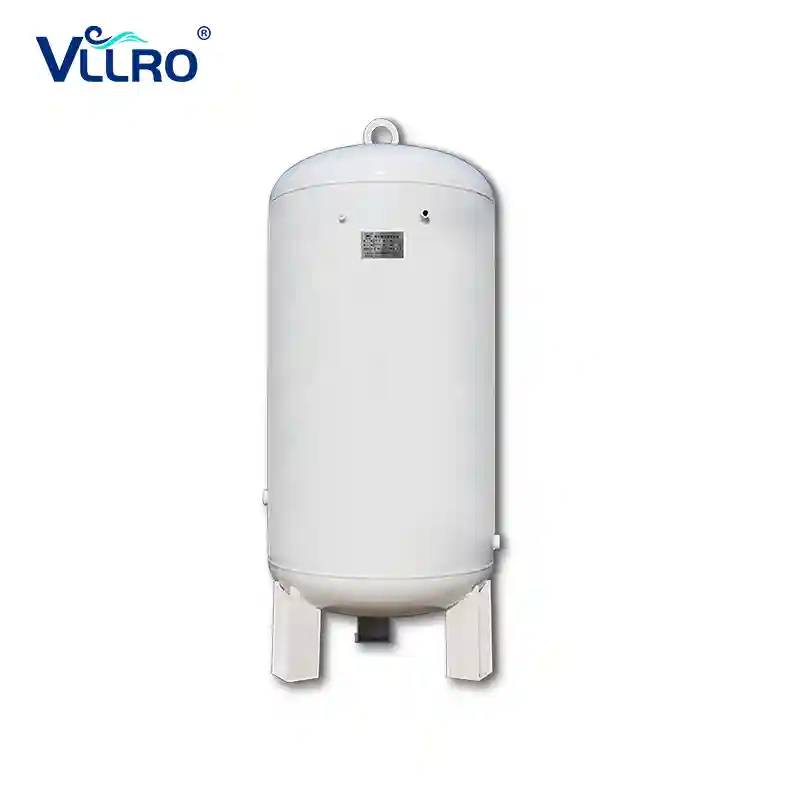
| Stainless steel | Strong hygiene performance, durable, good for many potable/process needs | Higher upfront cost; quality depends on welding and finishing; chemistry matters | Food-grade environments, facilities prioritizing cleanliness, long service life planning |
| GRP/FRP (fiberglass) | Corrosion resistance, modular installation options, good for outdoor placement | Needs quality resin/gel coat; UV protection matters; joint quality is critical | Municipal/industrial storage, coastal or corrosive environments |
| HDPE/Plastic | Lightweight, cost-effective, easy transport | Temperature and UV considerations; limited structural formats for some capacities | Small-to-medium tanks, temporary or mobile solutions |
| Concrete/Steel-lined | Very large capacities, stable temperature, long-term infrastructure builds | Longer construction timeline; lining/coating integrity is essential | Large-scale municipal, agricultural reservoirs, long planning horizons |
Construction details that matter more than marketing terms:
- Joint strategy: how panels connect, sealing method, and tolerance control.
- Access: manway size, internal ladder options, safe cleaning and inspection space.
- Drainage: proper low-point drain design to remove sediment completely.
- Overflow and venting: screened vents, overflow that prevents insects and backflow.
- Foundation interface: base frame design, load distribution, anchoring approach.
Keeping stored water clean and stable
Many “water tank problems” are actually water management problems: warm stagnant water, contamination entry points, and insufficient cleaning access. If the tank is hard to maintain, it won’t be maintained—simple as that.
Prevent contamination entry
- Use screened vents and protected overflows
- Ensure the cover and access points seal reliably
- Choose fittings that reduce dead legs and sediment traps
Reduce algae and odor risk
- Prefer opaque walls or light-blocking design
- Manage temperature swings (insulation if needed)
- Design for turnover: avoid oversized tanks for intermittent demand
Operational habits that protect quality:
- Schedule periodic draining/cleaning based on usage and environment.
- Flush lines after long idle periods.
- Consider level control logic that encourages regular turnover (where appropriate).
- Keep the surrounding area clean to reduce dust and insect pressure near vents.
Installation realities that change the right choice
A Water Tank can look perfect on paper and still be wrong for your site. Before you commit, map the “real route” from delivery to final placement and confirm how the tank will be lifted, aligned, and connected.
Site factors to confirm early:
- Access and lifting: crane reach, lifting points, overhead obstructions, and safe rigging plan.
- Footprint and height: available floor space, clearance for manway access, and ventilation.
- Foundation: load capacity, flatness tolerance, drainage around the base, and anchoring needs.
- Environment: freeze risk, strong winds, UV exposure, salt air, industrial corrosion sources.
- Piping layout: inlet/outlet position, isolation valves, overflow path, and backflow protection.
Practical rule: If a tank will be difficult to access, it will be difficult to maintain—so choose a design that makes routine work safe and fast.
Maintenance, monitoring, and risk control
The easiest way to reduce downtime is to design for early detection and simple upkeep. Even basic monitoring can prevent expensive surprises.
Recommended features (depending on application):
- Level indicators/sensors: avoid pump dry-run and overflow events.
- Overflow safeguards: a controlled overflow route that won’t damage nearby assets.
- Leak observation plan: visible inspection zones, accessible joints, and scheduled checks.
- Cleaning-friendly interior: smooth surfaces, safe access, and effective drainage.
- Documentation: installation drawings, maintenance guidance, and material certifications as needed.
This is where working with an experienced supplier helps. Teams like Jianyun Zhishui (Qingdao) Industrial Technology Co., Ltd. typically support projects by aligning tank design with the client’s water quality goals, site constraints, and long-term operating plan—so the tank doesn’t become a recurring headache for maintenance staff.
Cost: purchase price vs lifecycle cost
Two tanks can look similar in capacity and still have very different total costs over 5–15 years. The hidden drivers are repairs, cleaning effort, unexpected retrofits, and the consequences of downtime or water-quality issues.
Lifecycle cost drivers to compare:
- Expected service life and corrosion resistance in your environment
- Ease of inspection and cleaning (labor hours over time)
- Risk of leakage or joint degradation
- Availability of spare parts and after-sales support
- Time required for installation and commissioning
If your operation is sensitive (manufacturing, hospitality, healthcare, or any facility with strict water needs), reliability often beats “lowest upfront price” by a wide margin.
Supplier questions and a buying checklist

Before placing an order, treat the purchase as an engineering decision, not just a procurement line item. Here’s a checklist that catches most expensive mistakes.
Ask your supplier:
- What tank material and surface finish are recommended for my water type and temperature range?
- How are joints sealed, tested, and quality-checked during fabrication?
- What are the installation requirements for the foundation, anchoring, and site flatness?
- Where are the manway, drain, overflow, and vents located—and can they be customized for my piping plan?
- What is the cleaning procedure and recommended maintenance interval?
- What documentation is provided (drawings, material certificates, inspection records, etc.)?
- What support is available after delivery (spares, troubleshooting, replacement seals/panels)?
Buyer’s final check: Can your maintenance team safely access, inspect, and clean the tank without “special heroics”? If the answer is no, redesign now—before delivery.
FAQ
- How often should a Water Tank be cleaned?
- It depends on usage, temperature, and water source. High-turnover, controlled environments may need less frequent cleaning than intermittent systems exposed to heat and dust. The key is building a routine your team can actually follow, and ensuring the tank design supports safe access and complete drainage.
- Is a bigger tank always safer?
- Not always. Oversizing can increase stagnation, raise cleaning burden, and create water quality issues—especially if demand is seasonal or unpredictable. A modular approach (two smaller tanks) can improve redundancy and turnover.
- What features help prevent algae and odor?
- Light-blocking design (opaque walls), screened vents, protected overflows, and a layout that avoids dead zones. Good drainage and easy cleaning access are just as important as the material choice.
- What are common installation mistakes?
- Underestimating access for delivery and lifting, skipping foundation flatness requirements, placing vents/overflows where insects or dust easily enter, and routing pipes in ways that create sediment traps or maintenance obstacles.
- How do I decide between stainless steel and fiberglass options?
- Start with water quality requirements and environment. If hygiene and long service life are top priorities, stainless can be a strong choice. If corrosion environment and modular installation are major concerns, fiberglass solutions can perform well when resin systems and joint quality are properly controlled.
Closing thoughts
The right Water Tank is the one that quietly supports your operation: stable supply, clean storage, manageable maintenance, and predictable long-term cost. If you size correctly, match materials to your environment, and plan installation and monitoring from day one, you’ll avoid the problems that typically show up after “it’s already installed.”
Ready to spec a Water Tank that won’t become a recurring problem?
Share your application (water type, capacity target, site conditions, and any special requirements) and we’ll help you narrow down practical options. If you want a faster, safer decision path, contact us to discuss your project needs.
Related News
- How to Reduce Wastewater in Commercial RO Systems Without Sacrificing Membrane Life
- How to Calculate ROI for a Commercial Water Refilling Station
- How to Design a Borehole Water Pretreatment System for Remote Commercial RO Stations
- The "Brain" Behind the System: How VLLRO's Intelligent IoT Control Platform Revolutionizes Water Management
- The Invisible Shield: Why UV Sterilization is Non-Negotiable for Safe Drinking Water
- Maximizing RO Longevity: The Complete Guide to Water Filtration Consumables and Replacement Cycles
Leave me a message