English
- English
- Español
- Português
- русский
- Français
- 日本語
- Deutsch
- tiếng Việt
- Italiano
- Nederlands
- ภาษาไทย
- Polski
- 한국어
- Svenska
- magyar
- Malay
- বাংলা ভাষার
- Dansk
- Suomi
- हिन्दी
- Pilipino
- Türkçe
- Gaeilge
- العربية
- Indonesia
- Norsk
- تمل
- český
- ελληνικά
- український
- Javanese
- فارسی
- தமிழ்
- తెలుగు
- नेपाली
- Burmese
- български
- ລາວ
- Latine
- Қазақша
- Euskal
- Azərbaycan
- Slovenský jazyk
- Македонски
- Lietuvos
- Eesti Keel
- Română
- Slovenski
- मराठी
- Srpski језик

Why Water Filtration Consumables Decide Whether Your System Performs or Fails?
Abstract — Water treatment systems rarely “break” in one dramatic moment. Most performance problems creep in through the parts people replace the most: cartridges, membranes, media, and other water filtration consumables. When these components are mismatched, overdue, poorly stored, or sourced inconsistently, you see the same painful symptoms: pressure drop, unstable water quality, rising operating cost, frequent downtime, and endless troubleshooting. This guide explains the practical role consumables play, how to choose them with confidence, how to plan replacements without guesswork, and how to cut total cost while protecting water quality—whether you run a small commercial system or a multi-stage industrial line.
Table of Contents
- The real customer pain behind “just a filter replacement”
- A simple map of Water Filtration Consumables by treatment stage
- How to select consumables without trial-and-error
- Quick comparison table for common consumables
- Replacement planning that prevents downtime
- Reducing total cost without sacrificing water quality
- Storage, handling, and installation mistakes that quietly ruin performance
- How to evaluate a supplier and standardize your consumables
- A practical troubleshooting checklist
- FAQ
Outline
- Identify your pain points (quality drift, pressure loss, fouling, frequent changeouts).
- Match each process stage to the right consumable type.
- Confirm compatibility (dimensions, micron rating, chemistry, temperature, pressure).
- Build a replacement plan using measurements—not guesses.
- Standardize SKUs and supplier criteria to reduce risk and cost.
The real customer pain behind “just a filter replacement”

If you’ve ever felt like your water system is a mystery box, you’re not alone. The most common complaints I hear all trace back to consumables management:
- Unstable water quality: the same line produces different results week to week because the “protective” pre-filters aren’t protecting anything anymore.
- Rising pressure drop: clogged sediment stages force pumps to work harder, increasing energy use and stressing equipment.
- Membrane fouling or early failure: a single wrong cartridge choice (or a late changeout) can shorten membrane life dramatically.
- Downtime that feels random: you only notice an issue when production is interrupted.
- Confusing inventory: multiple cartridge sizes and “almost the same” part numbers lead to wrong installs and emergency purchases.
Here’s the truth: consumables are not accessories. They are the system’s “working surfaces.” If you control the consumables, you control consistency.
A simple map of Water Filtration Consumables by treatment stage
Most filtration trains follow the same logic: remove larger particles first, protect the sensitive components later, and polish the water at the end. This map helps you “place” each consumable correctly.
- Pre-filtration (protection stage): sediment cartridges, pleated filters, melt-blown filters, filter bags.
- Adsorption (taste/odor/organics): carbon cartridges, carbon block, granular activated carbon (GAC) media.
- Softening / demineralization: ion exchange resin (softening resin, mixed-bed resin), brine components depending on design.
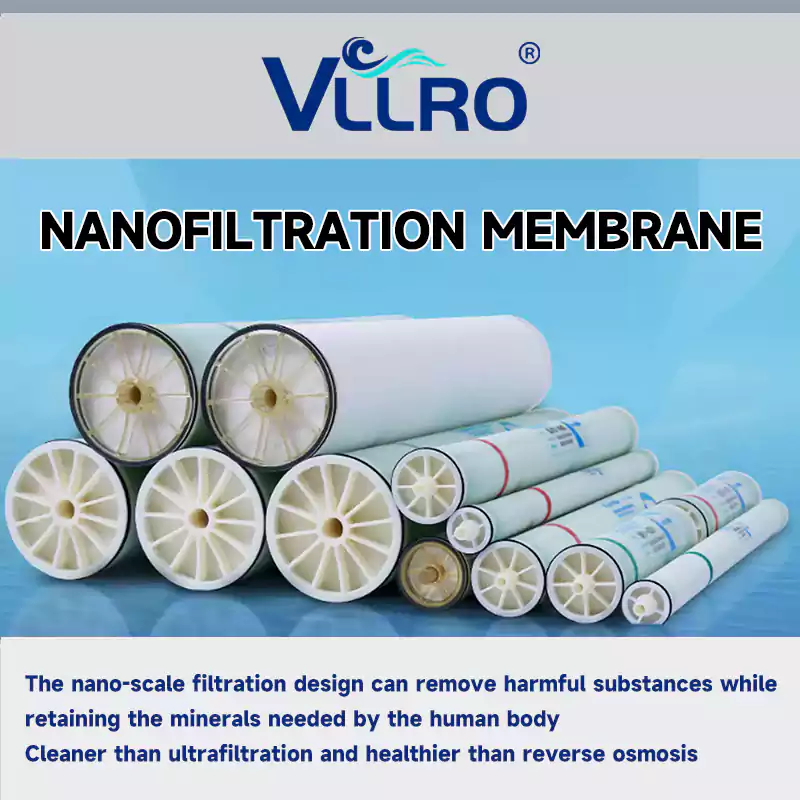
- Membrane separation: RO membranes, UF membranes, NF membranes (the exact type depends on target contaminants and recovery goals).
- Final polishing and safety: fine cartridges (1–5 micron or finer), sterile-grade options where needed, UV lamps (often treated as a consumable in maintenance planning).
When customers struggle, it’s often because stages overlap (for example, trying to use carbon to “fix” sediment problems) or because the pre-filtration stage is undersized, letting dirt reach high-value components.
How to select consumables without trial-and-error
Selecting the right consumable becomes straightforward when you anchor decisions to measurements and operating realities. Use this order of operations:
- Define the job in plain language: “Remove sand and rust,” “reduce chlorine before RO,” “stabilize hardness,” or “protect sterile point-of-use.”
- Confirm what you’re treating: source water type (municipal, groundwater, surface water, recycled process water) and the contaminants you actually see.
- Match performance to risk: If downstream equipment is expensive (membranes, precision valves, dosing), choose a more protective pre-filter strategy.
- Check compatibility: housing size, end-cap style, micron rating strategy (staged or single), temperature, pressure, and chemical exposure.
- Decide how you’ll know it’s “done”: differential pressure, flow decline, conductivity drift, or visible turbidity change.
A practical tip: If your pre-filter clogs too fast, it does not automatically mean the filter is “bad.” It can mean the filter is doing its job but the stage is undersized (too little surface area) or the upstream water is fluctuating. Upsizing surface area or adding a staged micron approach can reduce change frequency dramatically.
Quick comparison table for common consumables
| Consumable type | Primary purpose | Typical signs it’s time to replace | Common pitfalls |
|---|---|---|---|
| Sediment / pleated cartridge | Protect downstream components from particles | Rising differential pressure, reduced flow, visible discoloration | Wrong micron strategy; undersized surface area; installing backwards on certain designs |
| Carbon block / GAC | Reduce chlorine, odor, some organics; improve taste | Chlorine breakthrough, odor return, pressure drop | Using carbon to handle sediment; channeling from poor flow distribution; ignoring contact time |
| Ion exchange resin | Softening or demineralization depending on resin type | Hardness leakage, regeneration inefficiency, higher salt consumption | Incorrect regeneration settings; resin fouling from iron/organics; poor pre-filtration |
| RO membrane | Remove dissolved salts and many contaminants | Conductivity creep, pressure increase, recovery drop, frequent CIP | Inadequate pre-treatment; incorrect cleaning chemistry; chlorine exposure when not allowed |
| Final polishing cartridge | Catch fine particles at point-of-use; stabilize quality | Particle counts/turbidity rise; pressure drop at the endpoint | Relying on polishing filters to solve upstream problems; irregular replacement |
Replacement planning that prevents downtime
A “calendar-only” replacement schedule is one of the fastest ways to waste money and still miss problems. Instead, combine time-based planning with condition-based triggers:
- Use differential pressure for pre-filters: track inlet vs. outlet pressure on each stage. When the delta rises beyond your operating window, you have an objective replacement trigger.
- Use breakthrough indicators for adsorption: for carbon, watch for chlorine breakthrough or the return of odor/taste complaints.
- Use conductivity and recovery for RO: if conductivity drifts upward while operating conditions remain steady, the membrane or its protection stages need attention.
- Keep a “first-symptom” log: note the earliest sign before failure (slight flow decline, slight DP rise). Over time you’ll predict changeouts instead of reacting to emergencies.
If you operate multiple sites, standardizing the measurement method (same gauges, same logging frequency, same replacement thresholds) is often more impactful than chasing “the perfect” filter brand.
Reducing total cost without sacrificing water quality
Most teams try to cut cost by buying the cheapest cartridge. That usually backfires because the real cost sits in downtime, labor, membrane damage, and emergency shipping. Instead, target the drivers that actually move the needle:
- Extend life with staging: a coarse-to-fine approach (for example, 20 micron then 5 micron) can reduce rapid clogging and keep DP stable longer.
- Increase surface area: pleated designs and longer elements often lower the cost per treated ton because they don’t choke the system as quickly.
- Protect high-value assets: spending slightly more on pre-treatment can save far more by extending membrane life and reducing cleaning frequency.
- Standardize SKUs: fewer variants means fewer wrong installs, lower inventory carrying cost, and faster training.
- Buy with documentation and consistency: stable production quality and clear specifications reduce the hidden cost of troubleshooting.
If you want a simple internal metric, track “cost per cubic meter (or gallon) treated” instead of “cost per filter.” That shifts the conversation from purchase price to performance.
Storage, handling, and installation mistakes that quietly ruin performance
Even the right consumable can underperform if it’s mishandled. These are the mistakes that show up repeatedly:
- Improper storage: heat, humidity, or sunlight can degrade some materials and packaging integrity.
- Mixed inventory without labeling: “close enough” cartridges cause bypass, leakage, or lower capture efficiency.
- Skipping flush and start-up steps: carbon stages often need proper flushing to avoid fines traveling downstream.
- Forgetting seals and O-rings: small sealing parts create big problems—bypass is the silent killer of filtration performance.
- Over-tightening housings: this can damage threads and seals, making future service harder and riskier.
A good practice is to treat consumable installation like a repeatable procedure: a short checklist, consistent torque habits, a brief post-install inspection, and a recorded baseline DP/flow reading.
How to evaluate a supplier and standardize your consumables
Consistency is the core of trust in water treatment. When sourcing Water Filtration Consumables, you’re not only buying a part—you’re buying repeatability. A reliable supplier should help you lock down specifications and reduce variation between batches.
- Clear specs and compatibility guidance: dimensions, micron ratings, materials, and recommended operating windows.
- Stable product naming: consistent SKUs reduce ordering mistakes.
- Support for standardization: help you reduce “filter sprawl” across sites.
- Problem-solving mindset: the best partners ask about your symptoms and your process, not just your part number.
For buyers who want to streamline sourcing and improve reliability, Jianyun Zhishui (Qingdao) Industrial Technology Co., Ltd. focuses on practical consumables selection and stage-by-stage matching—so maintenance teams can stop reacting and start controlling outcomes.
A practical troubleshooting checklist

When something goes wrong, avoid the expensive habit of changing random parts. Use this order:
- Confirm the symptom: quality drift, flow drop, DP rise, unusual odor, or membrane alarms.
- Check measurements first: DP across each stage, inlet pressure, flow, conductivity/turbidity where applicable.
- Inspect for bypass: seals, O-rings, seating, and housing cracks.
- Identify the earliest stage showing change: the “first stage that moved” is usually the root cause.
- Review recent changes: new water source, seasonal shifts, maintenance timing, new cartridge supplier, altered chemical dosing.
- Correct the cause, then reset the baseline: after replacement, record fresh DP/flow values.
If you do this consistently, you’ll notice something satisfying: your system becomes predictable again—because you’re managing the consumables as a controlled variable, not a surprise expense.
FAQ
- How often should I replace water filtration consumables?
- Use a combination of time-based planning and condition triggers. Pre-filters are best managed by differential pressure; adsorption stages by breakthrough signs; membranes by trend changes in conductivity, recovery, and cleaning frequency. If you can only pick one improvement, start logging DP and flow weekly.
- What causes cartridges to clog “too fast”?
- Most fast clogging comes from undersized surface area, a micron rating that’s too fine too early, or upstream water variability (construction, rainfall, seasonal changes). Consider staging (coarse-to-fine), upsizing the element length, or adding a pre-stage for heavy particulate loads.
- Can I switch brands if the dimensions match?
- Sometimes yes, but “same size” is not the full story. End-cap design, sealing style, media structure, and effective filtration area can differ. If you switch, monitor DP and water quality closely for the first cycle and keep the old spec on hand for comparison.
- Why do my RO membranes foul even after regular cartridge changes?
- Membranes foul when pre-treatment doesn’t match the real contaminants. Common culprits include colloids that slip through, organics not addressed before RO, scaling risk not controlled, or accidental exposure to incompatible chemicals. Treat the membrane as a “final step” that requires stable upstream protection.
- What’s the easiest way to reduce downtime?
- Standardize your consumables list, keep a small safety stock of critical items, and create replacement thresholds that trigger service before failure. Downtime usually happens when you wait for a symptom to become a crisis.
Conclusion
If your water treatment performance feels inconsistent, don’t start by blaming the whole system. Start by controlling the pieces that change most often. When Water Filtration Consumables are selected by process stage, installed correctly, monitored with simple measurements, and standardized across operations, you get what every customer actually wants: stable water quality, fewer surprises, and a lower total operating cost.
If you want help choosing the right consumables for your specific water source and process goals, contact us — tell us your current stages, flow rate, and the problem you’re trying to solve, and we’ll help you build a consumables plan that’s consistent, measurable, and easy to maintain.
Related News
- How to Reduce Wastewater in Commercial RO Systems Without Sacrificing Membrane Life
- How to Calculate ROI for a Commercial Water Refilling Station
- How to Design a Borehole Water Pretreatment System for Remote Commercial RO Stations
- The "Brain" Behind the System: How VLLRO's Intelligent IoT Control Platform Revolutionizes Water Management
- The Invisible Shield: Why UV Sterilization is Non-Negotiable for Safe Drinking Water
- Maximizing RO Longevity: The Complete Guide to Water Filtration Consumables and Replacement Cycles
Leave me a message