- English
- Español
- Português
- русский
- Français
- 日本語
- Deutsch
- tiếng Việt
- Italiano
- Nederlands
- ภาษาไทย
- Polski
- 한국어
- Svenska
- magyar
- Malay
- বাংলা ভাষার
- Dansk
- Suomi
- हिन्दी
- Pilipino
- Türkçe
- Gaeilge
- العربية
- Indonesia
- Norsk
- تمل
- český
- ελληνικά
- український
- Javanese
- فارسی
- தமிழ்
- తెలుగు
- नेपाली
- Burmese
- български
- ລາວ
- Latine
- Қазақша
- Euskal
- Azərbaycan
- Slovenský jazyk
- Македонски
- Lietuvos
- Eesti Keel
- Română
- Slovenski
- मराठी
- Srpski језик

How to Choose Water Softening Equipment for Africa?
How to Choose Water Softening Equipment for Africa? Sophia‘s 4-Step Guide
Author: Sophia
Water Treatment Engineer, 12 years of experience | Specialized in challenging water conditions in Africa & the Middle East
If you are planning to install a water softening system in Africa, stop right there. I have seen too many imported softeners fail within 3 to 6 months – resin poisoned by iron, valves killed by voltage fluctuations, or tanks cracked under the African sun. The truth is: Africa’s water and environment are far more challenging than China or Europe.
Today, I will share my 4‑step framework for selecting the right water softening equipment for Africa. You will learn: why full water testing is non‑negotiable, how to design a life‑saving pretreatment train, what hardware can survive high temperatures and unstable power, and why local after‑sales support makes or breaks your project.
Let’s go.
Step 1 – Understand Africa‘s Water: Much Harsher Than You Think
Most African water sources are groundwater (boreholes/wells) . Compared to typical Chinese or European feed water, African groundwater often has:
- Extreme hardness – 200 to 800 mg/L (as CaCO₃), sometimes >1,000 mg/L.
- High iron & manganese – Iron >0.3 mg/L, manganese >0.1 mg/L. These poison the resin within months.
- High turbidity / sand – During the rainy season, surface water can exceed 50 NTU, clogging valves and resin beds.
- High temperature – Groundwater often 25–45°C (77–113°F), which degrades ordinary resin.
- Unstable power grid – Voltage fluctuates between 110V and 220V, with frequent outages.
> ⚠️ Sophia‘s warning: Never guess your water quality. I’ve had clients buy a softener based on “village experience” only to find iron >5 mg/L – the resin was dead in 3 months. Always do a professional water test (hardness, iron, manganese, turbidity, TDS, pH, temperature) before selecting any water softening equipment .
Step 2 – Pretreatment Is the Lifeline (4 Stages Minimum)
In Africa, pretreatment is not optional – it is the difference between a system that lasts 5 years and one that fails in 3 months. Never connect raw water directly to a softener.
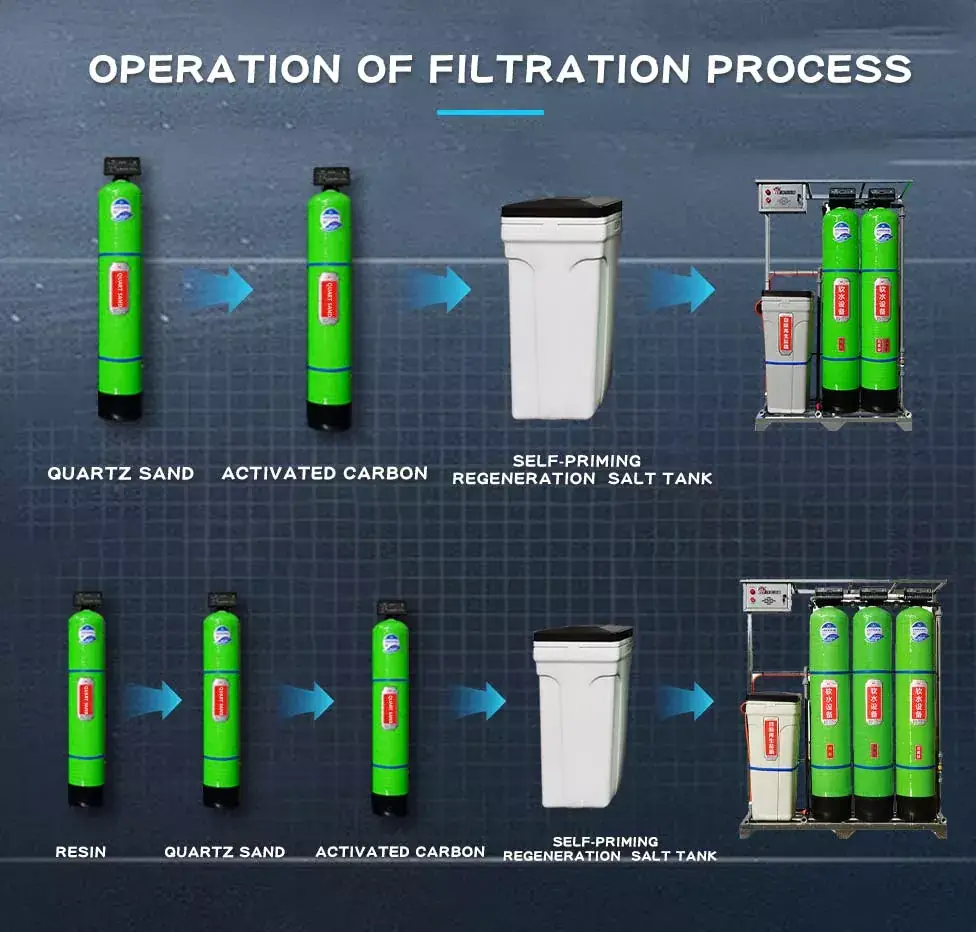
Here is my mandatory 4‑stage pretreatment train for African conditions:
|
Stage |
Equipment |
Function |
Target After Stage |
|
1 |
Stainless steel mesh filter (60–100μm) |
Remove large sand, stones, debris |
No visible particles |
|
2 |
Multi media filter (quartz sand + anthracite) |
Reduce turbidity to <5 NTU |
Turbidity <5 NTU |
|
3 |
Manganese sand filter |
Remove iron to <0.1 mg/L, manganese <0.05 mg/L |
Fe <0.1, Mn <0.05 |
|
4 |
Activated carbon filter |
Remove chlorine, organics, protect resin from oxidation |
Free chlorine <0.1 mg/L |
Without these 4 stages, your water softening equipment will suffer from iron fouling, sediment clogging, and resin degradation – you will replace resin every 3–6 months instead of every 3–5 years.
Step 3 – Softener Core Selection: Resin, Tank, and Control Valve
Once your pretreatment is solid, you can select the softener itself. For Africa, focus on high hardness tolerance, high temperature resistance, and continuous supply.
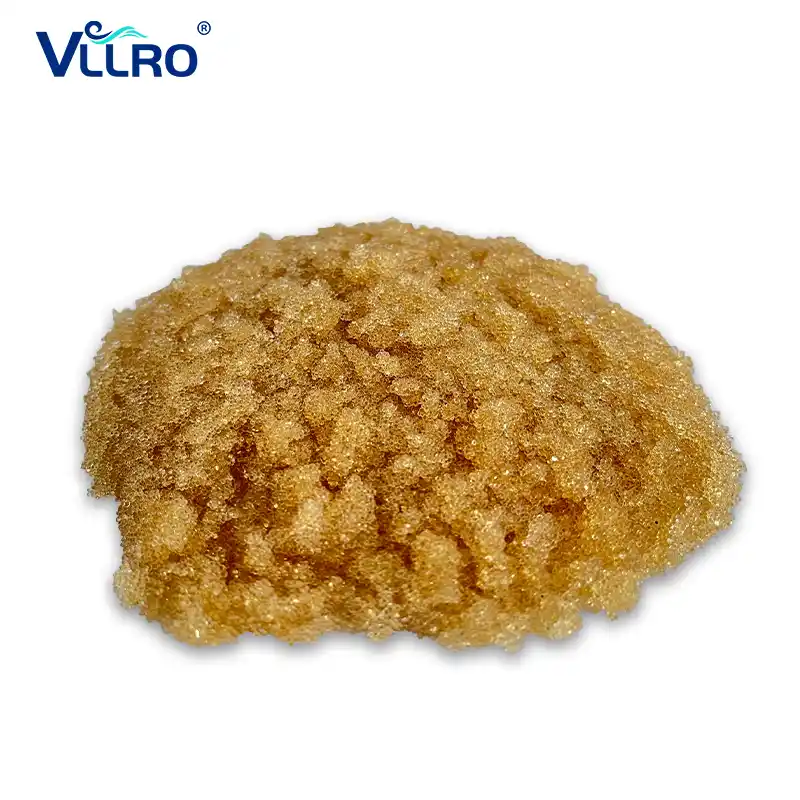
Resin – Food Grade, High Cross‑linking
- Standard resin (e.g., ordinary 001×7) will fail in 1–2 years under African high‑hardness and high‑temperature conditions.
- Recommended: High cross‑linking food grade cation resin (e.g., DuPont AmberLite, Lanxess, Purolite) with temperature resistance up to 50°C (122°F) .
Tank – FRP or 304 Stainless Steel
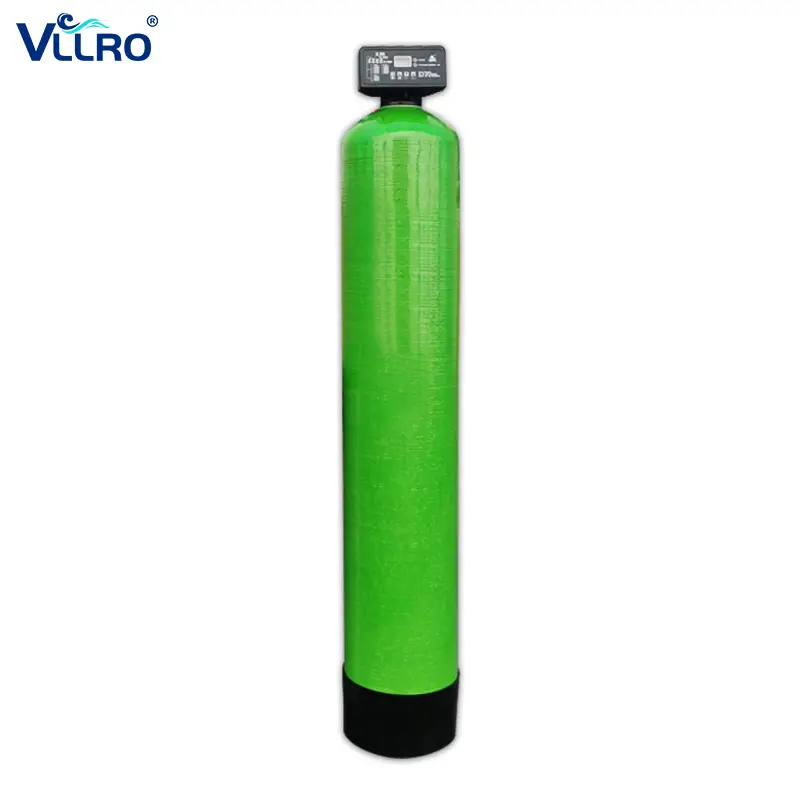
- FRP (fiberglass) – Lightweight, corrosion‑resistant, good for most applications. Avoid cheap thin‑wall tanks.
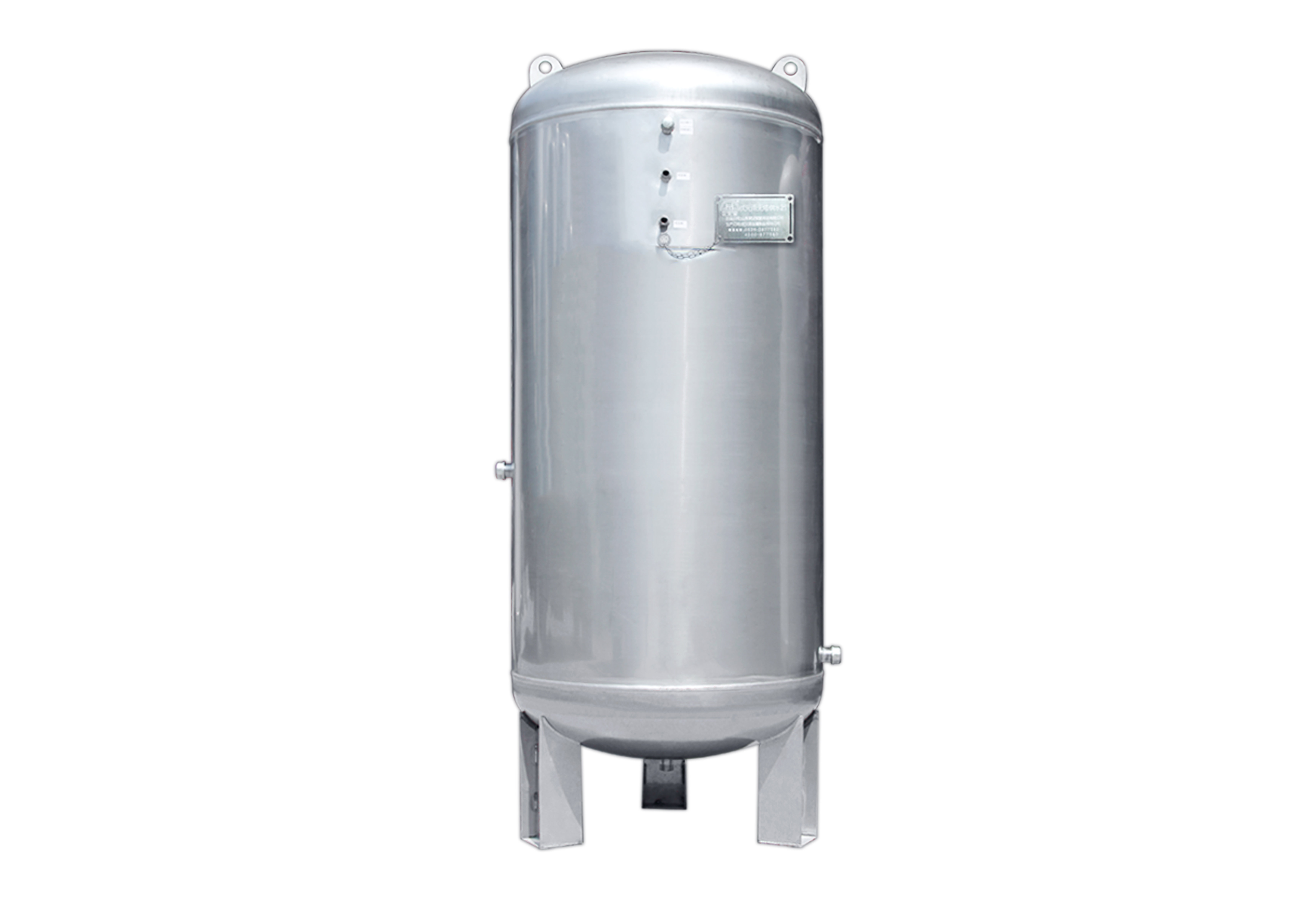
- 304 stainless steel – For very high temperatures or outdoor installations with a sunshade. Pressure rating: 0.6–1.0 MPa.
Control Valve – The Most Critical Component
|
Feature |
Why It Matters for Africa |
|
Flow controlled regeneration |
Regenerates based on actual water used – saves salt and water. Do not use time controlled valves (inconsistent water usage leads to premature exhaustion). |
|
Wide voltage (100–240V / 50–60Hz) |
Adapts to Africa‘s unstable grid. |
|
Battery backup |
Retains settings during power outages – essential. |
|
Bilingual interface (English + local language) |
Prevents operator errors. |
|
Missing salt alarm, high/low pressure protection, high temperature protection |
Prevents resin damage and system shutdown. |
|
Bypass valve |
Allows water supply during regeneration or maintenance – critical for hotels, hospitals, factories. |
Sizing for High Hardness
- Hardness >300 mg/L – Use two tanks in series (primary + secondary softening) to achieve outlet hardness <50 mg/L.
- Hardness >500 mg/L – Use dual tanks in parallel (lead‑lag) to ensure continuous water supply during regeneration.
- Flow rate – Multiply your peak hourly demand by 1.5 to 2.0 (higher safety margin than in China). Example: if peak usage is 3 m³/h, select a system rated for 4.5–6 m³/h.
Step 4 – Adapt to Africa‘s Harsh Environment (Heat, Power, Water Scarcity)
High Temperature Protection
- Ambient temperature can reach 50°C (122°F). Never install softeners in direct sunlight – UV degrades plastic, and heat accelerates resin aging.
- Install indoors or under a shaded shelter with good ventilation. Use FRP or stainless steel tanks.
Power Supply Reliability
- Choose valves with wide voltage input (100–240V AC) – they work on both 110V and 220V grids without manual switching.
- Add a UPS (uninterruptible power supply) or backup battery – even a small UPS can run 1‑2 regeneration cycles during a power outage. Without this, resin may stay exhausted for days, causing hard water breakthrough.
Water & Salt Savings (Dry Regions)
- Flow‑controlled regeneration uses 30‑50% less salt and water than time‑controlled types.
- Target salt consumption ≤100g per ton of treated water – lower is better because salt is expensive and hard to find in many African regions.
- Reuse regeneration wastewater – after settling, it can be used for irrigation or floor cleaning (not for drinking). This is crucial in water‑scarce areas.
Ready to Choose Your Africa Softener?
I have personally designed water softening equipment for projects in Nigeria, Kenya, Ghana, Tanzania, and South Africa. Every successful installation started with a water test and a customized pretreatment train.
Start with our [Water Testing Kit]– mail your sample or use our local partners.
Browse [Complete Softener Systems for Africa]– pre‑configured with wide‑voltage valves and heavy‑duty resin.
For large projects, request a [Custom Engineering Quote].
Sophia‘s Final Words
Do not underestimate African water and environment. A standard softener designed for Europe or China will fail fast and fail hard. But with the right pretreatment, robust components, and local support, your water softening equipment can deliver soft, safe water for 5–10 years – even under extreme conditions.
Have a specific African project? Send me your water test report and site photos. I will recommend a system within 24 hours – free of charge.
Related News
- How to Reduce Wastewater in Commercial RO Systems Without Sacrificing Membrane Life
- How to Calculate ROI for a Commercial Water Refilling Station
- How to Design a Borehole Water Pretreatment System for Remote Commercial RO Stations
- The "Brain" Behind the System: How VLLRO's Intelligent IoT Control Platform Revolutionizes Water Management
- The Invisible Shield: Why UV Sterilization is Non-Negotiable for Safe Drinking Water
- Maximizing RO Longevity: The Complete Guide to Water Filtration Consumables and Replacement Cycles
Leave me a message