English
- English
- Español
- Português
- русский
- Français
- 日本語
- Deutsch
- tiếng Việt
- Italiano
- Nederlands
- ภาษาไทย
- Polski
- 한국어
- Svenska
- magyar
- Malay
- বাংলা ভাষার
- Dansk
- Suomi
- हिन्दी
- Pilipino
- Türkçe
- Gaeilge
- العربية
- Indonesia
- Norsk
- تمل
- český
- ελληνικά
- український
- Javanese
- فارسی
- தமிழ்
- తెలుగు
- नेपाली
- Burmese
- български
- ລາວ
- Latine
- Қазақша
- Euskal
- Azərbaycan
- Slovenský jazyk
- Македонски
- Lietuvos
- Eesti Keel
- Română
- Slovenski
- मराठी
- Srpski језик

How to Choose RO Equipment?suitable for Residential and Commercial
How to Choose RO Equipment?
Choosing the right RO equipment can feel like solving a puzzle. I’m Sophia, and over the past 12 years, I’ve helped hundreds of families and businesses find the perfect water purification system. Today, I’ll walk you through my simple 4‑step method. By the end, you’ll know exactly how to choose RO equipment that fits your water quality, your budget, and your daily needs.
Step 1: Always Check Your Raw Water Quality First
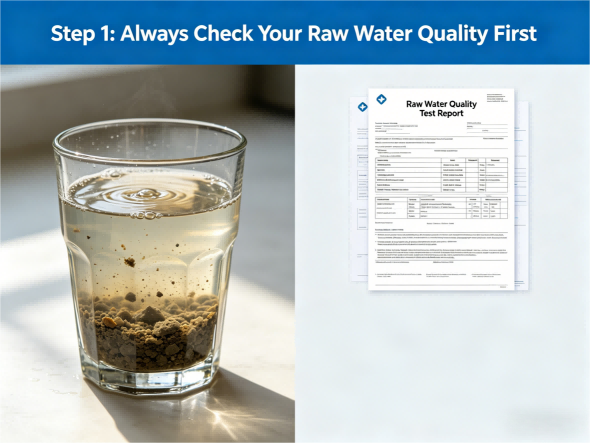
When people ask me “Sophia, how do I start?” my answer is always the same: test your source water. Don’t guess. Don’t assume.
Take a glass of your tap water or well water. Look closely – do you see any sediment impurities floating around? Is the water cloudy? Maybe you notice an unusual color (yellow, brown, or reddish), a strange smell (like rotten eggs or chlorine), or even an oily film on the surface.
If you have a professional water test report, that’s gold. It tells me exactly what contaminants we’re fighting – TDS, iron, manganese, chloramines, or bacteria.
Why is this step so critical? Because different water problems need different RO equipment configurations. For example, water with high silt density requires a sediment pre‑filter and possibly an ultrafiltration stage before the RO membrane. Water with high chlorine will destroy the RO membrane quickly unless you add a carbon filter. So please – never skip the water check.
Step 2: Calculate How Many Liters You Need Per Hour
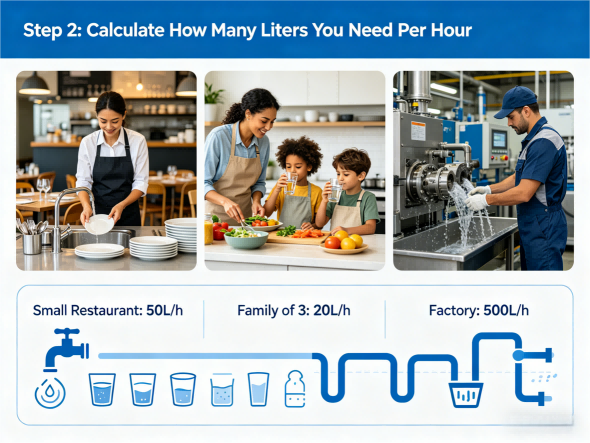
Now let’s talk about volume. I always ask my clients: “How many people will drink this purified water? And do you need water for cooking, ice making, or even light industrial use?”
You have to check the water yield per hour you want. For a small family of 3‑4 people, 50–80 liters per hour is usually enough. But if you run a small restaurant, juice bar, or office with 20+ employees, you may need 200–500 liters per hour. For factories or farms, the number can go above 1000 L/hour.
My golden rule: choose RO equipment with a capacity 20‑30% higher than your peak hourly demand. That buffer protects you during busy hours and reduces wear on the system.
If you buy an undersized system, you’ll face constant waiting for water. If you buy an oversized system, you waste electricity and money. So take out a calculator and be realistic.
Step 3: Decide – Separate Design or Combined Unit?
Here’s a question that confuses many beginners:“Sophia, should I buy a separate pretreatment system or a combined all‑in‑one unit?”
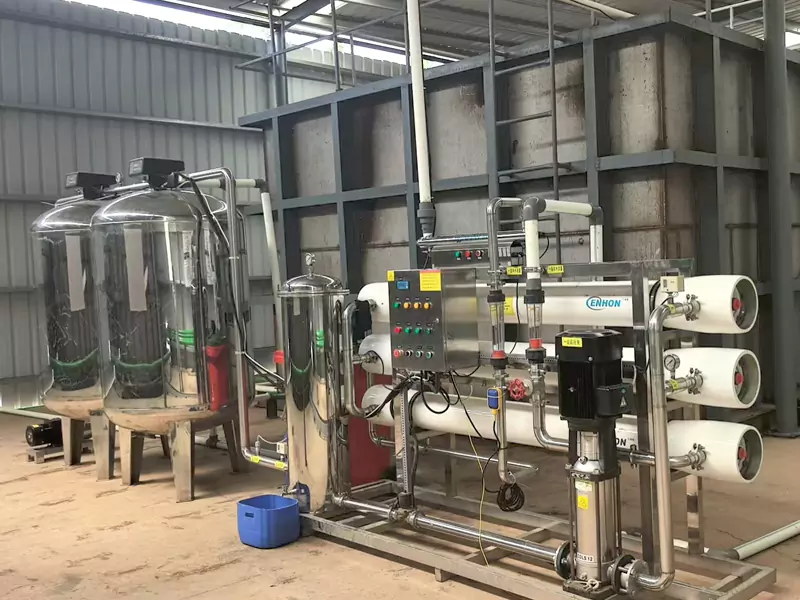
Let me explain clearly:
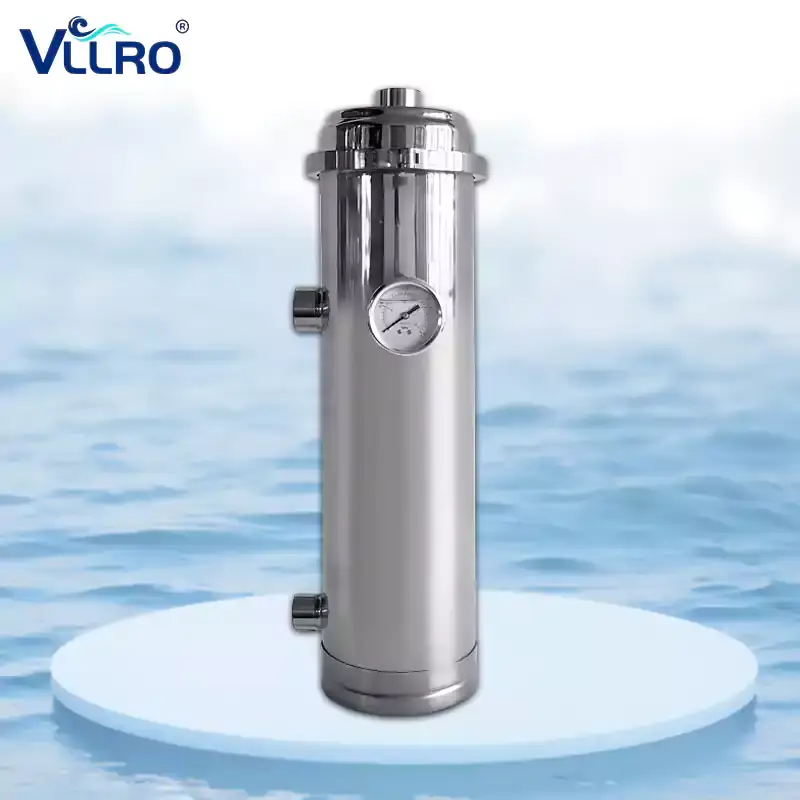
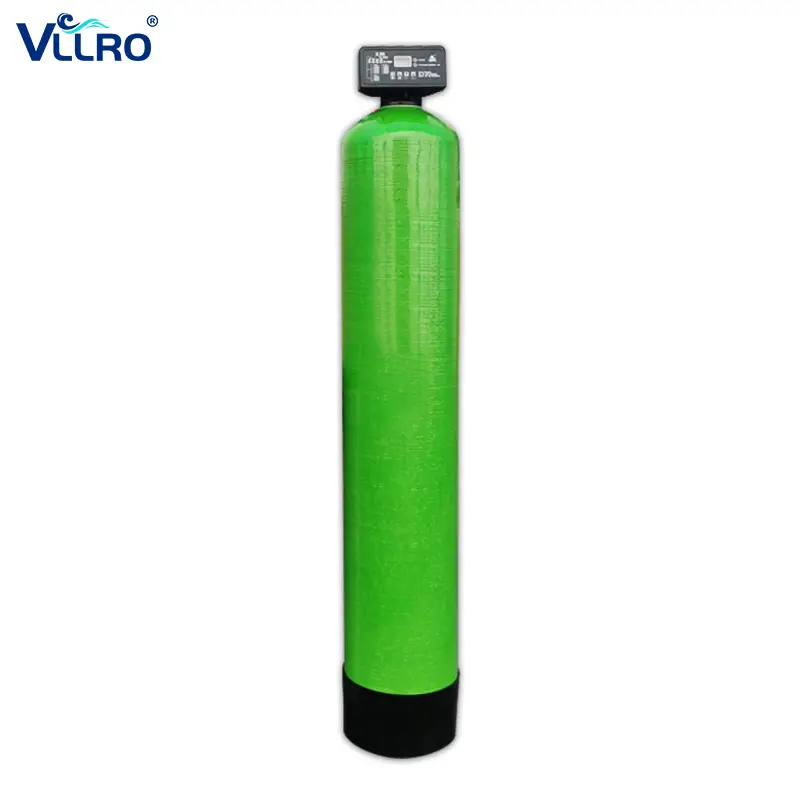
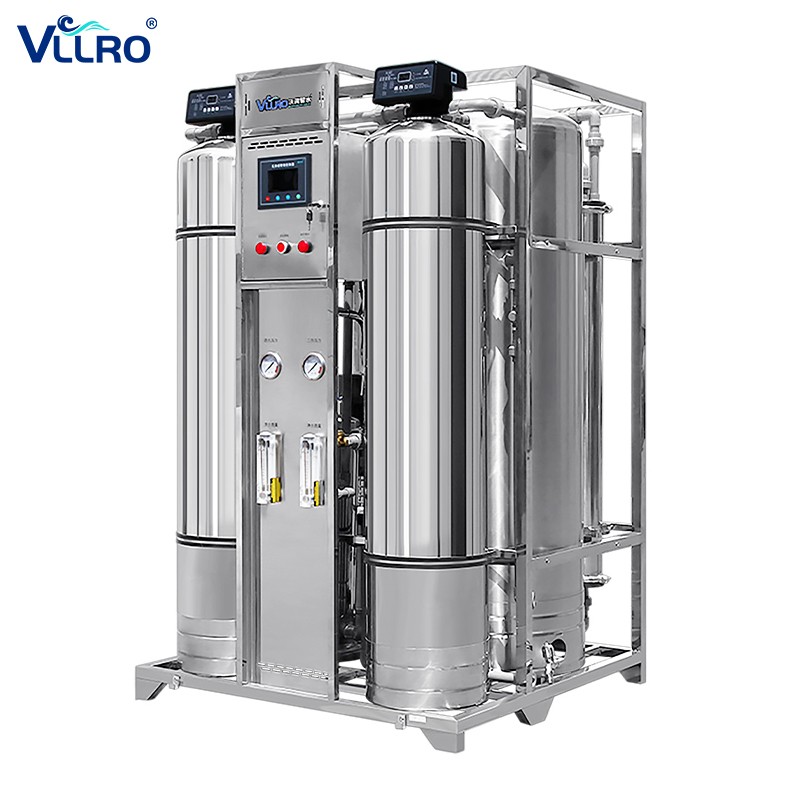
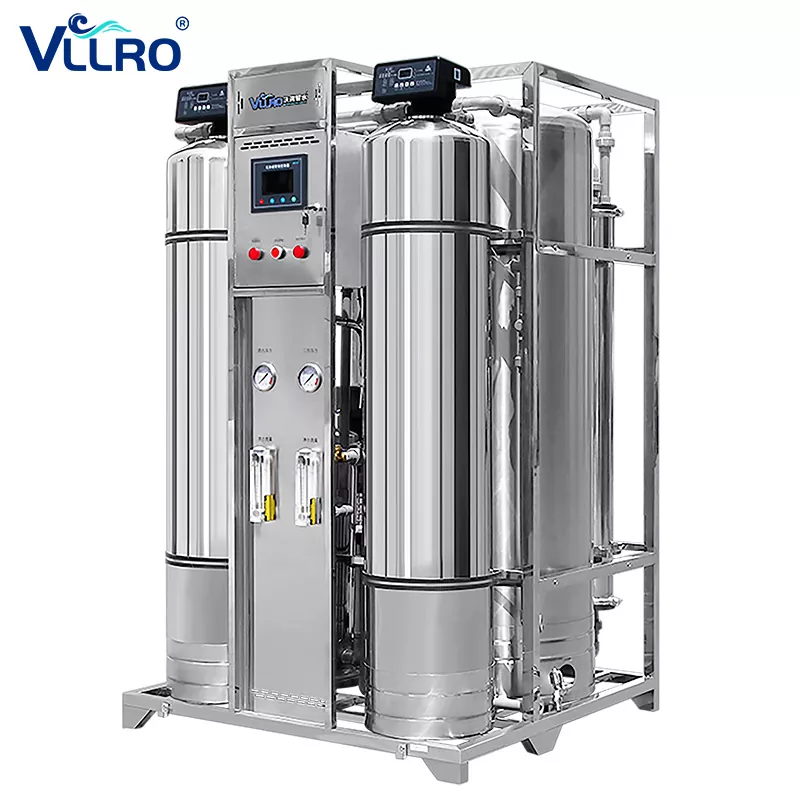
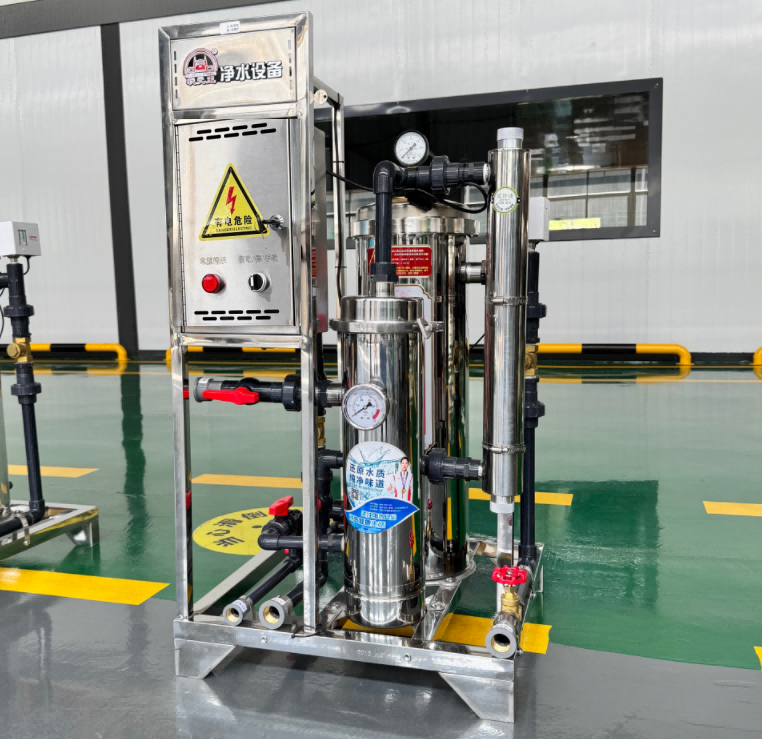
Separate design: means you have individual tanks/vessels for sediment filter, carbon filter, softener, RO membrane, and post‑filter. This setup takes more space but offers maximum flexibility. You can replace or upgrade one component at a time. It’s ideal for large homes, commercial RO, or industrial applications.
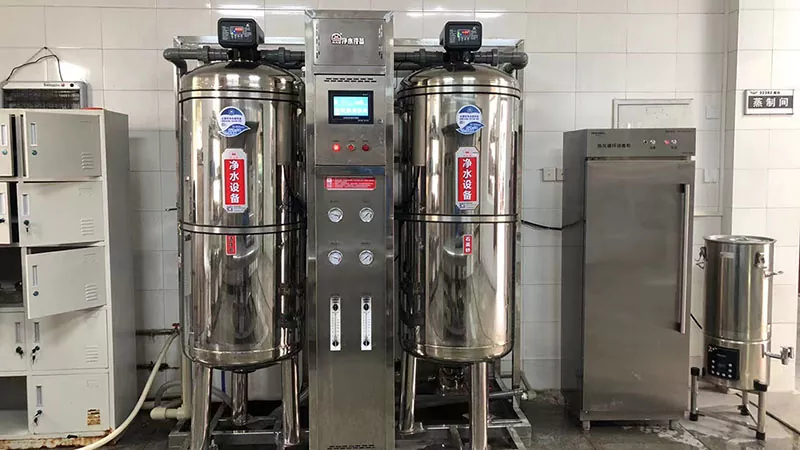
Combined design (also called integrated or compact RO equipment) packs everything into one sleek chassis. It saves space, looks clean, and is easier to install – perfect for apartments, small kitchens, or offices with limited floor area
Which one do I personally recommend? It depends on your space and maintenance preferenc. If you have room and want long‑term control, go separate. If you want simplicity and a quick start, choose a combined unit.
Pro tip: For most city apartments, a combined RO equipment is the winner. For rural homes with very poor well water, a separate design gives you more pretreatment power.*
Step 4: Don’t Forget Maintenance & Support
Even the best RO equipment needs regular love. Filters must be changed every 3‑6 months, and the RO membrane every 2‑3 years. Before you buy, ask the supplier:
- Are replacement cartridges easy to find?
- Is there a local service technician?
- What’s the warranty period? (I recommend at least 2 years.)
I’ve seen too many people buy cheap no‑name systems online, only to discover that spare parts are impossible to get six months later. Don’t let that be you.
Ready to Find Your Perfect RO System?
If you’ve followed my 4 steps, you now know your water quality, your hourly flow rate, and your design preference. The next step is to explore real products.
👉Browse our [Residential RO Systems] for compact combined units under the sink.
👉Check our [Commercial RO Equipment] for high‑capacity separate designs – perfect for restaurants, schools, and factories.
Each product page includes detailed specs, water test compatibility guides, and customer reviews. And if you’re still unsure, just contact me through the form below. I personally answer every question within 24 hours.
Final Words from Sophia
Choosing RO equipment doesn’t have to be stressful. Start with water quality, then match the flow rate, then pick your design style. Follow these steps, and you’ll avoid 90% of common mistakes.
Remember: Clean water is not a luxury – it’s a right
Related News
- How to Reduce Wastewater in Commercial RO Systems Without Sacrificing Membrane Life
- How to Calculate ROI for a Commercial Water Refilling Station
- How to Design a Borehole Water Pretreatment System for Remote Commercial RO Stations
- The "Brain" Behind the System: How VLLRO's Intelligent IoT Control Platform Revolutionizes Water Management
- The Invisible Shield: Why UV Sterilization is Non-Negotiable for Safe Drinking Water
- Maximizing RO Longevity: The Complete Guide to Water Filtration Consumables and Replacement Cycles
Leave me a message