English
- English
- Español
- Português
- русский
- Français
- 日本語
- Deutsch
- tiếng Việt
- Italiano
- Nederlands
- ภาษาไทย
- Polski
- 한국어
- Svenska
- magyar
- Malay
- বাংলা ভাষার
- Dansk
- Suomi
- हिन्दी
- Pilipino
- Türkçe
- Gaeilge
- العربية
- Indonesia
- Norsk
- تمل
- český
- ελληνικά
- український
- Javanese
- فارسی
- தமிழ்
- తెలుగు
- नेपाली
- Burmese
- български
- ລາວ
- Latine
- Қазақша
- Euskal
- Azərbaycan
- Slovenský jazyk
- Македонски
- Lietuvos
- Eesti Keel
- Română
- Slovenski
- मराठी
- Srpski језик

Malaysia Rural Water Supply Problems? Stainless Steel Pressure Tank Solution?
Malaysia Rural SelfBuilt House Water Supply Problems? Stainless Steel Pressure Tank Eliminates Overhead Tanks & Pump Noise
Author: Sophia
Water Treatment & Pressure System Specialist, VLLRO | 20 years in rural water supply solutions for Southeast Asia
If you live in a double‑story self‑built house or terrace house in rural or suburban Malaysia, you are likely familiar with this frustration: the overhead water tank on your roof rusts and breeds mosquitoes; the water pump starts and stops with a loud thump at odd hours; and the second‑floor shower delivers nothing but a weak trickle.
For decades, Malaysian rural homes have relied on borehole water pumped into rooftop overhead tanks. But this traditional system is increasingly out of step with modern living needs and Malaysia's tropical climate. The good news: there is a better way. The stainless steel pressure tank system eliminates overhead tanks, silences pump noise, stabilizes water pressure, and requires almost zero maintenance.
In this guide, I will walk you through the common problems of traditional water supply systems, explain why a stainless steel pressure tank is the ideal solution for Malaysian rural homes, and help you decide if it is time to upgrade.
The Hidden Problems with Traditional Overhead Tank Systems
Most rural and suburban homes in Malaysia rely on borehole water pumped into rooftop overhead tanks. This system has been used for generations – but it comes with a long list of problems that many homeowners have simply learned to tolerate:
Rusting steel structures – the metal frames that hold overhead tanks rust quickly in Malaysia's humid, coastal climate, requiring frequent repainting and replacement.
Mosquito breeding & water contamination – open or poorly sealed tanks collect dust, leaves, and stagnant water – perfect breeding grounds for Aedes mosquitoes.
Loud pump noise – the pump starts and stops every time you open a tap, creating disruptive noise day and night.
Weak second‑floor water pressure – gravity‑fed tanks often cannot deliver enough pressure for showers on upper floors.
Frequent pump failures – constant cycling wears out pumps quickly, leading to expensive repairs and replacements.
Safety hazards – aging overhead tanks and rusting steel frames pose a falling risk, especially during storms.
A homeowner in Johor told me: “My tank frame rusted through after 8 years. It collapsed during a thunderstorm – thankfully no one was underneath.”
If any of these sound familiar, it is time to consider a modern alternative.
What Are the Four Standards for a Modern Rural Water Supply System?
Based on years of experience upgrading water systems for Malaysian rural homes, I have identified four essential standards that any modern system must meet:
|
Standard |
Why It Matters |
|
Heat & corrosion resistance |
Malaysia's tropical climate demands materials that withstand intense sun, heavy rain, and high humidity |
|
No overhead installation |
Eliminate rusting structures, falling hazards, and difficult maintenance |
|
Quiet operation |
No disruptive pump cycling – peace and quiet for your family |
|
Consistent whole house pressure |
Strong, stable water flow on every floor – even when multiple taps are used at once |
Traditional overhead tank systems fail on all four counts. A stainless steel pressure tank system meets every one.
How Does a Stainless Steel Pressure Tank Work?
Unlike a gravity‑fed overhead tank, a pressure tank uses compressed air to push water through your pipes. Here is how it works:
1. Water fills the sealed tank – a pump pushes water into the tank, compressing the air above it.
2. Air pressure builds – as the tank fills, air pressure rises to a preset level (e.g., 0.28 MPa).
3. Pump automatically stops – a pressure switch cuts power to the pump when the upper pressure limit is reached.
4. You open a tap – compressed air pushes water out with steady, strong pressure.
5. Pressure drops – when pressure falls to the lower limit (e.g., 0.14 MPa), the pump restarts automatically.
The result: stable water pressure, no noisy pump cycling, and water even during brief power outages – all without a rooftop tank.
Three Core Advantages – Why Malaysian Homeowners Are Switching
1. No Overhead Tank, Zero Maintenance, No Safety Risks
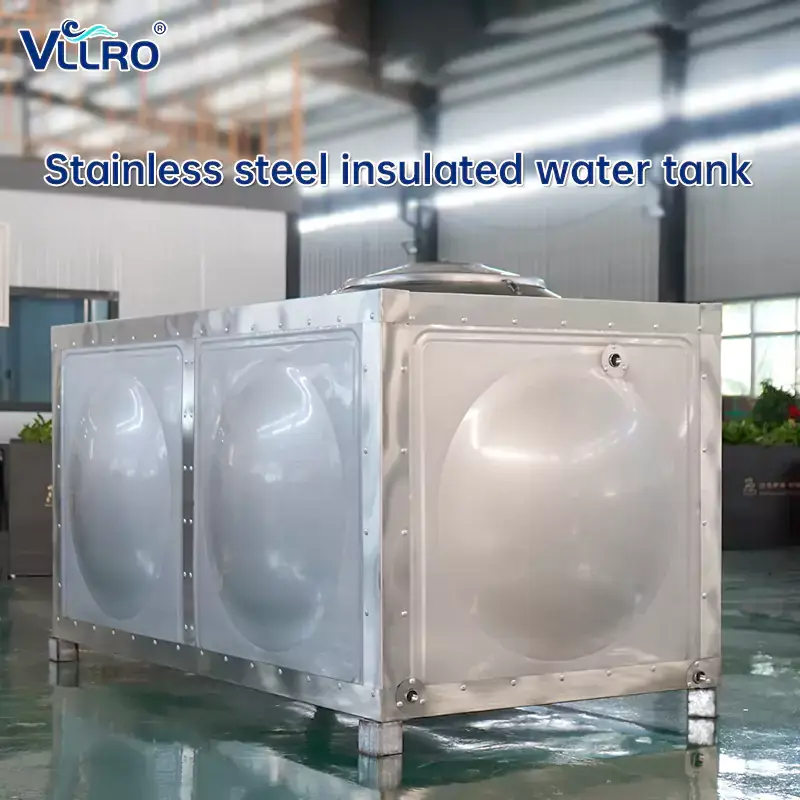
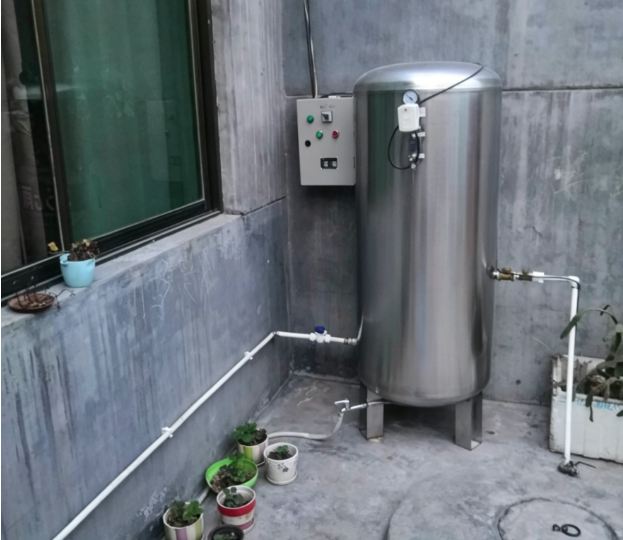
The stainless steel pressure tank can be installed at ground level – in your yard, beside the house, or even indoors. No steel frame, no rusting structure, no falling hazards. The 304 food‑grade stainless steel body is:
Rust‑proof and corrosion‑resistant – perfect for Malaysia's humid climate
UV‑resistant and weatherproof – withstands direct sun and heavy rain
Fully sealed – no mosquitoes, no dust, no water contamination
Install it once and forget about it. No more climbing onto the roof to clean tanks or repaint rusting frames.
2. Quiet Operation – No More Pump Noise Disturbance
With a traditional system, the pump starts and stops every time you use water – often multiple times per hour. This constant cycling:
Creates disruptive noise (especially at night)
Wears out the pump motor and pressure switch
Wastes electricity
A stainless steel pressure tank stores water under pressure, so the pump runs only to refill the tank – not every time you open a tap. The result is near‑silent operation and significantly longer pump life.
> A family in Selangor told us: “Before, our pump would wake up the baby every night. Now, we don't even hear it running.”
3. Constant Pressure – Strong Water Flow on Every Floor
Gravity‑fed tanks struggle to deliver consistent pressure, especially on upper floors. The stainless steel pressure tank uses compressed air to maintain steady pressure throughout your home:
Strong showers on the first and second floors – even at peak usage times
Multiple taps can run simultaneously – no more fighting over water pressure
Consistent flow – no sudden drops or sputtering
Your borehole water will feel just like municipal water – stable, reliable, and strong.
Common Questions About Switching to a Pressure Tank System
Q: Will the pressure tank rust or corrode in Malaysia's tropical climate?
A: No. Our tanks are made of thick 304 food‑grade stainless steel – specifically designed for outdoor tropical conditions. They resist rust, corrosion, and UV damage, far outlasting traditional mild steel tanks.
Q: Is installation complicated? Does it require structural changes?
A: No. The system requires no civil works, no steel frame construction, and no modifications to your house structure. It can be installed in a day – perfect for existing homes.
Q: Will it completely eliminate pump noise?
A: Yes. The pressure tank acts as a buffer, dramatically reducing pump cycling. During normal water use, the system operates almost silently.
Q: Is it more cost‑effective than an overhead tank in the long run?
A: Absolutely. You save on:
No periodic rust removal or repainting
No tank cleaning or mosquito control
Reduced pump wear and tear (fewer repairs and replacements)
Lower electricity consumption
The total cost of ownership over 10 years is significantly lower than a traditional overhead tank system.
Ready to Upgrade Your Rural Home Water Supply?
If you are tired of weak water pressure, noisy pumps, rusty tanks, or mosquito‑infested water storage – it is time to switch to a stainless steel pressure tank system .
Explore our [Pressure Tank Systems for Malaysian Homes](https://example.com/malaysiapressuretank) – available in sizes from 50L to 500L.
Request a free site assessment – send us your house type, number of floors, and daily water usage. We will recommend the right tank size and configuration.
Contact Sophia's team for a priority response.
Related News
- How to Reduce Wastewater in Commercial RO Systems Without Sacrificing Membrane Life
- How to Calculate ROI for a Commercial Water Refilling Station
- How to Design a Borehole Water Pretreatment System for Remote Commercial RO Stations
- The "Brain" Behind the System: How VLLRO's Intelligent IoT Control Platform Revolutionizes Water Management
- The Invisible Shield: Why UV Sterilization is Non-Negotiable for Safe Drinking Water
- Maximizing RO Longevity: The Complete Guide to Water Filtration Consumables and Replacement Cycles
Leave me a message